
 Algeria
 Egypt
 Libya
 Morocco
 Sudan
 Tunisia
 Benin
 Burkina Faso
 Cabo Verde
 Côte d'Ivoire
 Ghana
 Guinea
 Guinea-Bissau
 Liberia
 Mali
 Mauritania
 Niger
 Nigeria
 Senegal
 Sierra Leone
 The Gambia
 Togo
 Cameroon
 Central African Republic
 Chad
 DR Congo
 Equatorial Guinea
 Gabon
 Republic of the Congo
 São Tomé and Príncipe
 Burundi
 Comoros
 Djibouti
 Eritrea
 Kenya
 Madagascar
 Malawi
 Mauritius
 Mozambique
 Rwanda
 Seychelles
 Somalia
 South Sudan
 Tanzania
 Uganda
 Angola
 Botswana
 Eswatini
 Lesotho
 Namibia
 South Africa
 Zambia
 Zimbabwe
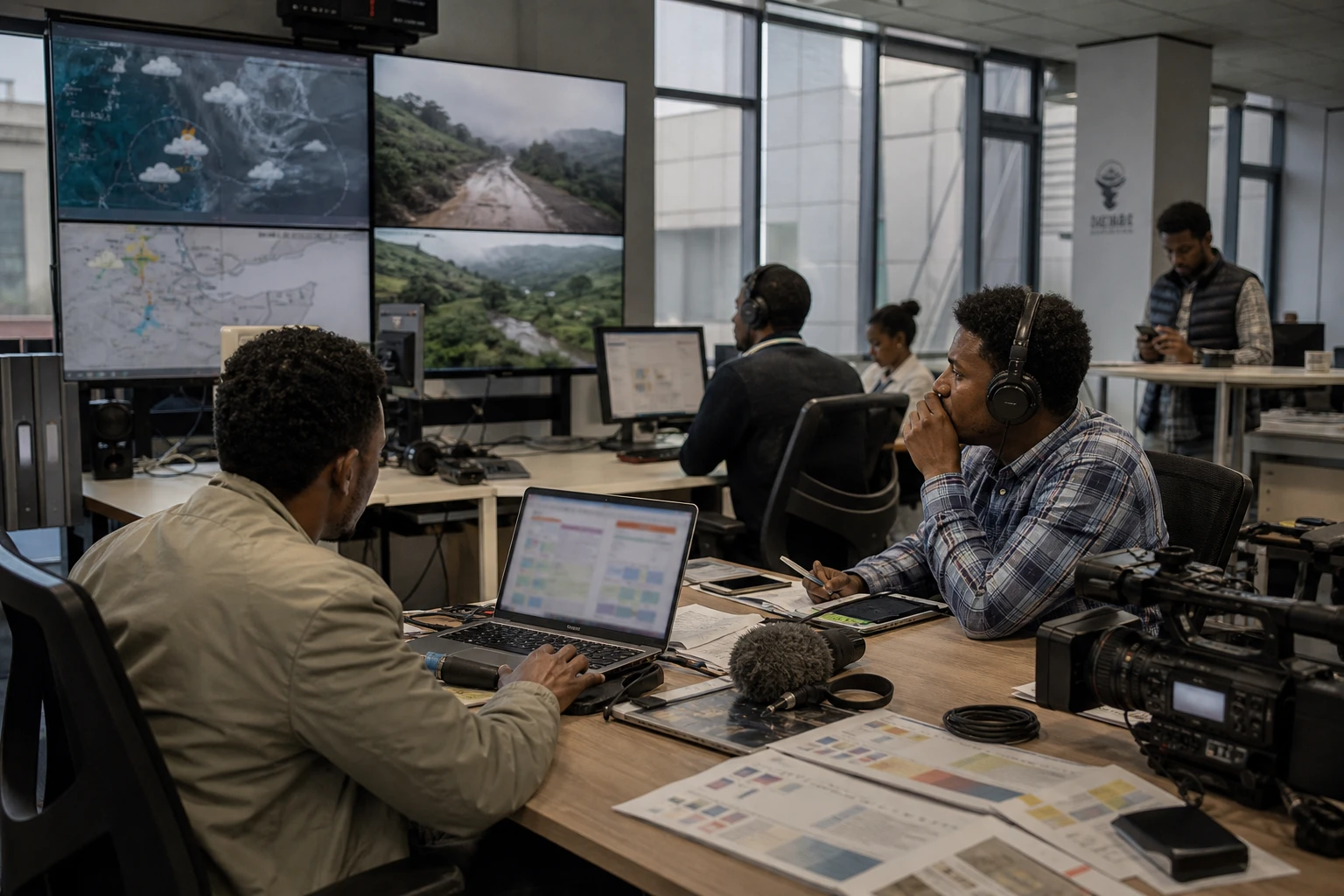
A place of prayer, then a slope gives way
In northern Ethiopia, a place of reflection became a scene of mourning within minutes. At Sela Dingay, in the Amhara region, a landslide struck the Tsadqane Debre Mitmaq Saint Mary Orthodox monastery as worshippers took part in a purification rite with holy water. Fourteen people were killed and seven others injured, according to a church official quoted by an international news agency.
The circumstances also made the disaster shocking. It happened at dawn, after heavy overnight rain, in an area of rugged terrain already prone to landslides. Rescue teams were deployed, but people were still reported missing when the first information emerged, pointing to an operation complicated by mud, rocks and difficult access to the site.
Amhara, Addis Ababa and the rainy season
Amhara is one of Ethiopia’s central regions. The country, in the Horn of Africa, has its capital in Addis Ababa. Like much of the country, it is in the rainy season known as kiremt, which runs from June to September. The Ethiopian Meteorological Institute says this period brings most of the annual rainfall across much of the country and underpins climate alerts and seasonal forecasts.
This climatic context is key to understanding the disaster. Heavy rain saturates soils, weakens slopes and triggers mudslides. In northern Ethiopia, inhabited slopes, narrow roads and settlement on hillsides further increase the risk. Ethiopia does have monitoring systems, through its meteorological institute and risk management bodies, but it remains difficult to turn warnings into practical protection everywhere, particularly in rural areas.
What is known about the victims and events
Initial local reports referred to an “earthquake and sudden landslide”. The consolidated account later provided by the diocese said instead that a mudslide, mixed with rocks dislodged from the hillside, had buried part of the monastery. The religious official gave a final toll of 14 dead and seven injured. Those with serious injuries were transferred to Debre Birhan, an administrative centre about 70 kilometres from the monastery, for treatment.
The monastery drew pilgrims who came to pray and receive holy water. That religious dimension matters. In Ethiopia, major spiritual gatherings extend beyond religious practice alone. They shape people’s movements, small local economies and close-knit rural social life. When a sacred site is hit, the loss is therefore human, communal and economic.
Another warning about the country’s vulnerability
This latest disaster is part of a grim pattern. In July 2024, deadly landslides in southern Ethiopia killed 257 people, according to consolidated figures cited by UN agencies and the Ethiopian Red Cross. In March 2026, further mudslides and floods hit the south of the country, with death tolls ranging from several dozen to more than 100 in successive updates from regional authorities and international media.
The common factors are clear: intense rainfall, unstable slopes, fragile infrastructure and uneven response capacity. An analysis cited by the United Nations in Ethiopia after the southern landslides noted that geology, slope, groundwater and extreme rainfall all play a part, while deforestation, farming on slopes, population growth and poorly controlled urbanisation heighten vulnerability. In other words, the danger is not only meteorological. It is also linked to land use.
For people in rural areas, the impact is immediate: homes lost, roads cut off, farming disrupted and access to healthcare made more difficult. For the authorities, the challenge is broader. They need to issue warnings earlier, map at-risk areas, secure slopes near gathering places and improve local response efforts. In Ethiopia, where most people still live in rural areas, this is a matter of everyday safety, not just disaster management.
A warning for East Africa
The disaster goes beyond Amhara. In the Horn of Africa, seasons are becoming less predictable and episodes of extreme rainfall are becoming more frequent. The IGAD Climate Prediction and Applications Centre, the regional East African organisation’s climate centre, closely monitors these trends and publishes seasonal forecasts for member states, including Ethiopia. Ethiopian authorities must contend with risks shifting from south to north, and from one valley to another, depending on rainfall patterns.
The wider significance is clear. Ethiopia hosts the African Union in Addis Ababa and plays a major political role in the region. When a country of such importance is repeatedly hit by climate-related disasters, it serves as a reminder of the broader African debate on adaptation, prevention and risk financing. The Sela Dingay landslide is therefore not an isolated event. It speaks to the vulnerability of many mountainous areas in East Africa, as well as the urgent need for protective policies designed at local, national and regional levels.



