Algeria
 Egypt
 Libya
 Morocco
 Sudan
 Tunisia
 Benin
 Burkina Faso
 Cabo Verde
 Côte d'Ivoire
 Ghana
 Guinea
 Guinea-Bissau
 Liberia
 Mali
 Mauritania
 Niger
 Nigeria
 Senegal
 Sierra Leone
 The Gambia
 Togo
 Cameroon
 Central African Republic
 Chad
 Equatorial Guinea
 Gabon
 Republic of the Congo
 São Tomé and Príncipe
 Burundi
 Comoros
 Djibouti
 Eritrea
 Ethiopia
 Kenya
 Madagascar
 Malawi
 Mauritius
 Mozambique
 Rwanda
 Seychelles
 Somalia
 South Sudan
 Tanzania
 Uganda
 Angola
 Botswana
 Eswatini
 Lesotho
 Namibia
 South Africa
 Zambia
 Zimbabwe
When the health response falters, an entire region is left exposed
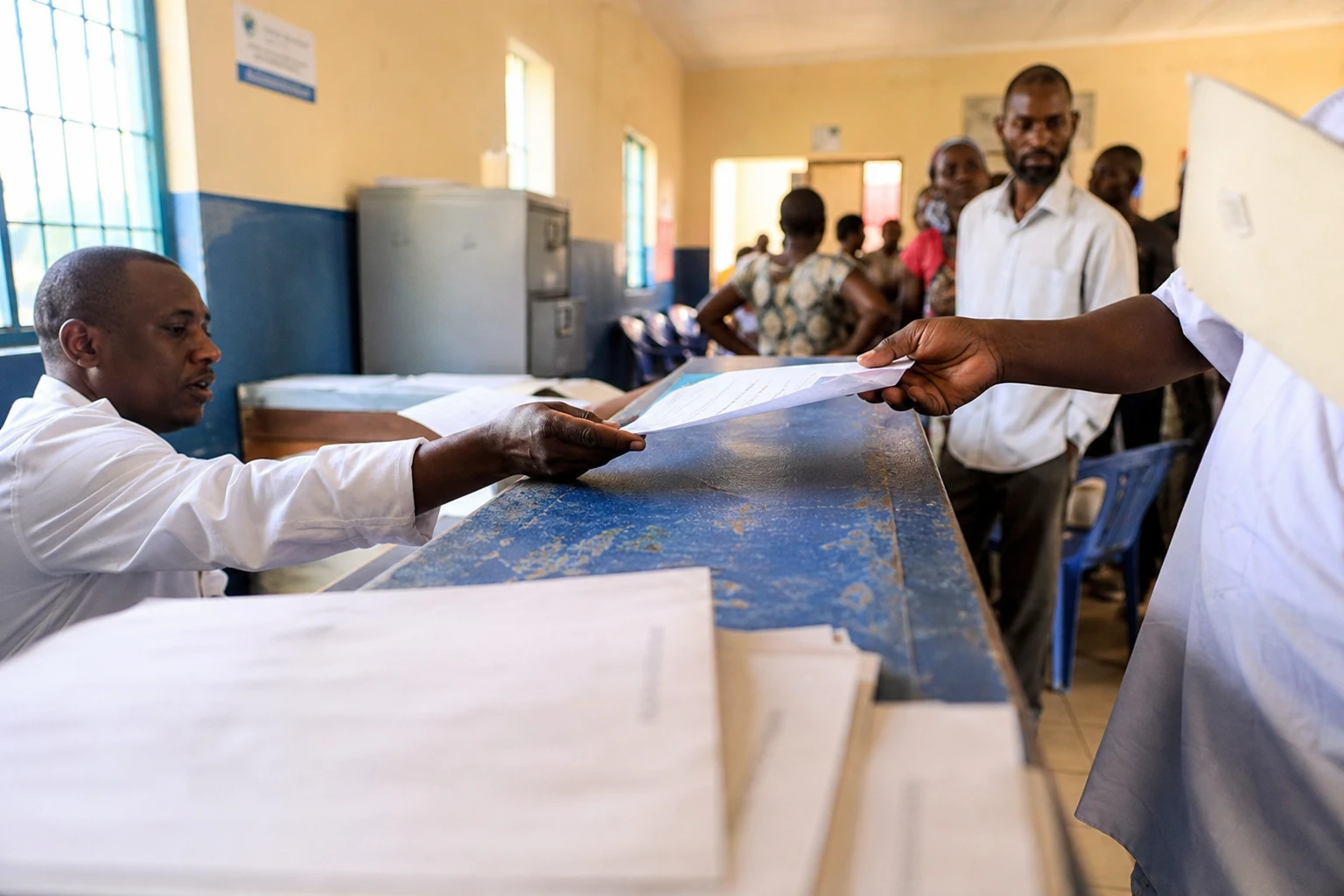
In Mongbwalu, in Djugu territory, the teams tasked with containing Ebola have themselves become the focus of tensions. Health workers, deployed for weeks in contact with a virus that spreads quickly and places frontline services under severe strain, have stopped work to demand three months of unpaid wages. During an epidemic, this kind of disruption is more than a labour dispute: it directly affects case surveillance, the isolation of patients and communities’ trust.
The problem extends beyond Mongbwalu. In 2026, Ituri once again became the entry point for a new outbreak of Ebola virus disease caused by the Bundibugyo strain. The World Health Organization confirmed that analyses by the National Institute of Biomedical Research in Kinshasa had established the diagnosis from samples collected in the Mongbwalu and Rwampara health zones. The Congolese government subsequently declared the 17th Ebola outbreak in the Democratic Republic of the Congo.
In Ituri, the response relies on local teams under pressure
Djugu territory and the Mongbwalu health zone are part of an environment already weakened by insecurity, population mobility and chronically poor health infrastructure. The WHO has said the current outbreak is in an urban or semi-urban area, with high population movement and a dense network of informal health facilities. In other words, the virus is not spreading in a health-service vacuum, but in an area where routes to care are sometimes fragmented.
That is precisely why the response depends on teams in the field: nurses, laboratory technicians, surveillance officers, disinfection teams, contact tracers, community outreach workers and maintenance staff. Their role is crucial, because Ebola is contained first and foremost through rapid detection, early isolation and the tracing of contacts. In Mongbwalu, the WHO reported alerts as early as 5 May about the deaths of healthcare workers in the health area, before the outbreak was confirmed a few days later.
This context gives the wage dispute particular significance. The workers concerned say they have not received their pay for May, June and July. They blocked the main entrance to Mongbwalu General Referral Hospital and issued a 24-hour ultimatum. Tyres were burned, and the Congolese National Police intervened with tear gas and warning shots. Hospital services and activity at the neighbouring commercial centre were disrupted.
A labour dispute during an epidemic is no minor matter
In normal circumstances, late pay is already a source of anger. In an Ebola outbreak, it can put the entire response chain at risk. If surveillance teams slow down, alerts are reported less quickly. If contact tracers stop working, transmission chains become harder to break. If community outreach workers withdraw from the field, mistrust can once again take hold in communities. This is not just a question of pay. It is also a question of continuity of health services.
Congolese authorities have already faced this vulnerability in other recent outbreaks. In Bunia and Rwampara, strike action by response workers had previously disrupted the operation of treatment centres, prompting the health minister to promise corrective measures. Later, the authorities again said that payments to response workers were being prepared. Ituri has thus shown that an emergency response can be weakened not only by the virus, but also by administrative delays and unequal treatment of teams.
The issue also points to the structure of the health response in the Democratic Republic of the Congo. From Kinshasa, the health ministry, the INRB, the WHO, MONUSCO and several partners support the response. But the decisive work takes place in Mongbwalu, Bunia, Rwampara and neighbouring villages, where workers go from house to house and come into direct contact with families and patients. When these workers are not paid, the imbalance is not merely social. It becomes operational.
What this crisis says about the DRC and Central Africa
The Democratic Republic of the Congo is not only confronting a disease. It is managing a crisis of trust between the state, its workers and the population. In Central Africa, where several health systems remain under severe budgetary pressure, the Ebola response is a reminder of an often-overlooked truth: an emergency strategy depends not only on the availability of vaccines, experts or treatment centres. It also depends on the ability to pay frontline workers on time.
The risk is all the more pressing because the WHO has reported, in its updates, that the outbreak has spread widely in Ituri, affecting several health zones and requiring constant vigilance as the virus circulates. In this kind of outbreak, every interruption to services can have a cascading effect, especially in areas where people travel frequently and health facilities are fragile. This is one of the recurring lessons of major Ebola outbreaks in eastern Congo: the response is effective only if it remains medical, logistical and socially acceptable.
In the short term, the key question is whether provincial and national authorities can reassure workers in Mongbwalu before the threat of a strike spreads to other response sites in Ituri. More broadly, the situation is a reminder to Central African states that public health cannot rest on the quiet heroism of precariously employed staff. It requires regular pay, a clear decision-making chain and care that does not stop at the doors of treatment centres.