Algeria
 Egypt
 Libya
 Morocco
 Sudan
 Tunisia
 Burkina Faso
 Cabo Verde
 Côte d'Ivoire
 Ghana
 Guinea
 Guinea-Bissau
 Liberia
 Mali
 Mauritania
 Niger
 Nigeria
 Senegal
 Sierra Leone
 The Gambia
 Togo
 Cameroon
 Central African Republic
 Chad
 DR Congo
 Equatorial Guinea
 Gabon
 Republic of the Congo
 São Tomé and Príncipe
 Burundi
 Comoros
 Djibouti
 Eritrea
 Ethiopia
 Kenya
 Madagascar
 Malawi
 Mauritius
 Mozambique
 Rwanda
 Seychelles
 Somalia
 South Sudan
 Tanzania
 Uganda
 Angola
 Botswana
 Eswatini
 Lesotho
 Namibia
 South Africa
 Zambia
 Zimbabwe

In Porto-Novo, an African date puts history centre stage
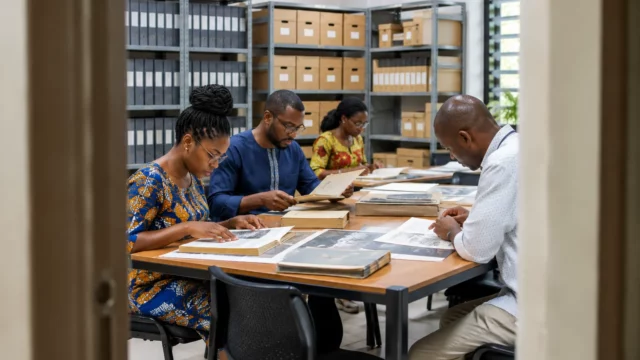
In Benin’s capital, Porto-Novo, a day dedicated to African women became an occasion to debate memory, creativity and transmission. The choice of venue was no accident: the Akanga Centre, founded in Porto-Novo in 2016, describes itself as a pan-African space for culture, history and links with the diaspora.
At a discussion led by the centre’s director, Jeki Esso, speakers also recalled that cultural initiatives in West Africa are not confined to the arts. They often serve as a bridge between heritage, civic awareness and public debate. In a member state of ECOWAS, the Economic Community of West African States, such spaces also offer a regional perspective on social issues.
31 July: a political memory before a commemorative one
African Women’s Day, celebrated on 31 July, dates back to the first Conference of African Women, held in Dar es Salaam in July 1962. The African Union says the conference proclaimed 31 July as the day, in memory of the creation of the first pan-African women’s organisation.
A second reference point helps explain the distinction from 8 March. The UN says International Women’s Day was officially recognised in 1977. The two dates therefore belong to different histories: one emerged from the international labour movement, the other from a pan-African framework born during decolonisation.
This distinction matters. It prevents 31 July from being reduced to a mere variation on 8 March. Above all, it recalls that as early as 1962, African women sought to put their struggles on the continental agenda, at a time when several countries had yet to gain independence and apartheid still shaped part of the balance of power in southern Africa.
In Benin, culture as a space for civic education
In Porto-Novo, the event highlighted women’s creativity as a lever for autonomy. The Akanga Centre describes itself as a place to discover the history of Benin, neighbouring Nigeria, West Africa and the diaspora. This focus lends meaning to a day in which art, speech and memory speak to one another.
Jeki Esso’s message echoes a broader debate about women’s place in Benin’s public life. Data compiled by UN Women show that the country continues to face challenges in political representation and in tackling violence against women. They also point out that a significant share of women’s economic activity remains informal, leaving them more exposed to irregular incomes and hardship.
In this context, talking about creativity is no decorative detour. It is a way to broaden the question. A woman who is a creator, entrepreneur or cultural mediator is not asking only to be celebrated. She is also calling for practical conditions: training, visibility, economic security and recognition of her work in the public sphere.
Transmission, young people and ownership of the narrative
The debate in Porto-Novo also touched on a sensitive issue: the circulation of ideas and references. Jeki Esso stressed that young people need to know more about the histories produced on the continent. This is not a retreat into identity politics. It is a call to rebalance perspectives. When African history is poorly known, it becomes easy to erase and then rewrite from outside.
31 July carries precisely this lesson. The day is not only about honouring female figures. It recalls that African women played a part in anti-colonial struggles, political organisation and the building of post-independence states. The African Union still presents the commemoration as an opportunity to recognise their contribution to freedom, equality and empowerment.
In Porto-Novo, this memory resonates in a particular way. Benin’s political capital also asserts itself through its cultural institutions, museums and spaces for transmission. The presence of a centre such as Akanga shows that the capital is more than an administrative hub. It is also becoming a laboratory for national and continental narratives.
What this day says about West Africa
The significance goes beyond Benin. Across ECOWAS, where debates on young people, employment and women’s participation remain lively, pan-African commemorations recall that there are historic tools for solidarity, not just economic frameworks. The memory of African women is one such tool.
It also sheds light on priorities for the future. For public institutions, the challenge remains to implement stronger policies on representation, access to income and protection from violence. For the cultural sector, the challenge is different but complementary: to circulate accurate, accessible and self-assured African narratives. The two dimensions are interconnected.
At the continental level, 31 July therefore remains a guiding light. It recalls that African women’s struggles did not begin with current trends or imported agendas. They are part of a long history of political struggle, critical thought and social innovation. In Porto-Novo, this history found a venue, voices and a stage.