Algeria
 Egypt
 Libya
 Morocco
 Sudan
 Tunisia
 Burkina Faso
 Cabo Verde
 Côte d'Ivoire
 Ghana
 Guinea
 Guinea-Bissau
 Liberia
 Mali
 Mauritania
 Niger
 Nigeria
 Senegal
 Sierra Leone
 The Gambia
 Togo
 Cameroon
 Central African Republic
 Chad
 DR Congo
 Equatorial Guinea
 Gabon
 Republic of the Congo
 São Tomé and Príncipe
 Burundi
 Comoros
 Djibouti
 Eritrea
 Ethiopia
 Kenya
 Madagascar
 Malawi
 Mauritius
 Mozambique
 Rwanda
 Seychelles
 Somalia
 South Sudan
 Tanzania
 Uganda
 Angola
 Botswana
 Eswatini
 Lesotho
 Namibia
 South Africa
 Zambia
 Zimbabwe
A closed border, and an economy still seeking support
Between Gaya and Malanville, the border is more than an administrative boundary. It is a route for goods, jobs and revenue for Niger and Benin alike. Three years after it was closed in the wake of the July 2023 coup in Niamey, the disruption continues to weigh on trade channels, even as political dialogue has resumed between the two capitals.
For Niger, the stakes go beyond symbolism. The country remains engaged with ECOWAS as the bloc undergoes political change, while continuing to be a member of WAEMU, the West African monetary union. In this context, the smooth passage of goods across land borders matters as much as diplomatic statements. It determines supplies to already fragile markets and the health of domestic trade, which is heavily dependent on regional corridors.
What the figures say about the real impact
The closure of the border with Benin first had a direct impact on customs revenue and transport. On the Beninese side, the International Monetary Fund reports a fall in revenue from transit trade since the 2023 closure, while the country’s north has had to absorb the halt in some of the flows to Niger. This is no small matter: the port of Cotonou remains one of the natural outlets for the Nigerien market, and the road through northern Benin remains strategic for transporters, traders and importers.
In Niger, the impact is most visible in costs and delays. In 2025, the International Monetary Fund said the continued closure of the border with Benin was still disrupting the services sector, driving up transport costs and making it harder for private-sector operators to access credit. The institution added that the situation was also affecting public finances by putting pressure on external and customs revenue.
The disruption has not, however, paralysed the entire Nigerien economy. The oil sector has continued to export through the pipeline running across Benin, supporting economic activity and public revenue. The IMF therefore estimates that Niger’s economy remained strong in 2025, growing by 6.9%, and should reach about 7% in 2026, driven in particular by agriculture and the extractive sector. In other words, the closed border is holding back part of the economy, but it is not enough on its own to halt the country’s overall momentum.
From households and transporters to businesses and the state
The most immediate impact is felt on shop shelves and in delivery times. When journeys take longer, essential goods arrive later and at a higher price. These include food, medicines, some agricultural inputs and basic industrial goods. In a country where much of the economy is informal, the shock quickly affects small traders, transporters and workshops that rely on regular supplies.
Businesses, in turn, face a knock-on effect. When a raw material is in short supply or arrives late, production slows. When a lorry is held up, an order is cancelled. When logistics costs rise, margins shrink. In this way, the border closure ultimately leads to reduced working hours, lower sales and more cautious spending. The IMF notes that risks to Niger’s growth remain high because of the security situation, climate shocks and financing constraints.
For the Nigerien state, the issue is also a budgetary one. Less transit means less customs revenue and less activity at inland ports, leaving less room to fund day-to-day spending. At the same time, Niamey is maintaining a degree of fiscal discipline: the IMF says the deficit stood at 2.9% of GDP in 2025 and is targeted at 3.4% of GDP in 2026. This trajectory shows that an economy can maintain its macroeconomic course while facing a lasting trade constraint.
Political rapprochement is advancing, but the border has its own timetable
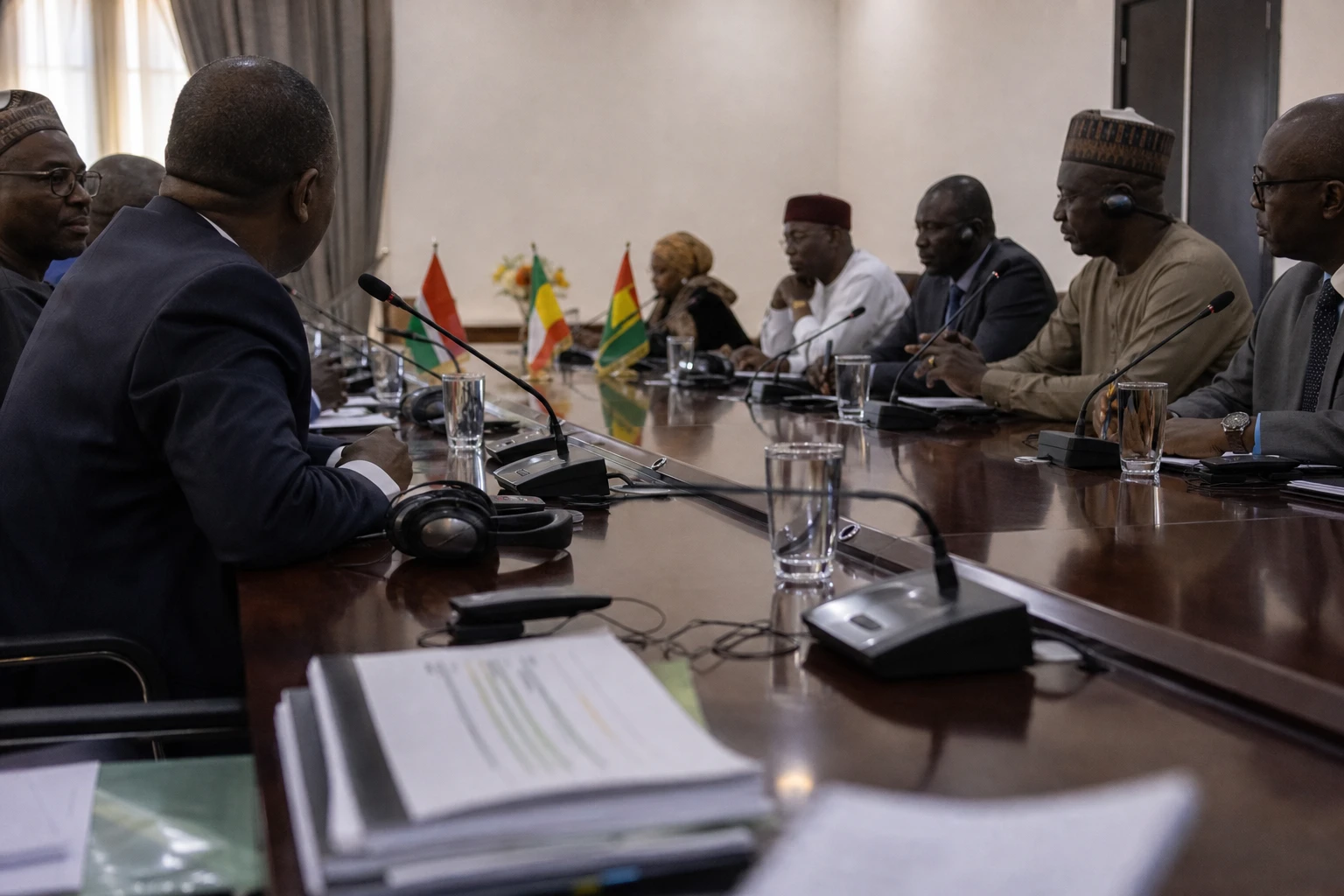
Relations between Niamey and Cotonou are improving. In late June 2026, talks in Cotonou resulted in agreements in principle on security, economic and legal matters. These steps have revived the prospect of an imminent reopening, although no firm date has yet been announced. The authorities in both countries must now turn the political agreement into practical arrangements for transit, taxes and checks.
This is where the difference between diplomatic détente and economic normalisation lies. Borders do not reopen through declarations alone. Security guarantees, rules for the movement of goods, trade disputes and inspection procedures all need to be resolved. Until these issues are settled, operators will continue to act cautiously, and prices will not automatically return to their previous levels.
Niger and Benin are therefore moving on two fronts at once. Diplomacy is repairing relations; the economy is waiting. For Niamey, the challenge is to safeguard revenue and supplies without giving the impression of a political retreat. For Cotonou, it is a matter of preserving its role as a trade hub while navigating a bilateral relationship that has become more sensitive since 2023.
Across West Africa, this case is a reminder of a reality that is often underestimated: a closed border does not just stop lorries; it reshapes entire regional balances. In a region criss-crossed by economic unions, port corridors and border markets, even limited normalisation between Niamey and Cotonou can have visible effects far beyond the two capitals. The next diplomatic decisions will show whether the easing of tensions in 2026 finally leads to the resumption of cross-border traffic.