Algeria
 Egypt
 Libya
 Morocco
 Sudan
 Tunisia
 Benin
 Burkina Faso
 Cabo Verde
 Côte d'Ivoire
 Ghana
 Guinea
 Guinea-Bissau
 Liberia
 Mali
 Mauritania
 Niger
 Senegal
 Sierra Leone
 The Gambia
 Togo
 Cameroon
 Central African Republic
 Chad
 DR Congo
 Equatorial Guinea
 Gabon
 Republic of the Congo
 São Tomé and Príncipe
 Burundi
 Comoros
 Djibouti
 Eritrea
 Ethiopia
 Kenya
 Madagascar
 Malawi
 Mauritius
 Mozambique
 Rwanda
 Seychelles
 Somalia
 South Sudan
 Tanzania
 Uganda
 Angola
 Botswana
 Eswatini
 Lesotho
 Namibia
 South Africa
 Zambia
 Zimbabwe
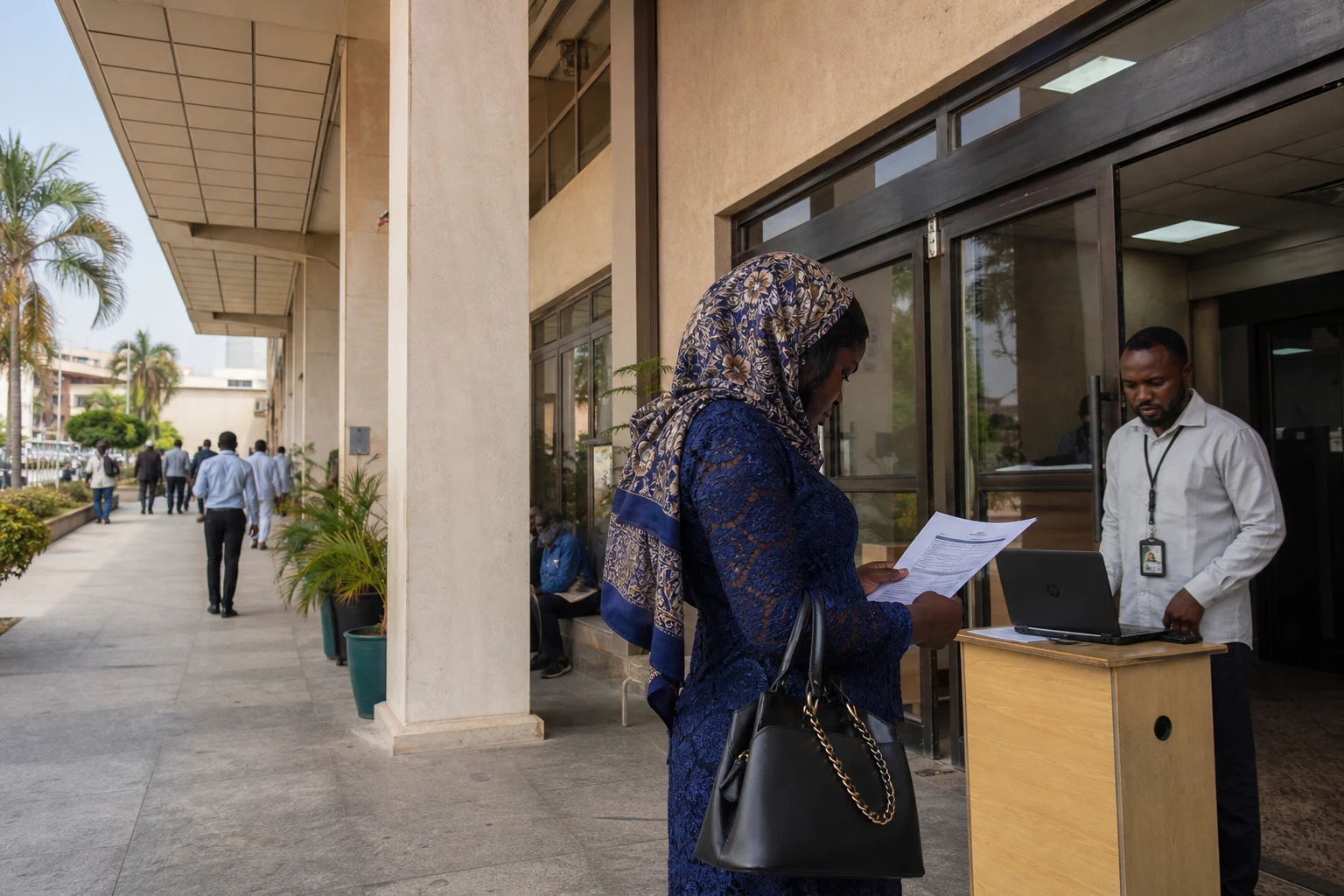
A digital portal to address blind spots in employment policy
In Nigeria, finding a job is no longer just a matter of skills or qualifications. It increasingly also depends on the state’s ability to make its schemes clear, traceable and genuinely accessible. That is where the credibility of the new cycle of the federal employment programme launched in Abuja will be tested.
The country is part of a wider battle against unemployment, underemployment and informality. The National Bureau of Statistics says the unemployment rate stood at 4.3% in the second quarter of 2024, but the economy remained dominated by informal employment, which accounted for 93.0% of employed people. Informality affected more women, at 96.0%, than men, at 90.0%, and peaked in rural areas, at 97.5%.
In this context, Abuja is seeking to make public employment programmes more targeted. The scheme is run through the National Directorate of Employment, the federal agency responsible for designing and implementing active employment policies. It is headquartered in Abuja, in the FCT, and its mandate includes tackling mass unemployment and creating databases of available jobs.
The third phase of the programme changes tack
Phase III of the Renewed Hope Employment Initiative opened in late July 2026 through an online registration portal. The programme aims to reach 26,961 unemployed Nigerians across more than 70 fields, according to several Nigerian media outlets and a report by the national news agency. The areas cited include agriculture, entrepreneurship, information technology, technical trades and public works.
The change is not merely a matter of scale. The portal requires authentication using the National Identification Number, or NIN, to reduce duplicate applications and match candidates with the nearest training centre. The authorities also say this edition is reserved for new jobseekers, with beneficiaries of phases I and II no longer eligible. Specific pathways have been announced for people with disabilities.
Silas Agara, director-general of the NDE, presented the tighter rules as a response to abuses observed in previous rounds. Labour Minister Mohammed Maigari Dingyadi, for his part, welcomed a more fine-grained selection process, closer to neighbourhoods and local government areas. This approach points to a straightforward challenge: ensuring that a federal programme genuinely reaches across Nigeria, from central Abuja to outlying states.
Previous results are useful, but incomplete
The programme, however, has a mixed legacy. According to information reported in the Nigerian press, phase I trained 32,886 people, but only 4,683 are said to have received effective support to start a business. Phase II reached 33,692 beneficiaries, while a further 4,651 were reportedly still waiting for their allowances because the 2025 investment budget had not been released. Other reports also say that 3,405 trainees were still due to receive start-up kits and work tools.
These gaps reflect a familiar challenge for active employment policies in West Africa: training is not employment, and certification is not integration into the workforce. Nigeria has an enormous domestic market, a young population and a vibrant business sector. But the gap between training and credit, and between a qualification and a first income, remains significant. In a country where formal employment is a minority and self-employment predominates, a public initiative only matters if it leads to real income.
The system’s fragility is not abstract. The National Bureau of Statistics shows that women remain more exposed to informality than men, while young people aged 15 to 24 had an unemployment rate of 6.5% in the second quarter of 2024. Urban areas, often seen as the most attractive, also face greater pressure on available jobs. In short, the programme’s reform affects not only registered unemployed people; it also speaks to graduates who spend a long time moving between odd jobs, forced unpaid work and the search for a first position.
What the issue says about Nigeria and West Africa
The Nigerian case goes beyond administrative mechanics. The country remains one of ECOWAS’s leading powers, and its employment choices carry weight across the region. When Abuja changes how it selects, trains and funds beneficiaries, it is also testing what public policy can still deliver in an economy that is predominantly informal.
The issue also raises a continent-wide question. The International Labour Organization notes that the informal economy remains extensive in Nigeria, limiting social protection, tax revenues and the upgrading of jobs. For the region, the challenge is twofold: to create more productive opportunities and to prevent vocational training from becoming a mere box-ticking exercise with no follow-up. The success or failure of phase III will therefore serve as a test for other countries facing the same imbalance between a large youth population, low levels of formalisation and growth that does not create enough jobs.
The most practical question remains: will the programme be able to turn a digital tool, stricter criteria and a better geographical spread of training centres into lasting incomes? In Abuja, the answer will say much about the Nigerian state’s ability to move from announcements to employment, in a country where jobs remain one of the main gauges of economic reform.