Algeria
 Egypt
 Libya
 Morocco
 Sudan
 Tunisia
 Benin
 Burkina Faso
 Cabo Verde
 Côte d'Ivoire
 Ghana
 Guinea
 Guinea-Bissau
 Liberia
 Mali
 Mauritania
 Niger
 Nigeria
 Sierra Leone
 The Gambia
 Togo
 Cameroon
 Central African Republic
 Chad
 DR Congo
 Equatorial Guinea
 Gabon
 Republic of the Congo
 São Tomé and Príncipe
 Burundi
 Comoros
 Djibouti
 Eritrea
 Ethiopia
 Kenya
 Madagascar
 Malawi
 Mauritius
 Mozambique
 Rwanda
 Seychelles
 Somalia
 South Sudan
 Tanzania
 Uganda
 Angola
 Botswana
 Eswatini
 Lesotho
 Namibia
 South Africa
 Zambia
 Zimbabwe
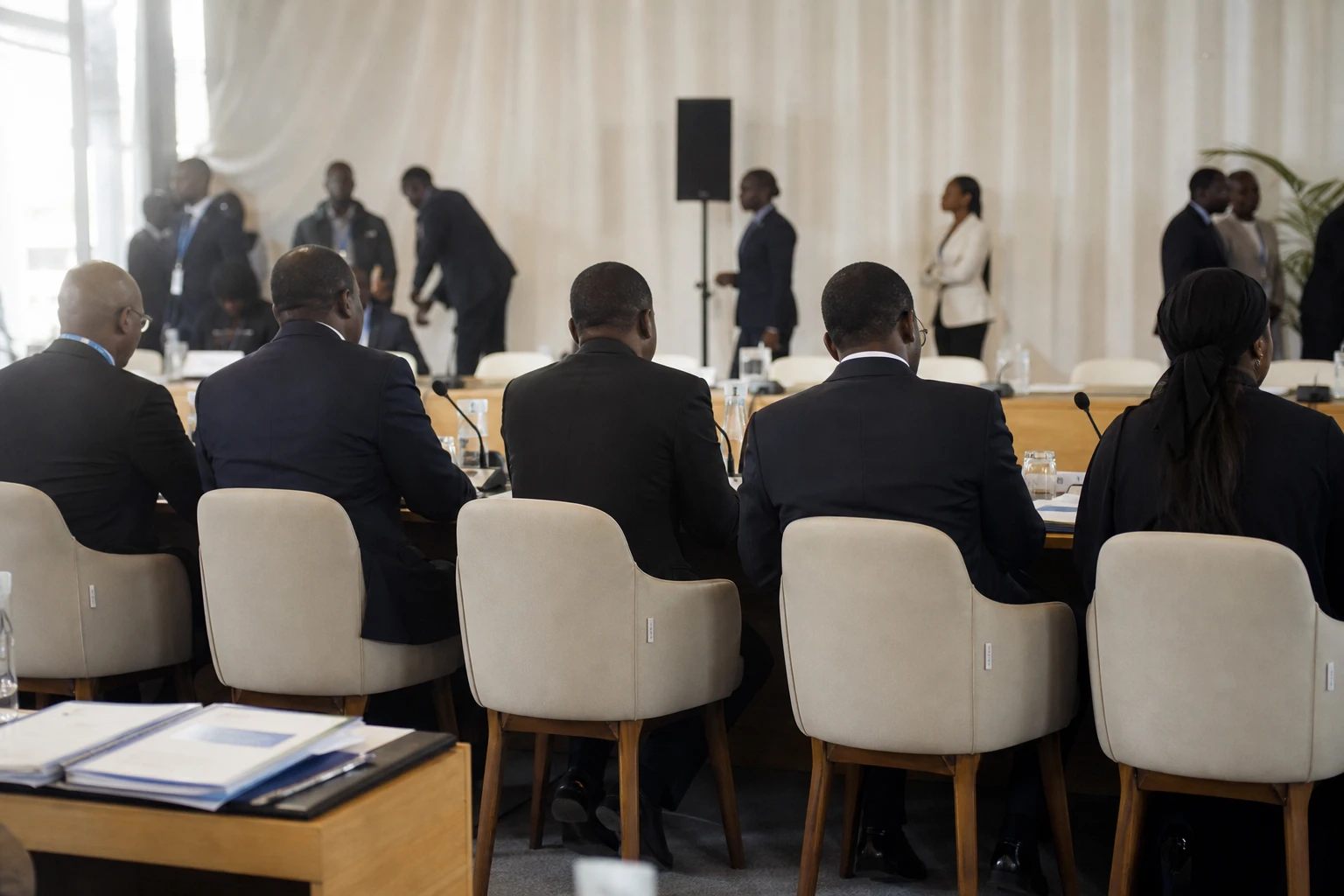
When an indicator falls, look at the mechanics behind the figure
In Senegal, the fall in foreign direct investment says more than just something about incoming capital. It also tells the story of a shift from an economy driven by major construction projects to one now seeking to generate revenue from its productive assets. For Dakar, the real issue is therefore not just the level of flows, but their nature, timing and capacity to support local employment.
The regional context matters. In the WAEMU, where competition between business destinations is fierce, investors immediately compare every signal of stability or uncertainty. Senegal remains one of West Africa’s economic gateways, but the period ushered in by the new government has raised expectations for budget transparency, clear rules and the pace of reform.
What explains Senegal’s fall in FDI
The figure of $37m cited for 2025 should first be treated with caution. It reflects a base effect: the very large start-up investments in oil and gas projects had already been made in previous years. When a field enters production, spending on construction, equipment and infrastructure no longer inflates FDI flows. The peak then gives way to a much lower figure, without this necessarily meaning that economic interest in the country has collapsed.
This point is essential for Sangomar. Woodside confirmed that production there began in June 2024, and the company described 2025 as the project’s first full year of operation. In this kind of project, the initial investment is massive, but it is not recorded in the same way once the asset starts producing oil. Senegal is therefore moving from a phase of receiving capital to one of generating revenue, changing how FDI statistics should be interpreted.
The same mechanism applies to gas from GTA, the Grand Tortue Ahmeyim project, led by BP and other partners. Here, too, the logic follows a conventional industrial cycle: the largest sums come before production begins. Once operations are under way, investment flows ease, even as the asset continues to contribute to exports, royalties and subcontracting activity.
There is, however, a second, more political dimension. Since 2025, the Senegalese government has introduced a series of tax and legal reforms. In September, the National Assembly adopted a new Investment Code, presented as a tool to address the shortcomings of the 2004 legislation and improve the business environment. At the same time, the authorities have stressed the need to finance more of the economy domestically — in other words, to mobilise national resources more effectively.
These signals reassure some business leaders, but they also raise questions among certain investors. The government talks of de-risking projects, spreading investment across the country and creating growth hubs outside Dakar. The parliamentary opposition, meanwhile, has warned that taxation could be too broad, arguing that it could push capital towards other WAEMU countries. In other words, the debate is not only about the volume of FDI, but about the balance between attractiveness, fiscal sovereignty and a predictable regulatory framework.
A third factor weighs on financing decisions: the relationship with the International Monetary Fund. After the under-reporting of debt and the deficit over the 2019-2023 period came to light, the country had to introduce corrective measures. In June 2026, the IMF said discussions were still under way on a new programme and that fiscal and debt vulnerabilities remained high, despite growth supported by hydrocarbons. For investors, this kind of episode matters as much as the reforms on paper. It shapes perceptions of country risk.
The government, for its part, does not deny the tension. Instead, it emphasises a transition: less dependence on major announcements, and more tax revenue, structured partnerships and better-secured projects. The Invest in Senegal forum held in Diamniadio in October 2025 showcased this new approach. The authorities used it to promote a more attractive legal framework, greater regulatory stability and a commitment to transparency intended to restore confidence.
A signal from Senegal that reaches beyond Dakar
For Senegalese people, the stakes are tangible. A statistical fall in FDI does not automatically mean less activity at ports, fewer orders for subcontractors or lower state revenues. But it may slow new industrial projects, especially if the international financial environment remains cautious. Cities such as Dakar, Diamniadio and Saint-Louis are not affected in the same way as rural areas, where employment depends more on agriculture, local processing and public services.
Across West Africa, Senegal’s case is a reminder of a simple rule: a major extractive project can drive FDI higher for several years, then cause the figure to fall sharply once construction is complete. This applies to Senegal as it does to other economies in the region. Comparisons with other WAEMU countries therefore remain useful, but they must distinguish between construction-phase flows, operational investment and the quality of the governance framework.
At the continental level, the picture is just as clear. UNCTAD’s 2025 report shows that Africa saw an overall rebound in FDI in 2024, but with flows heavily concentrated geographically. In this landscape, Senegal is not necessarily falling behind; it is entering a phase in which the value of investment depends less on mega-projects at launch and more on its ability to turn hydrocarbon revenues, reforms to the Investment Code and regional projects into a sustainable productive base. The question to watch now is whether this translates into broader economic activity: as production rises, does the real economy follow beyond the extractive sector alone?