Algeria
 Egypt
 Libya
 Morocco
 Sudan
 Tunisia
 Benin
 Burkina Faso
 Cabo Verde
 Côte d'Ivoire
 Ghana
 Guinea
 Guinea-Bissau
 Liberia
 Mali
 Mauritania
 Niger
 Nigeria
 Senegal
 Sierra Leone
 The Gambia
 Togo
 Cameroon
 Central African Republic
 Chad
 Equatorial Guinea
 Gabon
 Republic of the Congo
 São Tomé and Príncipe
 Burundi
 Comoros
 Djibouti
 Eritrea
 Ethiopia
 Kenya
 Madagascar
 Malawi
 Mauritius
 Mozambique
 Rwanda
 Seychelles
 Somalia
 South Sudan
 Tanzania
 Uganda
 Angola
 Botswana
 Eswatini
 Lesotho
 Namibia
 South Africa
 Zambia
 Zimbabwe
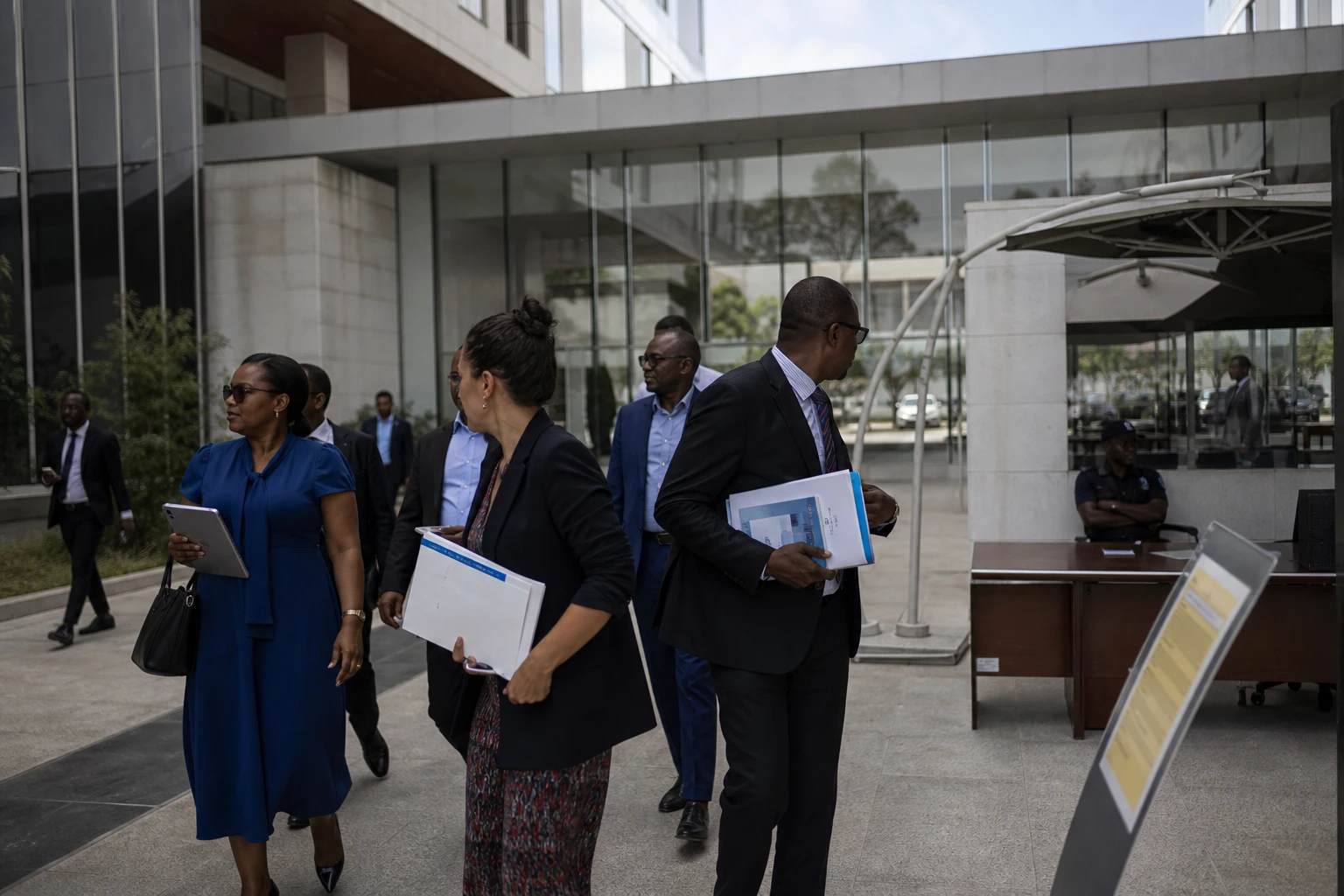
An announcement whose significance lies mainly in what comes next
In the east of the Democratic Republic of the Congo, the words “surrender” and “disarmament” never close a case on their own. Instead, they open a more difficult battle: verifying who actually lays down their weapons, where the fighters will be cantoned, and who will guarantee civilians’ safety during the transition.
The latest announcement on the Democratic Forces for the Liberation of Rwanda, better known by the acronym FDLR, is part of this long process. It concerns the security of North Kivu and South Kivu, relations between Kinshasa and Kigali, and the implementation of the peace agreement signed in Washington on 27 June 2025 by the DRC and Rwanda. The agreement, backed by the United States and monitored by regional mechanisms, provides in particular for the neutralisation of the FDLR and the gradual lifting of Rwanda’s so-called defensive measures.
In Kinshasa, the Minister for Regional Integration, Floribert Anzuluni, presented this stage as the result of a process under way for several months: awareness-raising on disarmament, followed by a phase of military positioning, before a demobilisation protocol was drawn up. An African source reported on 23 July that a document said to have been initialled by an FDLR political official was already circulating in diplomatic channels, confirming that the discussions had not been improvised at the last minute.
What the protocol says—and what it does not yet say
The core of the announcement is clear: the fighters concerned would undertake to lay down their weapons, be cantoned at a site far from combat zones, and then return to Rwanda or be received in a third country if a solution can be found. Those wanted by the courts would have to answer for their actions. But several points remain open: the exact location of the cantonment, the timetable, the cost of the operation and the monitoring mechanism. So far, no solid public details have been given on these matters.
This grey area matters. In eastern Congo, past experience has often shown that a text can exist without having an immediate effect on the ground. Implementation almost always depends on a complete chain: military command, political oversight, funding, logistics, identification of fighters and security at gathering sites. Without this, the risk is simple: a major announcement in Kinshasa, but little change in the villages living under the threat of weapons.
The Congolese government still needs to publish an operational plan with a timetable, budget and division of responsibilities. That document will show whether the announcement marks a genuine turning point or is merely a diplomatic manoeuvre. The DRC has also mobilised external partners, presenting the protocol to several African and European capitals, as well as to the diplomatic corps accredited in Kinshasa.
The FDLR: a longstanding issue still used as leverage
The FDLR is a Rwandan armed group that has been present in eastern DRC for decades. UN and Rwandan sources recall that it originally emerged from former Rwandan exiles and elements linked to the former Rwandan Armed Forces and the Interahamwe militias, perpetrators of the 1994 genocide against the Tutsi. This history explains the political weight of the issue. It also explains why Kigali regularly cites this threat to justify its security demands of Kinshasa.
But in the Congolese reality, the issue extends far beyond the Rwandan perspective. For Kinshasa, the FDLR are also one element in a much broader landscape: several armed groups operate in the east, in an area where local conflicts, trafficking, land disputes, foreign armies, community militias and war economies coexist. The Congolese government argues that the FDLR question cannot be separated from incursions by Rwanda and the fighting against the AFC/M23, a rebellion active in North Kivu and South Kivu.
In this context, the Washington agreement established a balance: the DRC must neutralise the FDLR, while Rwanda must lift its military measures and respect Congolese sovereignty. In a recent communication, the UN recalled that implementation of the agreement remains tied to the practical fulfilment of commitments by both sides. In other words, each is waiting for proof.
Security, diplomacy and power dynamics
Kigali’s response was immediate and unequivocal. The Rwandan authorities rejected the Congolese announcement, deeming it inconsistent with the Washington agreement and presenting it as a political manoeuvre. This refusal is not merely rhetorical. It shows that the battle is not only about weapons, but also about the diplomatic narrative: who is honouring their commitments, who is blocking the process, and who bears responsibility for the escalation in the Kivus.
For the Congolese authorities, the stakes are twofold. First, they must show they can make progress on an issue long used against them. Then they must persuade others that this progress can ease external pressure without weakening national sovereignty. It is a delicate task, because people in the east are waiting above all for visible results: fewer forced displacements, fewer abandoned villages, fewer blocked roads, and fewer illegal taxes on markets and fields.
At the regional level, the issue goes beyond bilateral relations. The joint security mechanism, which met in mid-July 2026 with the United States, Qatar, Togo and the African Union Commission, confirmed that the parties remained committed to the swift implementation of the Washington agreements. In short, the capitals involved want to prevent a dispute over cantonment or the timetable from derailing the entire framework.
What to watch in the coming days
The real test will begin with the operational plan promised by Kinshasa. If it sets out a secure cantonment site, a verification mechanism, guarantees for fighters who surrender and arrangements for voluntary repatriation to Rwanda, the announcement can be judged serious. Otherwise, it will remain a political signal.
The continental significance is clear. In the Great Lakes region, every development concerning the FDLR is watched far beyond the DRC. It affects relations between neighbouring states, the African Union’s credibility as a mediator, and the ability of regional mechanisms to address cross-border conflicts without delegating the solution entirely to external powers. For the DRC, a pivotal country in Central Africa, the challenge is also to show that a negotiated peace can be compatible with defending its territory, protecting civilians and gradually normalising its regional relations.