Algeria
 Egypt
 Libya
 Morocco
 Sudan
 Tunisia
 Benin
 Burkina Faso
 Cabo Verde
 Côte d'Ivoire
 Ghana
 Guinea
 Guinea-Bissau
 Liberia
 Mali
 Niger
 Nigeria
 Senegal
 Sierra Leone
 The Gambia
 Togo
 Cameroon
 Central African Republic
 Chad
 DR Congo
 Equatorial Guinea
 Gabon
 Republic of the Congo
 São Tomé and Príncipe
 Burundi
 Comoros
 Djibouti
 Eritrea
 Ethiopia
 Kenya
 Madagascar
 Malawi
 Mauritius
 Mozambique
 Rwanda
 Seychelles
 Somalia
 South Sudan
 Tanzania
 Uganda
 Angola
 Botswana
 Eswatini
 Lesotho
 Namibia
 South Africa
 Zambia
 Zimbabwe
In Nouakchott, digital sovereignty now also depends on registers
In a state where every reliable document matters, the question is no longer simply how to digitise services. It is who controls the proof, the data and the record. It is in this context that Mauritania is taking its thinking on blockchain further, a technology designed to secure records and limit tampering.
The initiative has not come out of nowhere. Since the 2022-2025 Digital Agenda, the Mauritanian government has said it wants to make digital technology a lever for administrative modernisation, social inclusion and competitiveness. The official document also cites the development of infrastructure, digital skills and local innovation. In the same vein, the ministry is preparing a Tier 3 data centre in Nouakchott, presented as a tool for data security, integrity and sovereignty.
Workshop in Nouakchott to frame a still-experimental tool
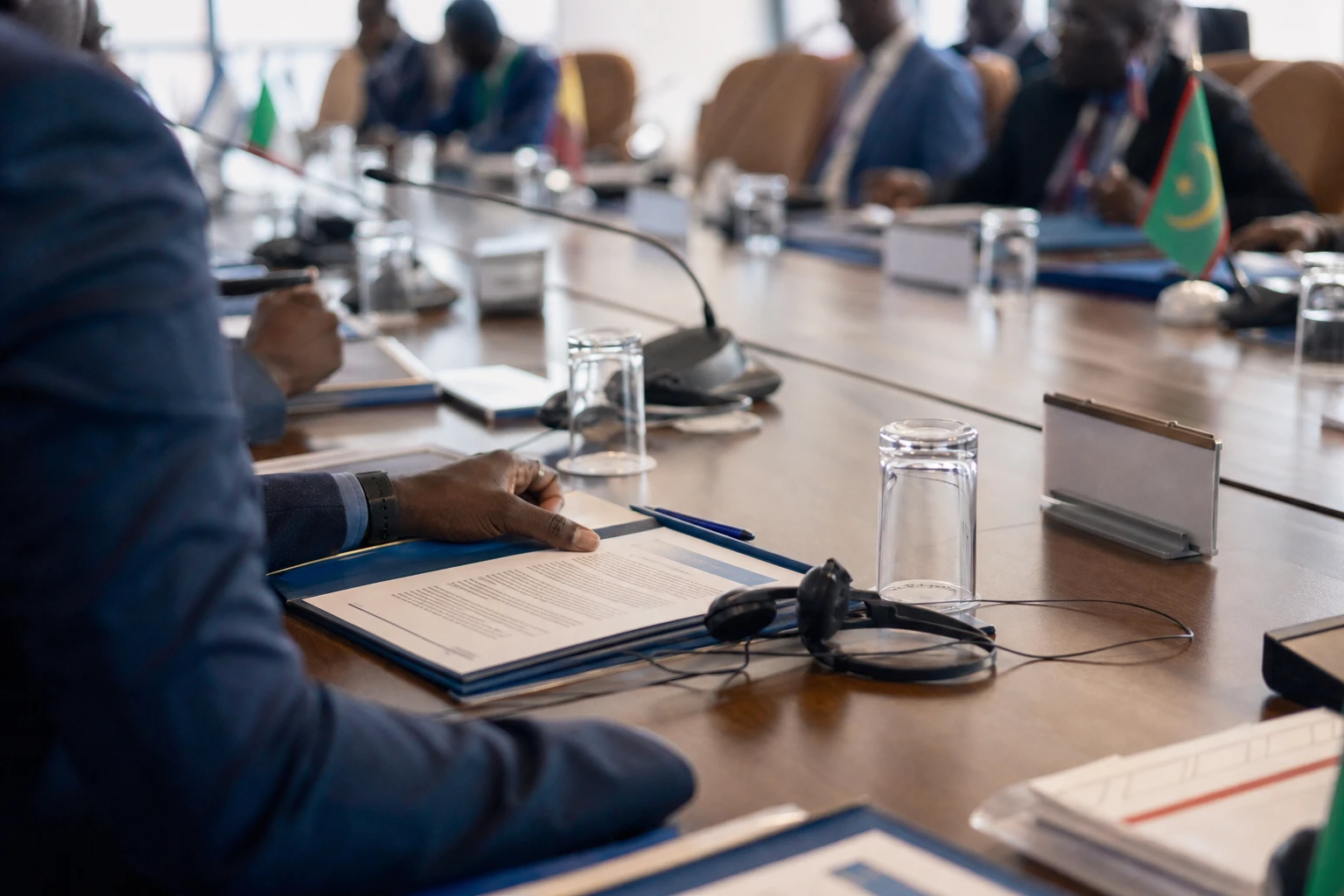
On 27 July 2026, Mauritania’s Ministry of Digital Transformation and Administrative Modernisation opened a workshop in Nouakchott on the use of blockchain and the governance of digital data, in partnership with the United Nations Development Programme (UNDP). National media confirmed that the session was opened by Minister Ahmed Salem Ould Bede as part of the ATNIMA project, which is dedicated to accelerating digital transformation and modernising the administration.
According to the ministry’s statement, reported by the Mauritanian News Agency in November 2025, the roadmap under preparation is intended to lead to a clear national policy on blockchain. Its stated aim is to test its use in practical areas: land, trade, public procurement, digital identity and the monitoring of natural resources. The same source says the process began with a consultative workshop held in Nouakchott in November 2025.
The minister argued for a pragmatic approach. The idea is not to import a fashionable solution, but to identify cases where blockchain offers real added value to citizens. In the official statement, the technology is presented as a way to make administrative documents more reliable, secure transactions and make digital registers more robust.
What blockchain can change, and what it cannot solve
The debate is useful because it puts the technology in its proper place. The OECD says blockchain can be used to manage identities, share information securely between government bodies, conduct transactions and support certain forms of electronic voting. But the organisation also highlights its limitations: confidentiality, storage, data quality, governance, cost, scalability and energy consumption, depending on the models used.
In other words, blockchain cannot by itself resolve administrative delays or coordination failures between departments. It can strengthen traceability. It can also reduce some risks of forgery. But it first depends on a sound legal framework, reliable data quality and trained teams. That is why the ministry links this policy to updating university curricula, training new skills and launching pilot projects.
For citizens, the stakes are tangible. A more secure register could make a land procedure easier, speed up a commercial file or reduce hidden costs in public-sector dealings. For the administration, the expected gains are fewer internal bottlenecks and better traceability. The government hopes young entrepreneurs will create start-ups specialising in data, digital auditing or trusted infrastructure. The 2022-2025 Digital Agenda already aimed to develop national digital champions and better integrate the innovation ecosystem into public procurement.
Mauritania seeks an African model for digital trust
Mauritania’s case is part of a broader trend across the continent. Several African governments are seeking to modernise services without relying solely on foreign platforms, while retaining control of public data. In Mauritania, this ambition takes on a particular dimension: the country is not a member of ECOWAS but remains closely linked to West Africa, while also belonging institutionally to the Arab Maghreb Union. Its position at a crossroads requires it to consider interoperability, security and cross-border applications.
This direction is also political. In an administration often faced with cumbersome procedures, modernisation means more than simply computerising processes. It requires reorganising decision-making channels, clarifying responsibilities and building trust. This is precisely what the Tier 3 data centre announced by the ministry is intended to support in Nouakchott: hosting government applications and storing citizens’ data in a framework presented as more secure.
The issue’s continental significance therefore lies less in blockchain itself than in the method. Mauritania is proceeding in stages: digital strategy, legal framework, consultation workshops, targeted experimentation and the search for technical partners. It is a cautious way to avoid grand technological rhetoric without practical application. The next test will be whether this policy can be translated into visible services, with shorter delays, more reliable registers and better-connected government bodies.