Algeria
 Egypt
 Libya
 Morocco
 Sudan
 Tunisia
 Benin
 Burkina Faso
 Cabo Verde
 Côte d'Ivoire
 Ghana
 Guinea
 Guinea-Bissau
 Liberia
 Mali
 Mauritania
 Niger
 Nigeria
 Senegal
 Sierra Leone
 The Gambia
 Togo
 Cameroon
 Central African Republic
 Chad
 DR Congo
 Equatorial Guinea
 Gabon
 Republic of the Congo
 São Tomé and Príncipe
 Burundi
 Comoros
 Djibouti
 Eritrea
 Ethiopia
 Kenya
 Madagascar
 Malawi
 Mauritius
 Mozambique
 Rwanda
 Seychelles
 Somalia
 South Sudan
 Uganda
 Angola
 Botswana
 Eswatini
 Lesotho
 Namibia
 South Africa
 Zambia
 Zimbabwe
In Dar es Salaam, the streets need not be noisy to alarm the authorities
In Tanzania, a date can sometimes be enough to put the entire public sphere on edge. 7 July, the day of Saba Saba, has become a political marker as well as a date of remembrance. This year again, the mobilisation announced around the day was contained by a heavy police presence, followed by a wave of arrests that the opposition described as a strategy of intimidation.
The country did not enter this period without baggage. Since the post-election violence of 2025, Tanzania’s political scene has been marked by lasting tension. A state-appointed commission concluded in April 2026 that at least 518 people had been killed during unrest linked to the 29 October 2025 election, a figure cited by several international and Tanzanian media outlets. The opposition puts the toll much higher.
Arrests stemming from a call to protest, then recast as terrorism cases
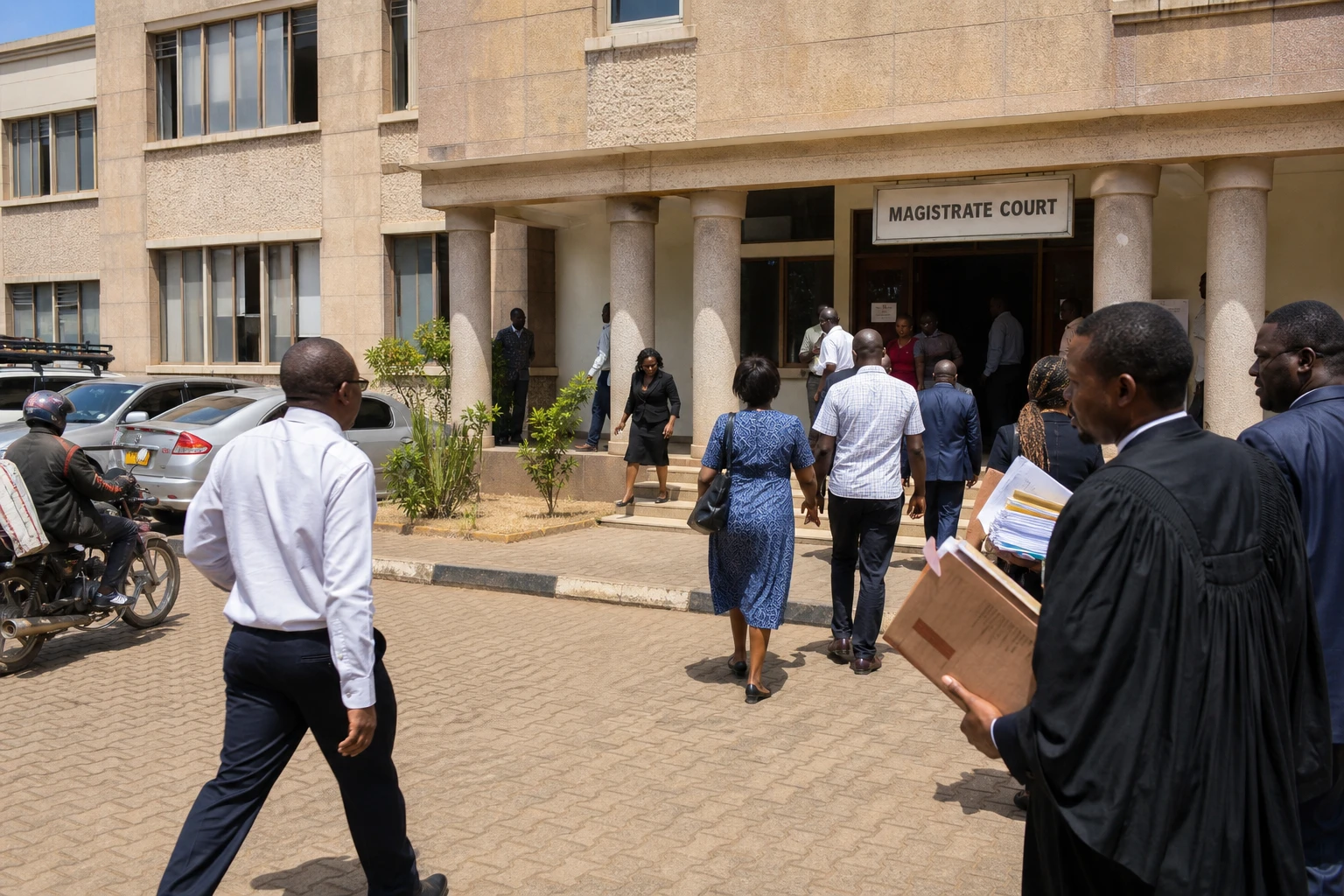
According to Chadema, the main opposition party, 61 people arrested in early July have been charged with terrorism in recent days. The party says they were arrested for calling for protests or taking part in a demonstration planned for 7 July. The same party says about 70 other people detained around the same time remain in custody and are waiting to learn their legal fate.
Police, for their part, announced on 9 July the arrest of 130 people suspected of having “planned” criminal acts or incited them through messages linked to the protests. This chronology matters because it shows a gradual shift: first preventive arrests, then serious charges, with anti-terrorism law used for acts the opposition describes as simple political activity.
Chadema categorically rejects this reclassification. The party says that “taking part in a demonstration is not an act of terrorism” and argues that the authorities are trying to turn a constitutional right into a criminal offence. Opposition leader Tundu Lissu is himself named in the same cases, according to several media outlets, giving the affair a significance that extends beyond rank-and-file activists.
The choice of 7 July was no accident. Saba Saba refers to a landmark in Tanzania’s political history, linked to the founding of TANU by Julius Nyerere, the party that led Tanganyika to independence. In a country where national memory is strongly shaped by the legacy of independence, the date serves both as a civic symbol and as a test for the authorities.
Beyond the trial, a battle over Tanzania’s political space
The current episode is part of a broader crackdown. On 26 June, Tanzania’s interior minister announced the suspension of political gatherings nationwide in the name of security. Tanzanian media confirmed that the decision explicitly targeted partisan activities and had been presented as temporary, with no clear end date.
For the authorities, the central argument remains public order. For the opposition and human rights organisations, the question is quite different: whether criminal justice can be used to deter dissent. The sensitive issue is not only the number of people arrested. It is also the nature of the charges, the length of pre-trial detention and the lack of bail for certain terrorism offences.
This tension affects different groups in the country in different ways. In Dar es Salaam and other major cities, it reduces the room for manoeuvre available to political parties, lawyers and journalists. In the regions, it acts mainly as a deterrent, in a context where many citizens follow politics without belonging to party structures. For informal traders, transport operators and small employers, every closure of public space can also mean less movement, fewer customers and greater uncertainty.
The case also points to a broader institutional issue. Tanzania holds a particular place in the East African Community, whose headquarters are in Arusha, and its political trajectory affects the regional image of a bloc that champions economic integration and the movement of people. When a member state responds to dissent with the fullest use of the courts, the debate extends beyond its borders: it touches on the democratic credibility of the entire region.
In the short term, the Tanzania case will hinge on two fronts. On one, the legal proceedings following the charges announced in early July. On the other, the political handling of the memory of the 2025 election violence, whose official death toll of 518 has reopened wounds without dispelling suspicions. In Dodoma, the country’s political capital, the authorities say they are defending stability. The opposition, meanwhile, says it is defending a fundamental right. Between the two, Tanzania’s civic space continues to shrink.