
 Algeria
 Egypt
 Libya
 Morocco
 Sudan
 Tunisia
 Benin
 Burkina Faso
 Cabo Verde
 Côte d'Ivoire
 Ghana
 Guinea
 Guinea-Bissau
 Liberia
 Mali
 Mauritania
 Niger
 Nigeria
 Sierra Leone
 The Gambia
 Togo
 Cameroon
 Central African Republic
 Chad
 DR Congo
 Equatorial Guinea
 Gabon
 Republic of the Congo
 São Tomé and Príncipe
 Burundi
 Comoros
 Djibouti
 Eritrea
 Ethiopia
 Kenya
 Madagascar
 Malawi
 Mauritius
 Mozambique
 Rwanda
 Seychelles
 Somalia
 South Sudan
 Tanzania
 Uganda
 Angola
 Botswana
 Eswatini
 Lesotho
 Namibia
 South Africa
 Zambia
 Zimbabwe
An electricity pledge on a larger scale
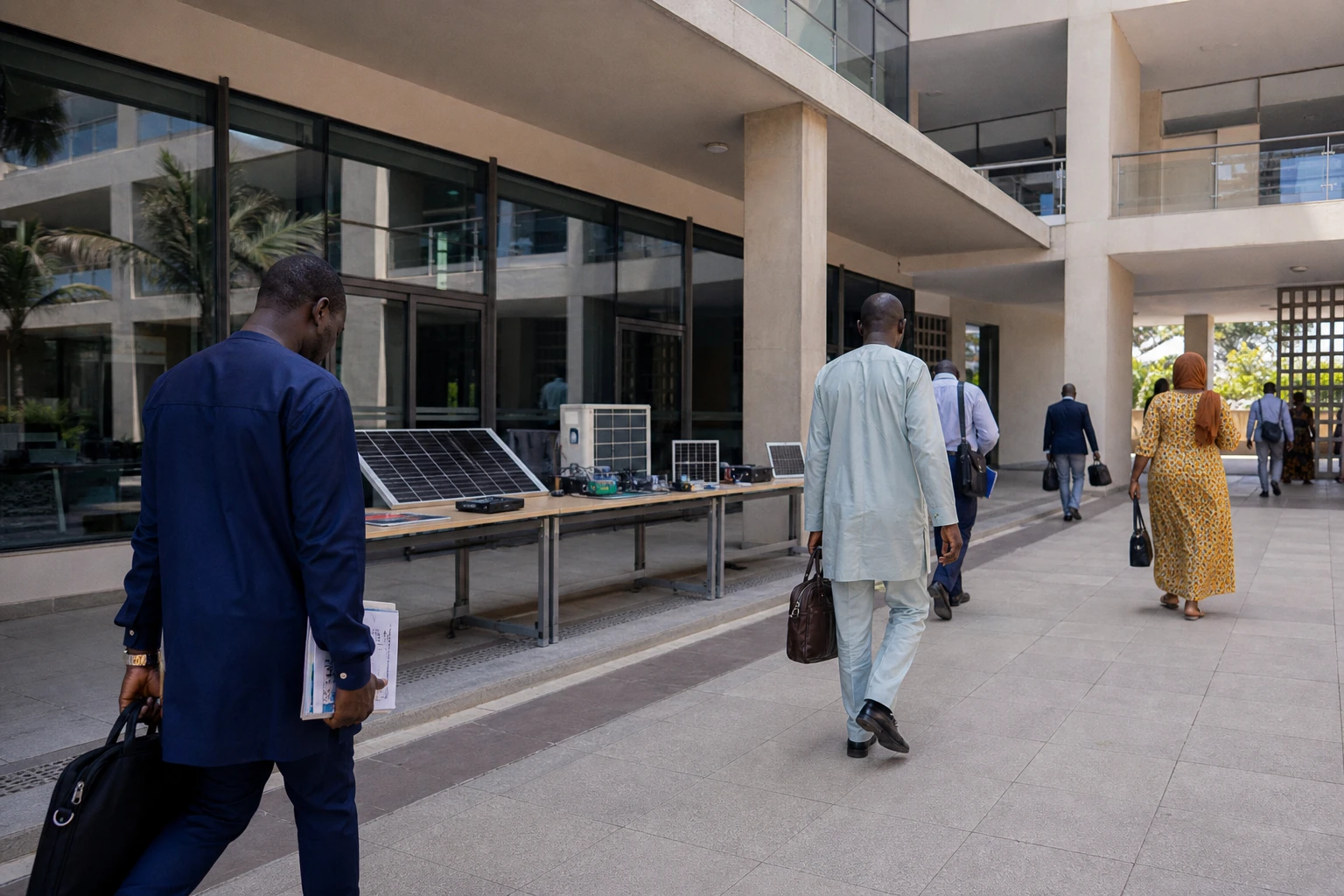
In rural Senegal, electricity does more than switch on light bulbs. It also determines whether produce can be preserved, water pumped, children study in the evening and small businesses support a household. This is where part of Senegal’s drive to close regional gaps is now taking shape, in a country where Dakar and the major cities are advancing faster than rural areas.
On 27 July 2026, the Senegalese Rural Electrification Agency announced the signing of a €120m commercial contract with German company GAUFF for a second phase of a project covering at least 753 villages. The stated goal remains the same: to bring access to electricity closer to the promise of universal access by 2029.
Senegal steps up efforts in an uneven landscape
The project forms part of a national trajectory already under way. Senegal’s energy ministry says the rural electrification rate reached 65.84% in 2023, up from 42.30% in 2018. The same source notes that Senegal aims to achieve universal access to electricity by 2025, an internal deadline more ambitious than the one often cited in more recent planning documents.
The “National Energy Pact” sets out a broader picture: national access stood at 84% in 2023, but that average conceals a sharp divide between urban areas, at 97.1%, and rural areas, at 64.5%. The World Bank sees this as a structural challenge involving financing, territorial coverage and sector governance.
This contrast explains the growing role of mini-grids and decentralised solar solutions. The choice is not incidental. In remote areas, connecting every village to the conventional grid is often more expensive and takes longer. Solar mini-grids can be deployed more quickly while supporting local needs that are immediately useful.
What the second phase entails
According to information released by ASER and reported by the Senegalese press, the new phase provides for the installation of 183 solar mini-grids, household connections and indoor installations. About 5% of the budget is also set aside to support income-generating activities in the target areas. The project is therefore about more than connecting homes; it aims to create a basic economic foundation around the energy available.
ASER director-general Jean-Michel Sène describes this phase as a tool for inclusion and local development. The approach is consistent with the first phase of the partnership, launched in 2019, which was intended to cover 300 localities and ultimately reached 410, according to GAUFF. The company says it deployed 372 photovoltaic systems with a combined capacity of 11.83 MWp and 46.24 MWh of storage, benefiting about 205,000 people.
The first phase was financed by KfW IPEX-Bank, a subsidiary of Germany’s state-owned KfW. The authorities, however, have not detailed the source or precise terms of financing for this new stage. That matters because rural electrification projects depend as much on the technical quality of installations as on the financial sustainability of contracts.
A budgetary challenge as well as a social one
Senegal is not starting from scratch, but much remains to be done. The country estimates that it needs $443m to develop mini-grids and close the rural gap, including $292m in public funding and $151m from the private sector. This shows that rural electrification is not merely a social policy issue; it is also a question of financial architecture.
This constraint explains the use of hybrid partnerships, in which the state sets the direction, private operators carry out the work and international lenders support the effort. Senegal is also part of a broader energy framework, shaped by the Just Energy Transition Partnership launched in 2023 with several international partners, including Germany, to mobilise up to €2.5bn.
On the ground, the impact will vary. For rural families, a mini-grid can cut the cost of kerosene, make household activities more reliable and provide access to basic services. For local authorities, it can boost economic appeal. For young people and women, it can also support local incomes, particularly in processing, refrigeration and retail.
A project to watch beyond Senegal
This issue extends beyond the country’s borders. In West Africa, access to energy remains a test of credibility for governments promising industrialisation, food sovereignty and local jobs. ECOWAS has long promoted regional interconnection as a partial solution, but remote rural areas remain heavily reliant on standalone systems. Senegal’s case therefore illustrates a broader trend: the growing use of mini-grids as a tool for territorial development.
For Dakar, the issue is also political. With three years to go until the 2029 deadline for universal access cited by the authorities, the pace of implementation will matter as much as the announcements. If the 753 targeted villages are indeed covered, Senegal will strengthen one of the region’s most prominent rural electrification programmes. If delays occur, the gap between urban centres and the country’s interior will remain a major obstacle to balanced development.



