Algeria
 Egypt
 Libya
 Morocco
 Sudan
 Benin
 Burkina Faso
 Cabo Verde
 Côte d'Ivoire
 Ghana
 Guinea
 Guinea-Bissau
 Liberia
 Mali
 Mauritania
 Niger
 Nigeria
 Senegal
 Sierra Leone
 The Gambia
 Togo
 Cameroon
 Central African Republic
 Chad
 DR Congo
 Equatorial Guinea
 Gabon
 Republic of the Congo
 São Tomé and Príncipe
 Burundi
 Comoros
 Djibouti
 Eritrea
 Ethiopia
 Kenya
 Madagascar
 Malawi
 Mauritius
 Mozambique
 Rwanda
 Seychelles
 Somalia
 South Sudan
 Tanzania
 Uganda
 Angola
 Botswana
 Eswatini
 Lesotho
 Namibia
 South Africa
 Zambia
 Zimbabwe
A stage that means more than a concert
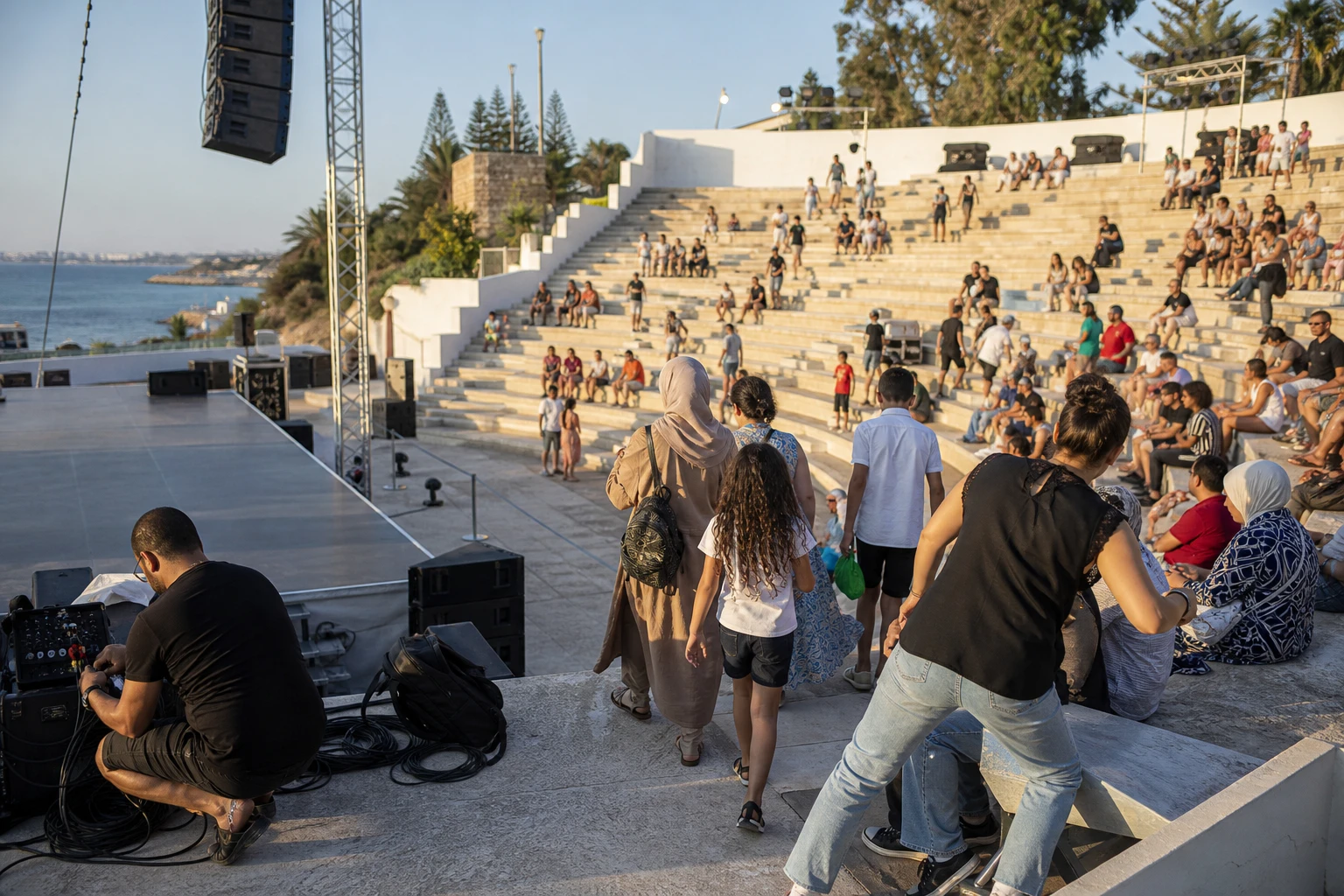
In Tunis, some artists fill a venue. Others cross age groups, neighbourhoods and listening habits. Nordo belongs to the second category. His appearance at Carthage, on the legendary stage of the Roman theatre, was more than a concert. It showed that an artist born out of Tunisian rap can now command a major heritage venue without losing his original audience. The official programme for the 60th Carthage International Festival confirms it: Nordo was announced for 21 July 2026, in an edition that is highly musical and distinctly Tunisian.
The same trend can be seen in Hammamet. The festival listed Nordo for Monday 27 July 2026, as part of a 60th edition intended to encompass more than commercial music, with theatre, dance and concerts. In other words, the artist is moving from one major amphitheatre to another, at two of the country’s most prominent cultural showcases. This is significant in Tunisia, where summer festivals still play a central role in the movement of artists, from the capital to the coast and from institutional stages to the wider public.
Carthage and Hammamet, two public showcases
The Carthage International Festival opened its 60th edition on 16 July 2026 and is scheduled to run until 19 August at the Roman theatre of Carthage. Its line-up brings together Tunisian voices, Arab artists and international guests. Nordo’s place on the bill, alongside established names in Arabic song, says something about changing public tastes and the outlook of festival programmers. The Hammamet festival, meanwhile, is holding its 60th edition from 11 July to 13 August 2026, with 32 performances announced. Together, the events showcase a Tunisian scene no longer confined to a simple opposition between heritage and modernity.
This recognition also comes through cultural institutions. Carthage remains an event backed by the state, its Ministry of Cultural Affairs and a heritage stage steeped in history. The fact that an artist from rap, long confined to the margins of major circuits, has been given a prominent place on the bill marks a form of public validation. Nordo has also previously been presented at Carthage as an artist capable of filling the venue and delivering a full show, reinforcing the sense of an upward trajectory rather than a one-off appearance.
Why Nordo speaks to several Tunisias
Nordo, whose real name is Marwen Jebali, began his career in 2006. The Hammamet festival notes that date and highlights music drawing on Tunisian atmospheres while addressing social and personal themes. This foundation helps explain part of his success: he sings about recognisable experiences, without jargon, with a distinctive voice and lyrics about social relationships, dignity, leaving, family and everyday life. His writing remains urban, but has ceased to be a niche marker.
His strength also lies in his musical range. Programmes and profiles published around his concerts describe an artist able to move from rap to pop, from ballads to more pronounced influences from Arabic music and Afro rhythms. This blend allows him to bring together a broader audience than rap alone. At Carthage and Hammamet, that audience includes teenagers, parents and older spectators. This diversity says something about contemporary urban Tunisia: a society fragmented socially, but still connected by shared cultural references.
Nordo’s success also rests on a carefully managed public image. Sources agree on his discretion and his distance from displays of wealth or ostentation. In Tunisian media, often dominated by controversy, this restraint helps build a connection with the public. It also lends credibility to his lyrics when they address concrete hardships. In a country where young people are still looking for stories that reflect their lives, this consistency matters as much as the quality of the stage production.
What this success says about Tunisian creativity
Nordo’s story goes beyond his own career. It shows that in Tunisia, rap can now enter spaces long reserved for heritage music or established popular song. This is an important signal for artists from working-class neighbourhoods in Tunis, Sfax, Sousse and elsewhere: movement between digital platforms, private venues and public festivals is possible, provided they sustain their careers and develop a language that speaks to the whole country.
The phenomenon also has regional significance. Tunisia remains a cultural crossroads of the Maghreb and the Arab world, even amid economic strain. When a national festival showcases an artist like Nordo, it is not simply celebrating local popularity. It shows that an aesthetic born on the margins can enter the shared repertoire without losing its edge. This is one of the defining features of the 2026 cultural season: making the Tunisian stage a space where memory, audiences and styles meet rather than cancel one another out.
Attention now turns to the end of the summer calendar, with Carthage scheduled to close on 19 August 2026 and Hammamet on 13 August 2026. If the trend continues, Nordo will be more than one of the most visible names of the Tunisian summer. He will also be one of the defining figures of a scene that has found a distinctly Tunisian path between heritage and urban culture.