Algeria
 Egypt
 Libya
 Morocco
 Tunisia
 Benin
 Burkina Faso
 Cabo Verde
 Côte d'Ivoire
 Ghana
 Guinea
 Guinea-Bissau
 Liberia
 Mali
 Mauritania
 Niger
 Nigeria
 Senegal
 Sierra Leone
 The Gambia
 Togo
 Cameroon
 Central African Republic
 Chad
 DR Congo
 Equatorial Guinea
 Gabon
 Republic of the Congo
 São Tomé and Príncipe
 Burundi
 Comoros
 Djibouti
 Eritrea
 Ethiopia
 Kenya
 Madagascar
 Malawi
 Mauritius
 Mozambique
 Rwanda
 Seychelles
 Somalia
 South Sudan
 Tanzania
 Uganda
 Angola
 Botswana
 Eswatini
 Lesotho
 Namibia
 South Africa
 Zambia
 Zimbabwe
El-Obeid, a key to west-central Sudan
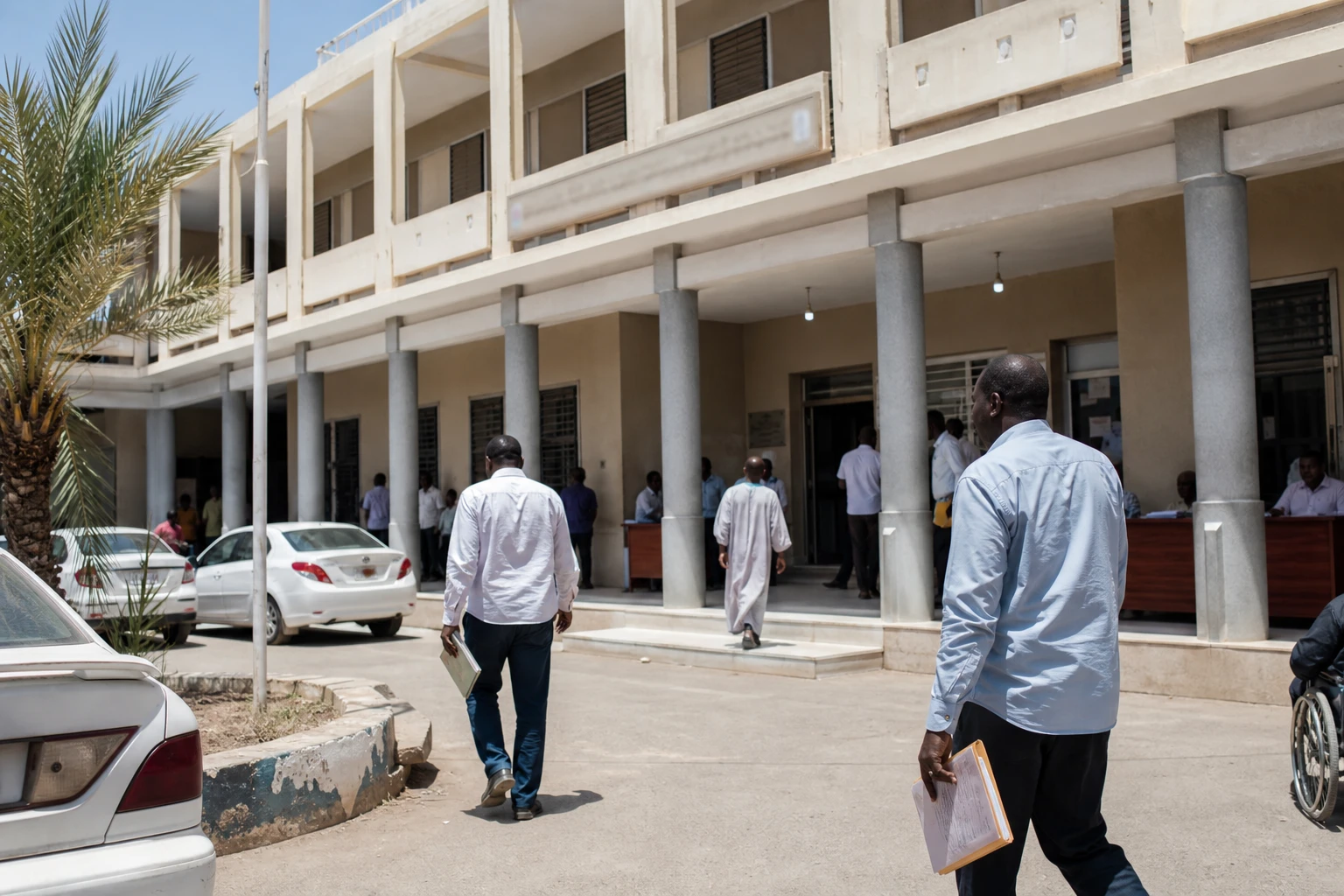
In western Sudan, one city now encapsulates the fragile balance of the war: El-Obeid. It is more than a state capital. It is a road junction linking Khartoum with Kordofan and Darfur, making it a military, commercial and humanitarian transit point. When fighting moves there, supply lines, displaced families and negotiations all take on a different complexion.
The conflict has pitted the Sudanese Armed Forces, loyal to General Abdel Fattah al-Burhan, against the Rapid Support Forces, led by Mohamed Hamdan Daglo, known as Hemedti, since April 2023. For months, the Kordofan region has been a focal point of the front. The United Nations, IGAD and several humanitarian agencies have warned of the pressure on El-Obeid, the capital of North Kordofan, where civilians face the threat of drones, water cuts and disrupted supplies.
These warnings are not new. At the beginning of the summer, the UN was already referring to rising risks around the city, while the World Food Programme described El-Obeid as a new centre of gravity for Sudan’s displacement and hunger crisis. In this war, control of territory is not measured only by the flags planted in a square. It is also measured by the ability to bring in fuel, water, medicine and food.
What Sudanese forces say they have retaken
On 25 July 2026, Sudanese officials and their allies said they had retaken several towns in North Kordofan: Bara, Umm Garfa, Umm Sayala and Jabra al-Sheikh. The advances were said to have resulted from coordinated operations following heavy fighting with the paramilitaries of the Rapid Support Forces. The announcements also credited the army and its partners with securing a wider area around El-Obeid.
This account was reported by several regional media outlets and broadly confirmed by African and Sudanese news dispatches. The central argument is strategic: Bara and nearby towns lie on routes supplying El-Obeid and then continuing towards Darfur. By retaking these points, the army is seeking to ease the pressure on the city and make it harder for the Rapid Support Forces to move around the centre of the country.
But strict caution is needed. On this front, victory claims often circulate before independent confirmation. Fighting in urban and semi-rural areas makes verification difficult. The military authorities say they have inflicted heavy losses on their opponent. The paramilitaries, for their part, often dispute the army’s account or publish their own videos. In this context, territorial gains should be treated as serious claims, but ones that remain partly impossible to verify independently.
One point, however, is firmly established: El-Obeid remains a wartime hub. As early as mid-June, UN sources reported a build-up of reinforcements around the city and the risk of an imminent ground offensive. A few days later, humanitarian agencies noted that drone strikes on vital infrastructure were intensifying almost daily. The battle is therefore not just about hills or villages. It is also about control of logistical corridors.
A military battle, but also a civilian and political one
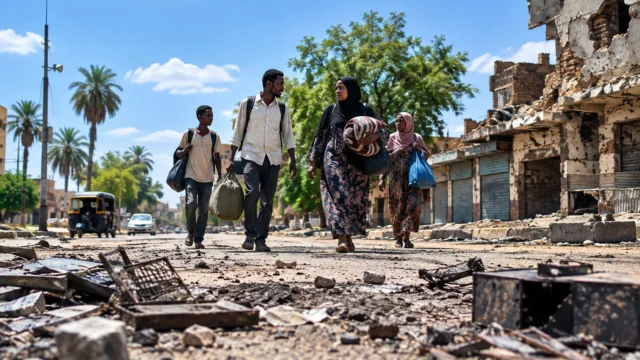
North Kordofan is bearing the most tangible effects of this war. Convoys are slowed, prices are rising and displaced people’s neighbourhoods are overcrowded. The World Food Programme has said that El-Obeid is hosting hundreds of thousands of internally displaced people, potentially doubling the city’s population. Water, fuel and food are scarce. The city is also receiving families from South and West Kordofan, evidence that the front is not confined to a single province.
The strain on healthcare is immense. The United Nations Population Fund has reported that strikes have targeted electrical substations, fuel stations, water facilities and health infrastructure. This is undermining basic services and making access to healthcare more difficult for women and girls, particularly amid mass displacement. At the beginning of July, the International Committee of the Red Cross had already reported assisting tens of thousands of people in the area, a sign that humanitarian needs are growing faster than local capacity.
The battle also has political significance. Since the army retook Khartoum, Sudan’s military command has sought to show that it can seize the initiative beyond the capital. Retaking territory in and around El-Obeid enables General al-Burhan to strengthen his position in diplomatic discussions. It is a way to enter negotiations with more leverage, even as the war remains unresolved and deadly.
For the population, the stakes are different. A military advance may reopen a road, but it guarantees neither lasting security nor a swift return to normality. El-Obeid’s residents face two risks: a siege and drones on the one hand, and an expansion of fighting towards residential neighbourhoods on the other. Traders, transport operators and displaced families all depend on the same factor: a minimum level of stability on the roads. Without it, the local economy remains paralysed.
What Kordofan says about the rest of Sudan
What is happening in North Kordofan extends beyond Sudan itself. The region links the east, centre and west of the country. It therefore affects flows between Khartoum, Darfur and neighbouring states. When El-Obeid is under threat, Sudan’s entire logistical system is weakened. And when fighting shifts, humanitarian agencies have to redraw their access plans, often at short notice.
IGAD, the East African regional organisation to which Sudan remains connected, has again recently called for an end to hostilities around El-Obeid and for dialogue without preconditions. The message is clear: there is no lasting military solution. The African Union and the partners in the diplomatic “Quintet” also insist on an inclusive political process led by Sudanese people themselves. This perspective matters because it places the war in a regional context, where Sudan’s security has repercussions for its neighbours.
The current phase above all shows a war that has become mobile. After Khartoum, the fronts are shifting towards Kordofan, Darfur and other secondary routes. Every town retaken or lost changes the balance of power, but none resolves the underlying conflict. The coming weeks will show whether the army’s claims around Bara and the other towns in North Kordofan really open a secure corridor to El-Obeid, or whether they are just another episode in a war of attrition in which civilians pay the heaviest price.
In this battle, the real question is therefore not only who is advancing. It is whether a city such as El-Obeid can continue to function as a place to live, a transit point and a humanitarian hub, or whether it will become another symbol of the erosion of state control in Sudan.