Algeria
 Egypt
 Libya
 Morocco
 Sudan
 Tunisia
 Benin
 Burkina Faso
 Cabo Verde
 Côte d'Ivoire
 Ghana
 Guinea
 Guinea-Bissau
 Liberia
 Mauritania
 Niger
 Nigeria
 Senegal
 Sierra Leone
 The Gambia
 Togo
 Cameroon
 Central African Republic
 Chad
 DR Congo
 Equatorial Guinea
 Gabon
 Republic of the Congo
 São Tomé and Príncipe
 Burundi
 Comoros
 Djibouti
 Eritrea
 Ethiopia
 Kenya
 Madagascar
 Malawi
 Mauritius
 Mozambique
 Rwanda
 Seychelles
 Somalia
 South Sudan
 Tanzania
 Uganda
 Angola
 Botswana
 Eswatini
 Lesotho
 Namibia
 South Africa
 Zambia
 Zimbabwe
When justice becomes a test for the Malian press
In Mali, a legal case goes beyond the circumstances of a single journalist. It raises questions about the place of the law, the boundary between public criticism and an offence, and a country in transition’s ability to protect professional speech without weakening its institutions. In a capital such as Bamako, where political and media life remains under close scrutiny, every ruling against a journalist is read far beyond the courtroom.
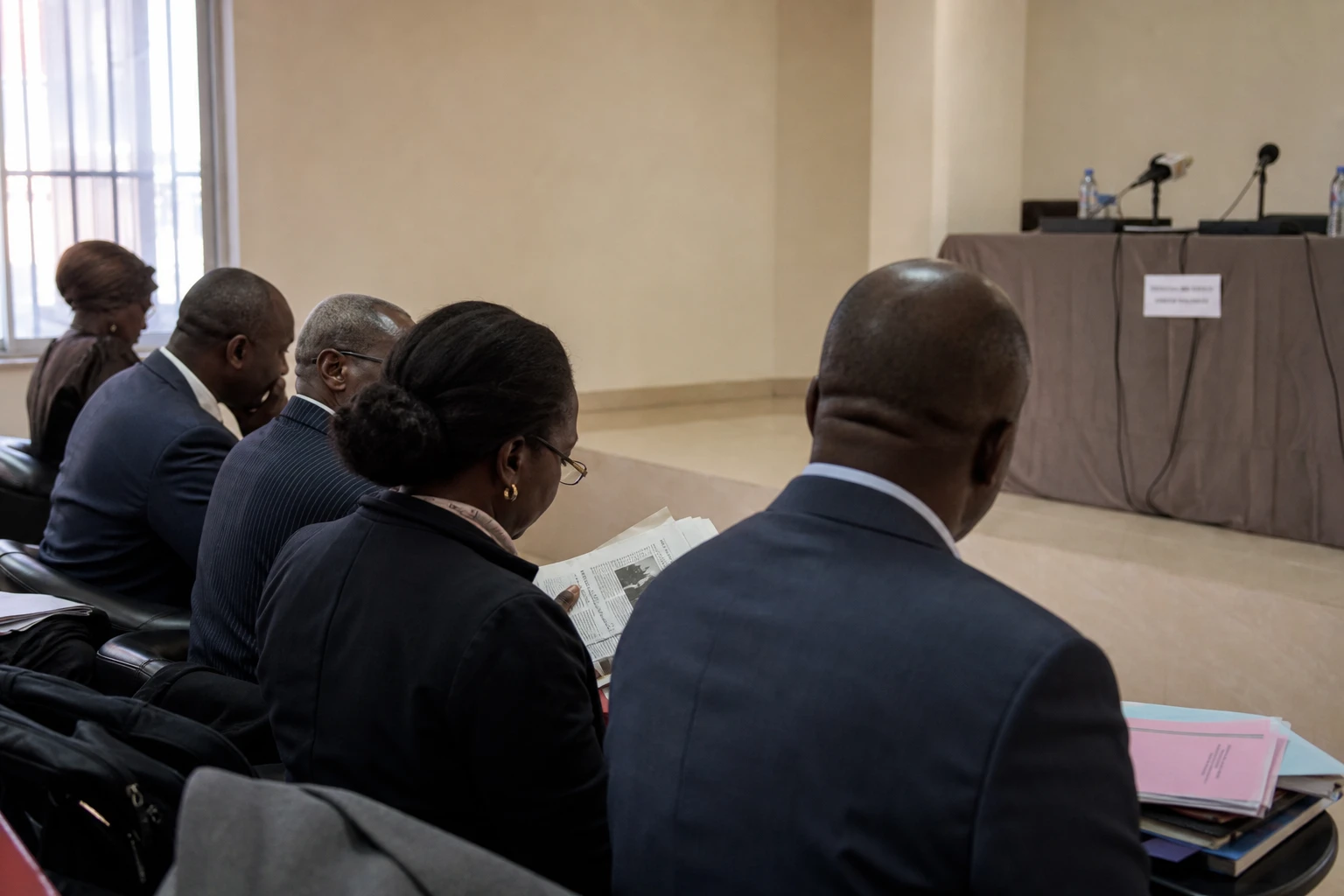
This Monday, 27 July, Chahana Takiou, editor of the newspaper 22 Septembre, is due to appear before the specialised judicial division responsible for combating cybercrime. He has been detained since early June, following remarks made at an official event in Bamako about the use of the law against journalists. Those close to him say he is approaching the hearing with faith and calm. The context is sensitive, as Mali has for several years seen growing tension between security regulation of public debate and the practice of journalism.
A case born in an atmosphere of tension
According to corroborated information, the journalist had denounced in early June what he considered a misuse of the law: in his view, magistrates were circumventing the press law in favour of cybercrime proceedings. Shortly afterwards, the prosecutor of the relevant judicial division remanded him in custody on a charge of “undermining the credibility of the state through the judicial institution”. This highly sensitive charge turns a position on the workings of justice into a criminal case.
Those close to the journalist say he receives regular visits and remains in good spirits. They have also cited his health problems, including diabetes and a history of cardiovascular disease. Here too, the issue goes beyond the individual: in pre-trial detention, access to healthcare, the length of proceedings and the proportionality of the measure become substantive concerns. In a country where trust in institutions remains fragile, the handling of a press case affects the image of the justice system itself.
Mali’s legal framework adds another layer of complexity. The 2023 revised Constitution recognises freedom of the press and the right of access to information, while making their exercise subject to the law. The Malian Ministry of Justice also describes the judicial division for combating cybercrime as one of the sector’s major reforms. Between these two benchmarks, judicial practice becomes the real fault line: protecting the digital space, or containing political criticism under the language of security.
What the case reveals about journalists and the state
The Press House and several professional organisations voiced concern after Chahana Takiou’s arrest. Their view is clear: the imprisonment of an editor has a chilling effect on the profession as a whole. In a sector where local media often operate with limited resources, criminal proceedings can be enough to impose self-censorship, especially when a case is handled by a specialised division linked to digital issues.
The day after this arrest, another journalist, Abdrahamane Keïta, editor of the newspaper Le Témoin, was also imprisoned by the same jurisdiction, according to corroborated local press sources. His case illustrates a broader climate: in Mali, media speech takes place in an environment where references to national security often take precedence over debate. This is not only a question of individual freedom. It is also about the flow of information in a country in transition, where the authorities are seeking to control the public narrative.
Mali is also part of a region in upheaval. Since its break with ECOWAS, the authorities in Bamako, Ouagadougou and Niamey have established the Alliance of Sahel States, the AES. In this context, debates on sovereignty, security and criticism of leaders have become more fraught. The press often finds itself at the intersection of these forces. When those in power take a harder line, it is the national media that feel the impact first, well before foreign correspondents.
Reporters Without Borders’ 2026 World Press Freedom Index ranks Mali 121st out of 180 countries and territories, down from 2025. RSF links this deterioration to broader restrictions on the press in AES countries and the use of prosecutions on grounds such as spreading false information or undermining the credibility of the state. The ranking does not tell the whole story of a country, but it confirms a significant trend: the battle over information has shifted from public debate to the judicial system.
A case to follow beyond the verdict
Chahana Takiou’s trial will first show whether the court upholds the criminal charge chosen by the prosecution or recasts it within a framework more consistent with press law. Above all, however, it will show how the Malian state intends, over time, to strike a balance between control of the digital space and protection of pluralism. In a military-led transition, a hearing of this kind becomes a political signal as well as an act of justice.
For Malian journalists, the issue is concrete: whether criticism expressed in a professional setting can lead to pre-trial detention, and for how long. For the justice system, the question is the reverse: to show that it remains separate from the political arm, even when the remarks at issue touch on the image of the state. For Bamako, finally, the case is a reminder that a country is measured not only by the strength of its institutions, but also by the space it gives to checks and balances.
Across West Africa, the case matters because it adds to a series of tensions around the press in states facing war, political transitions or regional realignments. Mali, a central power in the Sahel, often serves as a barometer. When proceedings against journalists multiply in Bamako, they are watched in Dakar, Ouagadougou, Niamey and diaspora newsrooms as an indicator of the state of public debate across the Sahelian corridor.