Algeria
 Egypt
 Libya
 Morocco
 Sudan
 Tunisia
 Benin
 Burkina Faso
 Cabo Verde
 Côte d'Ivoire
 Ghana
 Guinea
 Guinea-Bissau
 Liberia
 Mauritania
 Niger
 Nigeria
 Senegal
 Sierra Leone
 The Gambia
 Togo
 Cameroon
 Central African Republic
 Chad
 DR Congo
 Equatorial Guinea
 Gabon
 Republic of the Congo
 São Tomé and Príncipe
 Burundi
 Comoros
 Djibouti
 Eritrea
 Ethiopia
 Kenya
 Madagascar
 Malawi
 Mauritius
 Mozambique
 Rwanda
 Seychelles
 Somalia
 South Sudan
 Tanzania
 Uganda
 Angola
 Botswana
 Eswatini
 Lesotho
 Namibia
 South Africa
 Zambia
 Zimbabwe
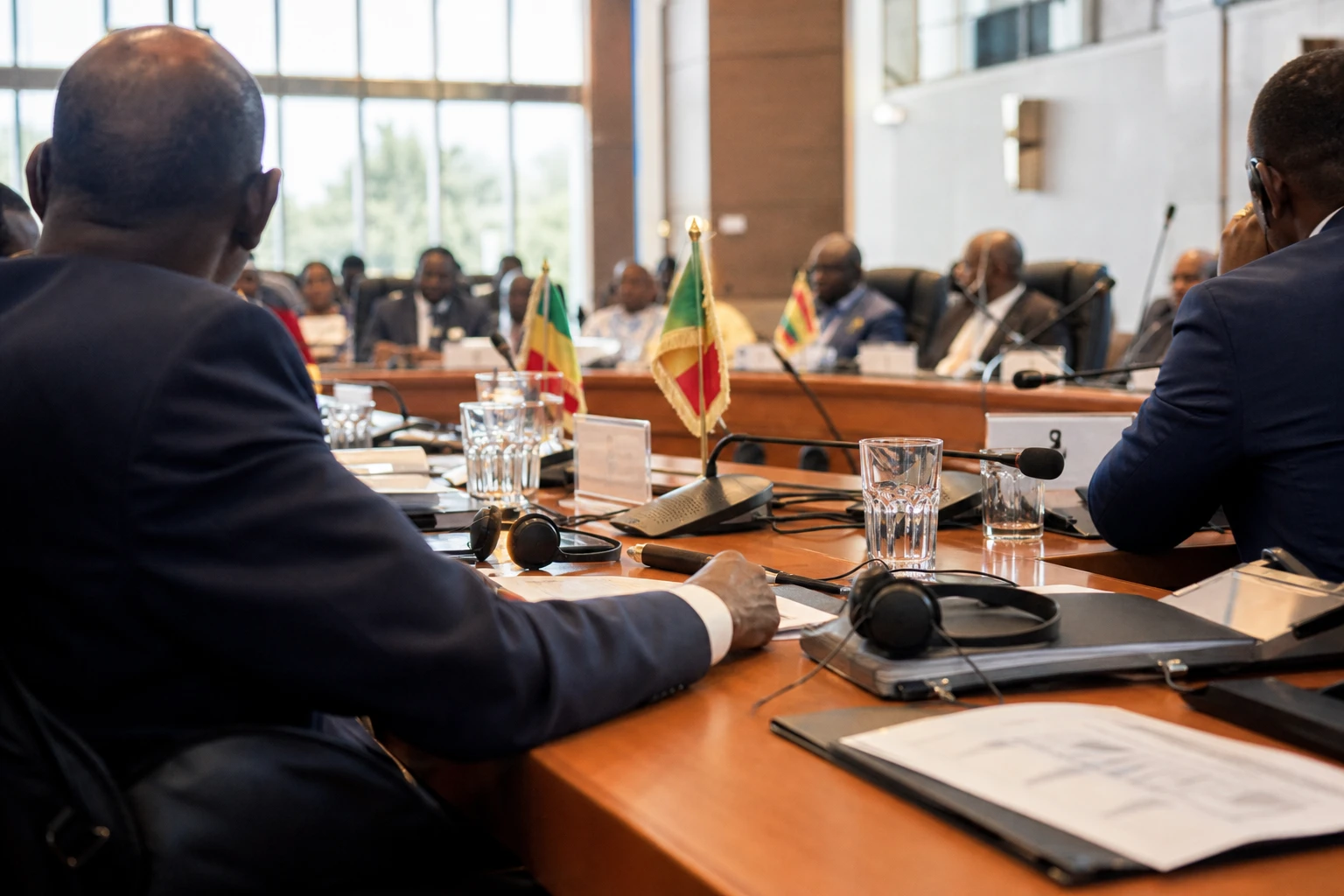
In Bamako, security is no longer just a military matter
In Mali, the war is no longer confined to the front line. It affects roads, markets, logistics routes and the political balance of a government that has made security its main promise. Since the coordinated offensives of April 2026, pressure from JNIM, al-Qaeda’s Sahel affiliate, has increased in several parts of the country, while the Malian army and its Russian partners have had to defend vulnerable positions as far north as the country’s northern regions.
In this context, any prospect of US intervention would not be a mere tactical adjustment. It would unfold in a theatre where Bamako has already moved closer to Moscow, following the departure of French forces and the UN mission, and where the Malian state is seeking to regain control of fragmented territory. The Malian authorities continue to present their Russian partners as a central source of support, including in the face of recent attacks.
A US option under consideration, but not decided
On 22 July 2026, several US media outlets reported that the Trump administration was considering military options against JNIM in Mali. The scenarios discussed range from aerial surveillance to intelligence-sharing, with targeted strikes and special operations among the most offensive possibilities. So far, the White House has announced no public decision.
This framing matters. A ground campaign appears unlikely. By contrast, expanded surveillance or occasional strikes would quickly change the nature of the issue. In counter-terrorism operations, the line between intelligence-gathering and kinetic action is thin: tracking a convoy, identifying a commander or confirming a target may be enough to shift an operation from support to a strike. This interpretation emerges from the information published on 22 July, but remains a working hypothesis, not a settled decision.
The timing is significant. In the same week, a US missionary pilot kidnapped in Niger in 2025 was again mentioned in discussions as a possible impetus for security cooperation, although analysts believe his abduction was more closely linked to Islamic State in the Sahel than to JNIM. Washington also wants to regain strategic depth in a region where it lost its main regional foothold after withdrawing from its base in Agadez, Niger.
Moscow, Bamako and the political cost of forced coexistence
Since 2021, and more clearly since Wagner’s withdrawal, Russia’s presence in Mali has been organised around the Africa Corps, a force under the authority of Russia’s defence ministry. Reuters and several international media outlets confirmed in April and July 2026 that the force was operating alongside Malian troops in the fight against armed groups, while also suffering setbacks of its own on the ground.
For Bamako, the stakes are as much political as military. The junta has built part of its legitimacy on the promise of breaking with former Western partners and on the idea that a new protector could do better. The arrival of US units, even on a limited scale, would undermine that narrative. It would also show that Russian cooperation alone is not enough to contain the advance of jihadist groups. This contradiction weakens the security-sovereignty rhetoric the government has promoted since the end of the French and UN presence.
For Moscow, the calculation is equally sensitive. A US presence in a theatre where Russia has invested personnel, equipment and considerable public messaging would amount to an admission that its de facto monopoly no longer exists. This would be particularly awkward given that several setbacks in early 2026 have already put pressure on the image of the Africa Corps in Mali. Reuters reported deadly fighting in April, followed by a Russian withdrawal from Kidal after fierce clashes.
The balance of power is therefore not being contested only between Mali and armed groups. It is also being contested between rival partners, each seeking to shape the narrative of the war. In this context, any potential channel of cooperation between Washington and Bamako would require precise coordination mechanisms to prevent incidents between Russian and US forces. This is one of the most sensitive aspects of the issue, as the overlap of armed actors leaves little room for error.
The Sahel remains the essential context
Mali is not an isolated case. The crisis now spans the central Sahel and extends beyond national borders. ECOWAS, which Mali, Burkina Faso and Niger left on 29 January 2025, has had to organise the terms of separation and preserve some mechanisms for movement and trade. Security cooperation in the region, however, has fragmented with the emergence of the Alliance of Sahel States, an entity created by Bamako, Ouagadougou and Niamey.
At continental level, the African Union continues to call for respect for international humanitarian law and the protection of civilians amid a rise in coordinated attacks. The AU Commission recently reiterated that the terrorist threat in Mali concerned all of West Africa, not just the Malian capital or the rural areas of the north. This African perspective matters: it places the issue within a regional crisis of governance, security and arms flows, in which purely external solutions have shown their limits.
For residents of Bamako, Mopti, Gao and Kidal, the immediate stakes are even more tangible: safe roads, available fuel, access to markets, schools staying open and an effective state presence. For the army and its allies, the question is control of the territory. For foreign partners, it has become one of influence, intelligence and strategic credibility. In the coming weeks, one very specific point will need watching: not a dramatic announcement, but the form, if any, that the US return to a space where Russia sought to be indispensable will take.