
 Algeria
 Egypt
 Libya
 Morocco
 Sudan
 Tunisia
 Benin
 Burkina Faso
 Cabo Verde
 Côte d'Ivoire
 Ghana
 Guinea
 Guinea-Bissau
 Liberia
 Mali
 Mauritania
 Niger
 Nigeria
 Sierra Leone
 The Gambia
 Togo
 Cameroon
 Central African Republic
 Chad
 DR Congo
 Equatorial Guinea
 Gabon
 Republic of the Congo
 São Tomé and Príncipe
 Burundi
 Comoros
 Djibouti
 Eritrea
 Ethiopia
 Kenya
 Madagascar
 Malawi
 Mauritius
 Mozambique
 Rwanda
 Seychelles
 Somalia
 South Sudan
 Tanzania
 Uganda
 Angola
 Botswana
 Eswatini
 Lesotho
 Namibia
 South Africa
 Zambia
 Zimbabwe
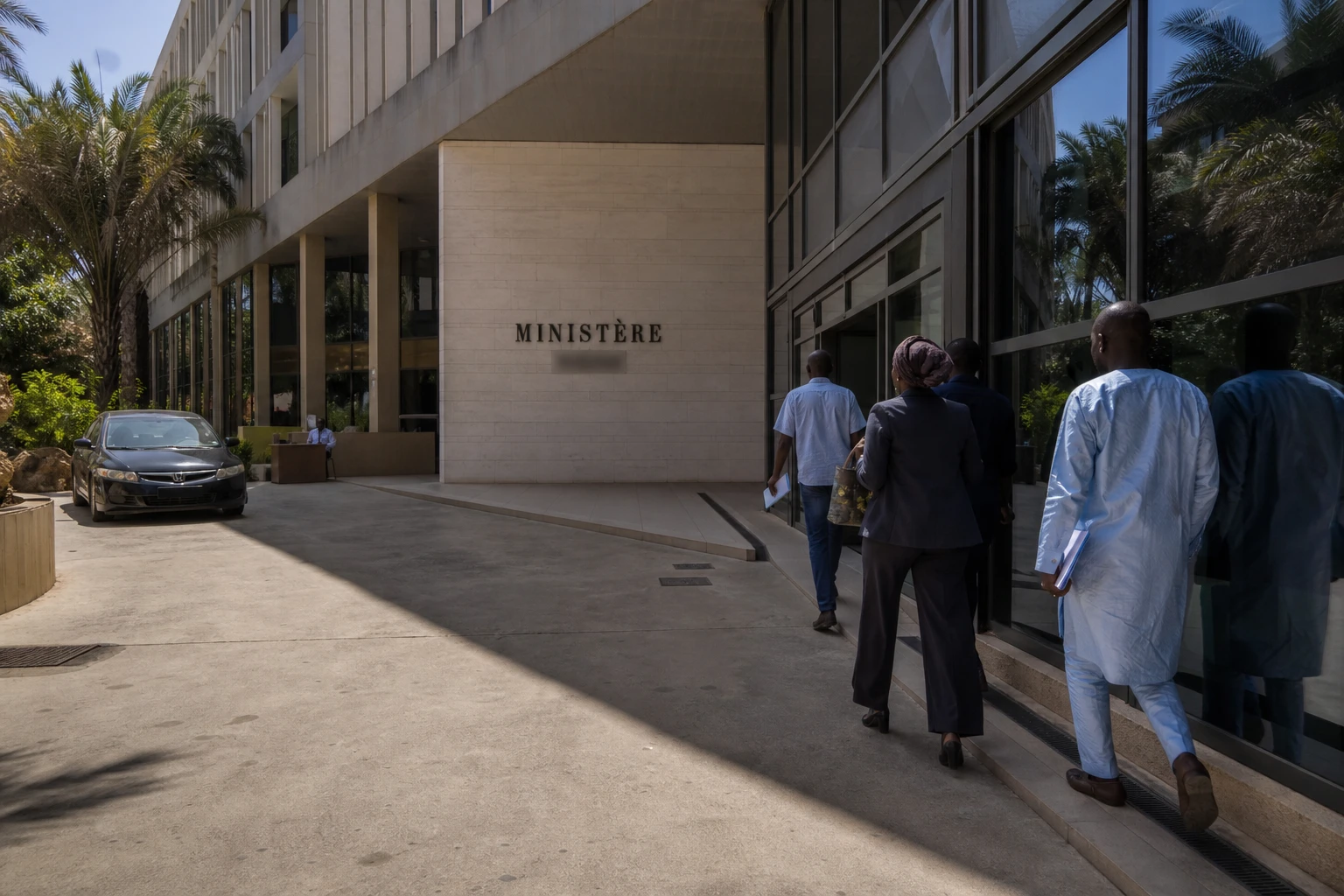
A government seeking its shape
In Dakar, the political battle is no longer being fought only between the ruling majority and the opposition. It is also playing out at the top of the state, within a camp that came to power promising a break with the past, only to be caught up in its own divisions. Senegalese President Bassirou Diomaye Faye chose this Saturday, 25 July 2026, to launch his own political movement, KIIRAAY – The Republican Patriots, just as Ousmane Sonko tightens ranks around Pastef.
The move says much about a political moment that has become more complex than a simple clash of egos. It reflects the head of state’s desire to build an independent party base, as the coalition that emerged from the 2024 victory fragments and internal decisions take on national significance. In a country where electoral alliances matter as much as programmes, the shape of power has itself become an issue.
A realignment weeks in the making
The split did not begin this weekend. It took shape over several weeks, after Ousmane Sonko was removed as prime minister in May 2026, followed by a gradual clarification of the lines between the president, his inner circle and Pastef’s hard core. The APA news agency reported as early as 1 June that Pastef would not take part in the next government, signalling a fundamental disagreement over how the executive should be run. A few days later, the party elected Ousmane Sonko as its leader at its first congress.
On 4 July, Senegalese media reported that Bassirou Diomaye Faye was already preparing to create his own political organisation. On 6 July, several international sources confirmed that he intended to formalise the separation. The events of 25 July are therefore the public culmination of that process, with a name, a banner and a distinct rallying platform.
Meanwhile, resignations and acts of distancing have shaken the Pastef ecosystem. Party officials, regional coordinators and well-known figures have announced their departure for the presidential camp, according to the Senegalese press. This is no minor development. It shows that the realignment is not confined to the top of the executive; it extends down to local networks, where electoral machinery is built.
What KIIRAAY changes
Bassirou Diomaye Faye’s new party is first and foremost an attempt to solve a problem of governance. A president without a base of his own remains dependent on a coalition, and therefore on unstable balances of power. A presidential party, by contrast, can organise supporters, bring elected representatives into line and prepare for the next local and national elections. This is a familiar pattern in West Africa, where the personalisation of power often goes hand in hand with weak, short-lived coalitions.
But the strategy comes at a cost. It also formalises competition within the camp that came to power in 2024, at a time when the country faces heavy debt and real economic pressure. The AP noted that the party’s launch comes amid a debt crisis, while protests in Dakar last April showed the impatience of some workers, trade unions and opposition figures over the cost of living. For citizens, the question is not only who leads the ruling camp. It is whether this realignment will speed up or delay responses on jobs, prices and public services.
The name KIIRAAY points to a desire for projection and autonomy. Through the political message it conveys, the president is seeking to show that he does not want to remain beholden to a force that brought him to power but now claims a central role of its own. In practice, this creates two poles within the same sphere of power: on one side, the presidency, presenting itself as institutional and inclusive; on the other, Pastef, which retains a strong activist identity and a direct mobilisation base.
This division of roles may reassure some local allies. It could also alarm those who see political stability as essential to supporting economic reforms. In local authorities, among mayors and across activist networks, the time has come to reposition. In Senegal, the geography of power is often shaped as much in regional capitals as in Dakar’s institutions. That is where the real strength of this new party will be tested.
A signal to Dakar, ECOWAS and the rest of the continent
This political moment extends beyond Senegal. On 19 July 2026, in Freetown, Bassirou Diomaye Faye assumed the rotating presidency of ECOWAS, the Economic Community of West African States, while Senegal also secured the appointment of General Birame Diop as head of the Commission from 1 September 2026. In other words, Dakar is gaining influence in West African affairs at the very moment its executive must stabilise its own majority.
The coincidence matters. A president speaking for Senegal on the regional stage must also show that he can manage domestic balances of power. ECOWAS often looks to its member states for signs of institutional coherence, particularly at a time marked by military transitions in the Sahel, budgetary strains and difficult economic reforms. For Dakar, then, the stakes are not only partisan. They are also diplomatic and regional.
Across Africa, the Senegalese case is a reminder of a widely shared political reality: a change of government does not resolve everything if victorious coalitions fail to become durable institutions. The test begins now, in municipal councils and the National Assembly, and then as the next electoral cycles and major economic decisions approach. KIIRAAY is more than a new name. It is an attempt to clarify the shape of power at a time when Senegal is still searching for its balance.



