Algeria
 Egypt
 Libya
 Morocco
 Sudan
 Benin
 Burkina Faso
 Cabo Verde
 Côte d'Ivoire
 Ghana
 Guinea
 Guinea-Bissau
 Liberia
 Mali
 Mauritania
 Niger
 Nigeria
 Senegal
 Sierra Leone
 The Gambia
 Togo
 Cameroon
 Central African Republic
 Chad
 DR Congo
 Equatorial Guinea
 Gabon
 Republic of the Congo
 São Tomé and Príncipe
 Burundi
 Comoros
 Djibouti
 Eritrea
 Ethiopia
 Kenya
 Madagascar
 Malawi
 Mauritius
 Mozambique
 Rwanda
 Seychelles
 Somalia
 South Sudan
 Tanzania
 Uganda
 Angola
 Botswana
 Eswatini
 Lesotho
 Namibia
 South Africa
 Zambia
 Zimbabwe
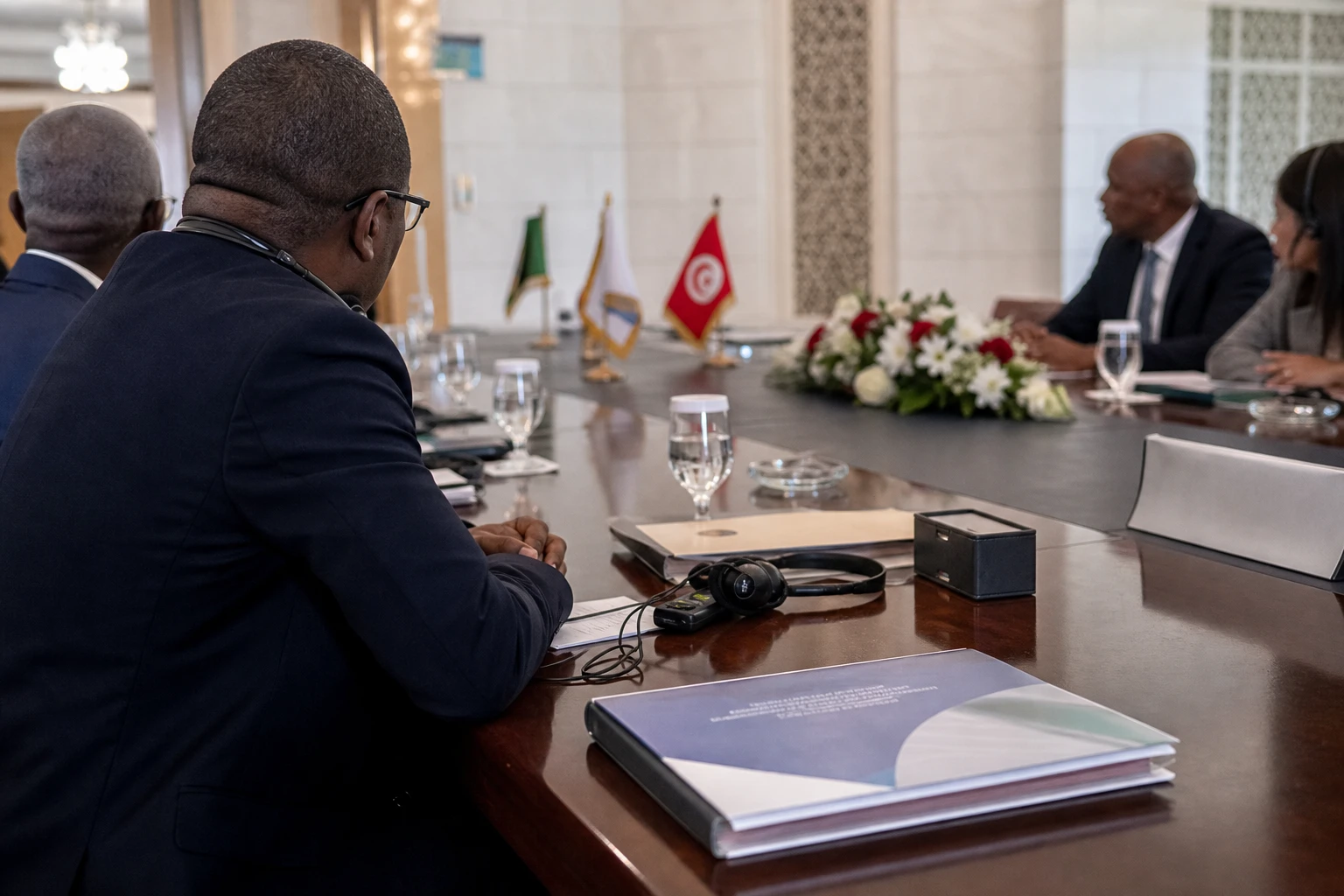
25 July: two political memories meet on the same street
In Tunis, 25 July is more than a date on the national calendar. For many Tunisians, it has become a day when the Republic, proclaimed in 1957, is celebrated alongside memories of the political turning point opened up in 2021 by Kaïs Saïed. This overlap gives the Tunisian capital particular symbolic weight: a chance to celebrate the state, or denounce the way it is governed.
On Saturday 25 July 2026, dozens of people marched through central Tunis at the call of political parties, organisations and civil society activists. Their demands focused on defending civil liberties, freeing political detainees and denouncing a socio-economic crisis weighing on daily life. Other gatherings, reported by the Tunisian press, also marked the Republic’s 69th anniversary with calls to uphold the rule of law.
The weight of a Tunisian crisis with regional reach
The events form part of a trajectory that began on 25 July 2021, when the Tunisian president took exceptional measures, suspending parliament and concentrating more power in his hands. Since then, the country’s institutional course has changed. Opponents see an authoritarian shift. The government, for its part, defends the move as necessary to regain control in the face of a deadlocked system. This opposing interpretation still shapes public debate in Tunisia.
Tunisia is also experiencing a period of acute social tensions. International and Tunisian sources describe an economy under pressure, with weak growth, high prices, occasional shortages and persistent problems with public services. Protesters also cited water and electricity cuts, a sign of discontent that goes beyond the political arena and affects working-class neighbourhoods as well as the urban middle classes.
In this context, Tunis remains the nerve centre of protest. The capital is home to the headquarters of state institutions, media outlets, political parties and major professional organisations. But tensions between the city and the country’s interior remain high. People in remote regions have for years called for better access to services, jobs and public investment. The 25 July demonstration is a reminder that Tunisia’s crisis is not only institutional. It is also territorial and social.
What the streets of Tunis are saying
Saturday’s gatherings brought together people from a range of backgrounds. They included human rights activists, opposition party figures and citizens with no declared political affiliation. This diversity matters. It shows that protest is no longer confined to one political camp. It brings together different concerns: freedom of expression, prosecutions, unemployment, inflation, shortages and a sense that public space is shrinking.
Human rights organisations have also issued a series of warnings in recent weeks. Human Rights Watch reported a crackdown on associations, journalists and opponents, as well as the temporary suspension of at least 25 organisations between July 2025 and April 2026. The organisation also cited lengthy sentences in several political cases. These developments fuel protesters’ perception that Tunisia’s civic space is narrowing.
In the street, however, the message is simpler than the reports of experts. It comes down to one idea: a republic is more than a commemorative date. It is also measured by citizens’ ability to speak, protest, organise and vote without fear of punishment. This link between national memory and practical freedoms gives the 25 July mobilisation its political significance.
A Tunisian date, a North African signal
The significance of the day extends beyond Tunisia. Across the Maghreb, the role of the executive, the state of checks and balances and the space available to civil society organisations remain sensitive issues. Tunisia, a member of the African Union and the Arab Maghreb Union, has long been regarded as a political laboratory in the region. The perceived decline in freedoms there is therefore being watched closely, far beyond Tunis.
For the African Union and Tunisia’s European partners, the challenge is now twofold. It concerns both institutional stability and the credibility of a country with a highly organised civil society. Migration, economic cooperation and commitments on fundamental rights are now intertwined in the same debate. This, too, is what the streets of Tunis reveal: an internal crisis can quickly become a regional test of how governments govern, negotiate and protect freedoms.
In the short term, attention is focused on the Tunisian government’s ability to respond to social discontent without further tightening political space. In the medium term, the question is broader: can the Tunisian Republic still function as a framework for compromise, or is it moving towards a lasting concentration of power? The next protests, court rulings and moves by the Carthage Palace will show whether 25 July remains a shared symbol or becomes a marker of division.