Algeria
 Egypt
 Libya
 Morocco
 Sudan
 Tunisia
 Benin
 Burkina Faso
 Cabo Verde
 Côte d'Ivoire
 Ghana
 Guinea
 Guinea-Bissau
 Liberia
 Mali
 Mauritania
 Niger
 Nigeria
 Senegal
 Sierra Leone
 The Gambia
 Togo
 Cameroon
 Central African Republic
 Chad
 DR Congo
 Equatorial Guinea
 Gabon
 Republic of the Congo
 São Tomé and Príncipe
 Burundi
 Comoros
 Djibouti
 Eritrea
 Ethiopia
 Kenya
 Madagascar
 Malawi
 Mauritius
 Mozambique
 Rwanda
 Seychelles
 Somalia
 South Sudan
 Tanzania
 Uganda
 Angola
 Botswana
 Eswatini
 Lesotho
 Namibia
 Zambia
 Zimbabwe
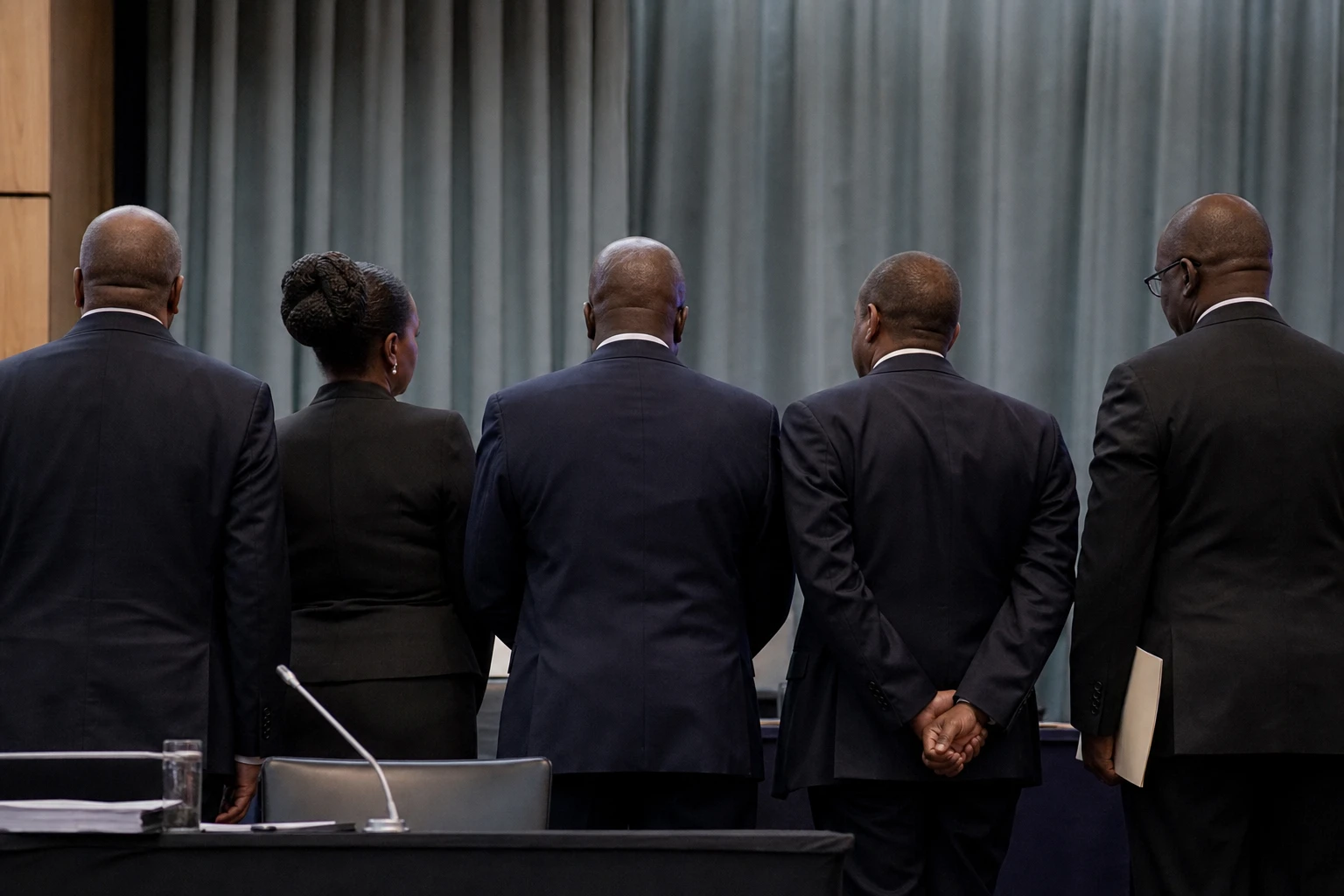
In Pretoria, the Phala Phala case has not gone away. Instead, it continues to weigh on South Africa’s presidency as Cyril Ramaphosa seeks to preserve his room for manoeuvre in the face of a Parliament galvanised by the courts. The president has secured a procedural reprieve, not a political clearance. The Cape High Court has suspended public hearings by the impeachment committee pending consideration of his challenge to the report that brought the case back into focus.
The case is unfolding within an institutional framework that is now well established. In May 2026, South Africa’s Constitutional Court ruled that the National Assembly’s December 2022 vote, which blocked further action on the independent panel’s report, was unconstitutional. The impeachment process therefore resumed in Parliament through an ad hoc committee tasked with examining the case. In South Africa, where parliamentary oversight is one of the system’s most sensitive safeguards, this sequence is testing the executive, the rules of the National Assembly and the judges’ interpretation of political accountability.
An old case that remains explosive
The case dates back to 9 February 2020, when a burglary took place at Phala Phala, the president’s private game farm in Limpopo province, in the north of the country. US dollars are said to have been stolen from a sum kept in a sofa, according to details cited in public proceedings. Ramaphosa said the money came from the sale of buffaloes. Several opposition parties have challenged this account, while parliamentary bodies and courts have since examined how the funds were kept, declared and managed.
The amount cited in the controversy remains $580,000, a figure reported by several South African and international sources based on the facts in the case. The debate is therefore not only about a theft. It also concerns the transparency of the head of state, the possible use of public security resources and the way institutions initially handled the incident. This combination of factors turned a farm burglary into a national political crisis.
What the court actually suspended
The decision handed down on 24 July 2026 does not end the parliamentary process. It only blocks the public hearings stage while the courts decide on Ramaphosa’s challenge to the independent panel’s report. The judicial timetable is central: a hearing on the merits of the application is scheduled for September 2026. In the meantime, the parliamentary committee can remain in place, but it cannot subject the president to public hearings on the basis of the contested report. The president argues that such a step, before a decision on the merits, would cause him irreparable harm.
This distinction matters. In a system such as South Africa’s, battles are often fought over procedure as much as substance. The report by the panel chaired by former chief justice Sandile Ngcobo found as early as November 2022 that there was sufficient evidence to consider serious misconduct and, potentially, a violation of the Constitution. But the president’s defence argues that the report must first be ruled on by the courts before it can inform an impeachment process. The High Court has not ruled on guilt. It has simply frozen the process’s public-facing stage.
The stakes for Pretoria, Limpopo and the ANC
For Cyril Ramaphosa, the stakes are twofold. On the one hand, he is seeking to prevent the image of a president facing a public inquiry from further weakening his authority within the ANC, his party. On the other, he must show that he respects the institutions he leads. This tension is familiar in coalition or minority-majority democracies, but it is particularly visible in South Africa, where corruption, conflicts of interest and public accountability remain central political issues. The Phala Phala case also fuels criticism of the distance between the ruling elite and social expectations in a country grappling with high unemployment, pressure on public services and persistent distrust of traditional parties.
The local implications are just as clear. Phala Phala is in Limpopo, a rural province where livestock farming, commercial agriculture and private security networks carry considerable weight. The case is a reminder that major South African scandals do not arise only in Johannesburg, Pretoria or Cape Town. They can also begin on a private property, at a security post, with a sofa and an account of events that political opponents consider inadequate. The impact of this case is therefore felt by the presidency, but also by the institutions tasked with investigating the facts and protecting the integrity of public funds.
A South African case, but a signal to the region
At regional level, the episode also speaks to how Southern Africa upholds standards of accountability. South Africa is a key member of SADC, the Southern African Development Community, which brings together 16 states and seeks to provide a space for political, economic and security cooperation. When Pretoria is shaken by a case involving presidential probity, the region watches closely to see what this says about institutional leadership. This matters all the more because South Africa is already dealing with sensitive issues in Southern Africa and beyond, from regional security decisions to debates on economic governance.
The next date to watch is clear: the September 2026 hearing on the challenge to the panel’s report. Part of the case’s political future will be decided there, between an accelerated parliamentary process and a fresh judicial delay. For now, Ramaphosa is buying time. But the substance of the case has not changed: South Africa’s presidency still has to convince the public that it can weather an old scandal without allowing the idea of impunity at the highest level of government to take hold.