Algeria
 Egypt
 Libya
 Morocco
 Sudan
 Tunisia
 Benin
 Burkina Faso
 Cabo Verde
 Côte d'Ivoire
 Ghana
 Guinea
 Guinea-Bissau
 Liberia
 Mali
 Mauritania
 Niger
 Nigeria
 Senegal
 Sierra Leone
 The Gambia
 Togo
 Cameroon
 Central African Republic
 Chad
 DR Congo
 Equatorial Guinea
 Gabon
 Republic of the Congo
 São Tomé and Príncipe
 Burundi
 Comoros
 Djibouti
 Eritrea
 Ethiopia
 Kenya
 Madagascar
 Malawi
 Mauritius
 Mozambique
 Rwanda
 Seychelles
 Somalia
 South Sudan
 Tanzania
 Uganda
 Angola
 Eswatini
 Lesotho
 Namibia
 South Africa
 Zambia
 Zimbabwe
Why cattle genetics have become a food sovereignty issue
In several African capitals, the same question keeps coming up: how can more milk and meat be produced without relying even more heavily on imports? The arrival of cows from Brazil is not simply about buying animals. It is also about testing another way to strengthen livestock farming: investing in genetic quality, controlled breeding and technical support.
This shift is affecting countries with very different profiles. Botswana is seeking to reduce its dependence on imported dairy products. Senegal has already embarked on a major operation. Burkina Faso is investing in a local milk programme. And Nigeria, like Tanzania, has opened the door to cattle breeding products from Brazil. The trend therefore goes beyond any one country. It points to a new agricultural partnership between Latin America and several African markets.
A partnership shaped by specific needs in each country
In Botswana, the government confirmed to Parliament in March 2026 a programme to acquire 1,000 Girolando cows, a dairy breed developed by crossing Holstein and Gir cattle. The first batch of 200 head was announced as due to arrive in several phases, with a clear aim: to boost national milk production and support the Milk Valley project, led by the Botswana Development Corporation. In budget documents and parliamentary exchanges, the government also referred to a technical training component to be provided by Brazilian suppliers.
In Senegal, the process is already further advanced. The Senegalese Press Agency reported in January 2026 that 1,050 Guzerá and Girolando cattle had been received from Brazil. The operation is part of a policy to improve the herd’s genetics, implemented with farmers organised in a group and backed by the state. A few months earlier, the country had already received 1,000 Guzerá cattle. Senegal is not simply seeking to increase the number of animals. It wants to improve reproductive performance, growth and milk production.
Burkina Faso followed a similar path in March 2026. The Agence d’information du Burkina and APA confirmed the arrival of 710 pregnant cows imported from Brazil under the Faso Kossam programme. The aim is to reduce milk imports and support local meat and milk production. Here too, the initiative forms part of a broader debate on food security and the development of domestic value chains.
Nigeria has opened another front. In March 2025, Brazil’s Ministry of Agriculture announced that Nigerian health authorities had approved the international health certificate for Brazilian bovine semen. A few months later, Brazil also said it had secured new access to the Nigerian market for bovine and buffalo embryos, both in vivo and in vitro. In other words, trade is no longer limited to live cattle. It also covers genetic material and reproductive technologies.
Why Brazil is emerging as a key partner
Brazil is not just selling cows. It is exporting experience. Over the long term, the country has developed expertise in tropical livestock farming. It has adapted European breeds to difficult climatic conditions. That work gave rise to the Girolando, which features prominently in Brazil’s dairy strategies. This approach appeals to African countries facing heat, fodder constraints and intense pressure to keep production costs down.
Brazil also has the profile of a major agricultural player. Embrapa data show that in 2024 it consolidated its position as the world’s leading beef exporter by volume. The FAO, for its part, lists India, the United States, Pakistan, China and Brazil among the largest milk producers. This combination of export strength and expertise in animal genetics explains its appeal to several African markets.
But this cooperation should not be seen as a miracle solution. Introducing more productive breeds is not enough if the rest of the system does not keep pace. Without a regular supply of animal feed, water, veterinary care, a cold chain and commercial outlets, genetic gains can quickly be lost. This is where the difference lies between a one-off operation and a lasting transformation of value chains.
What these imports mean for farmers and governments
For governments, the benefits are clear. They hope to reduce the cost of importing dairy products and better meet rising urban demand. For farmers, the issue is even more tangible. A more productive cow does not merely change a national statistic. It can alter a farmer’s income, the amount of milk available in a local market, or a producer group’s ability to build a small value chain.
The limitations are just as clear. African value chains are often fragmented. Some livestock farming remains extensive. Other parts depend on costly inputs. And rural areas do not all have access to the same services. Capital cities can import, process and distribute more quickly. Pastoral regions, by contrast, face distance, climate and pressure on land. In this context, genetic improvement must be accompanied by infrastructure, training and accessible public services.
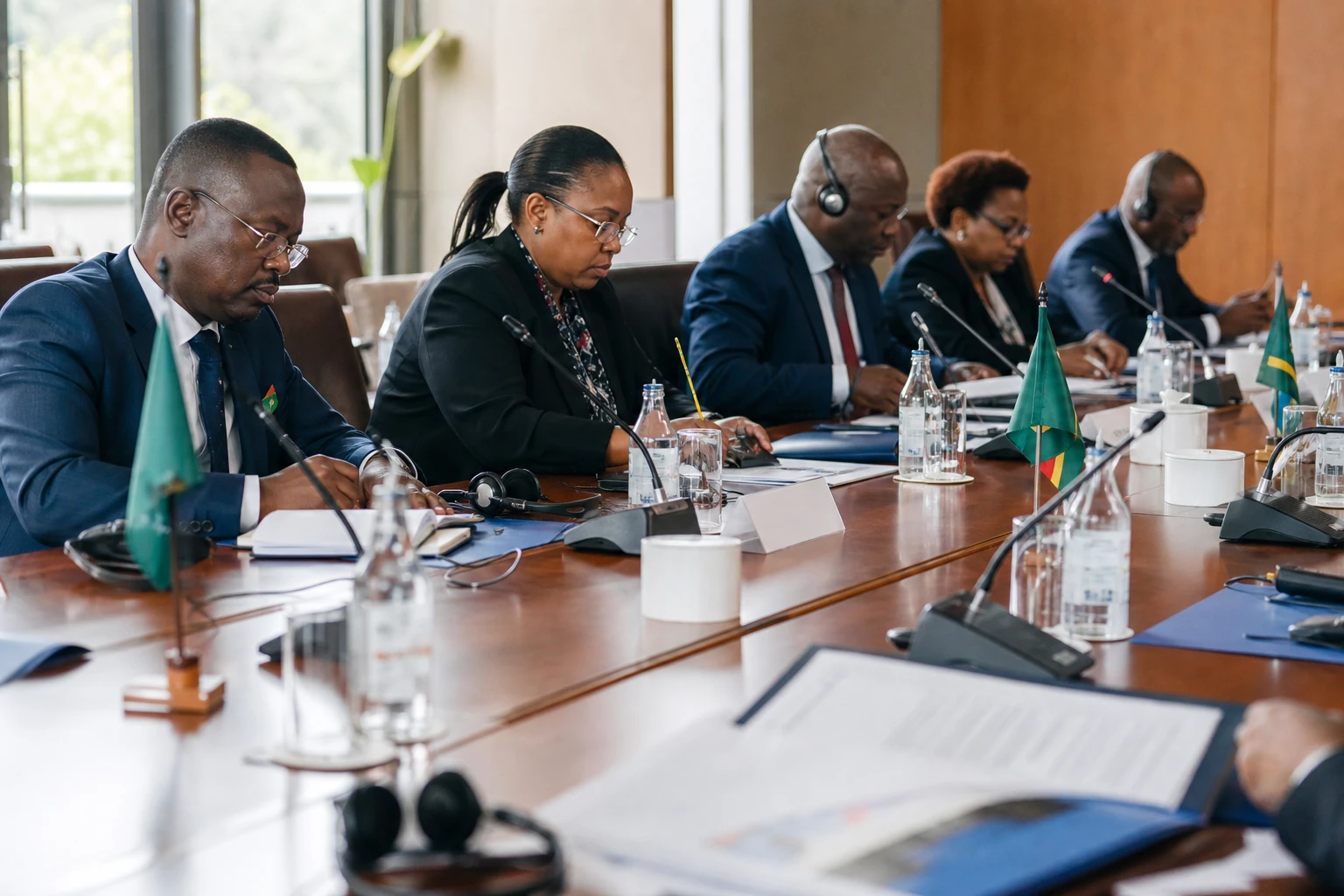
Regional institutions are also watching this trend closely. In ECOWAS, where trade in livestock and dairy products is already significant, animal productivity is an economic as well as a political issue. Within SADC, Botswana is seeking to secure its supplies and strengthen a sector still exposed to imports. At continental level, the AfCFTA could eventually make it easier for inputs, equipment and expertise to move across borders, provided health standards keep pace.
A signal for African agricultural cooperation
The developments in Botswana, Senegal, Burkina Faso, Nigeria and Tanzania point to one simple fact: Africa is no longer content with importing finished products. It is also seeking to import expertise, seeds, embryos and methods. This is a strategic shift. It reflects an ambition to modernise value chains without ignoring local realities.
What happens next will depend on governments’ ability to turn these purchases into lasting results. The real test will not simply be the cattle arriving at the port or the farm. It will be measured in litres of milk produced, the cost per kilo of meat, the health of herds and the growing expertise of local stakeholders. That is the scale on which the true impact of the agricultural partnership between Africa and Brazil will be measured in the coming months.