Algeria
 Egypt
 Libya
 Morocco
 Sudan
 Tunisia
 Benin
 Burkina Faso
 Cabo Verde
 Côte d'Ivoire
 Ghana
 Guinea
 Guinea-Bissau
 Liberia
 Mauritania
 Niger
 Nigeria
 Senegal
 Sierra Leone
 The Gambia
 Togo
 Cameroon
 Central African Republic
 Chad
 DR Congo
 Equatorial Guinea
 Gabon
 Republic of the Congo
 São Tomé and Príncipe
 Burundi
 Comoros
 Djibouti
 Eritrea
 Ethiopia
 Kenya
 Madagascar
 Malawi
 Mauritius
 Mozambique
 Rwanda
 Seychelles
 Somalia
 South Sudan
 Tanzania
 Uganda
 Angola
 Botswana
 Eswatini
 Lesotho
 Namibia
 South Africa
 Zambia
 Zimbabwe
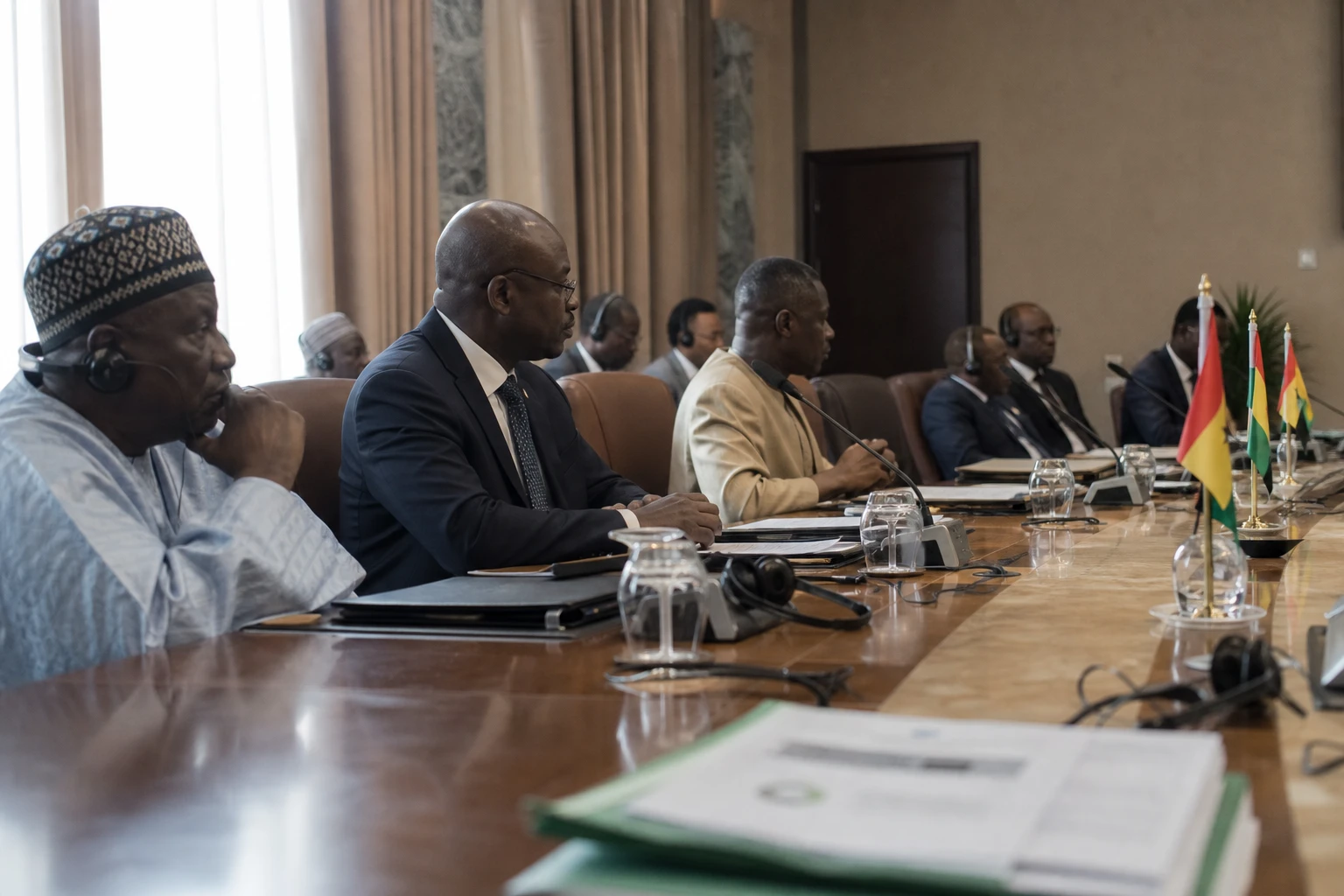
When local rice piles up, the entire agricultural economy grinds to a halt
In Mali, rice is more than an everyday food. It is also a test of economic sovereignty. When warehouses fill with unsold stocks, the strain affects not only producers. It reaches the banks that financed the growing season, transporters, processors and then households weighing up price, quality and the product’s origin. In April 2026, the government acknowledged that the sector was facing difficulties selling local rice because of high production costs and unfavourable competition from imports. It then decided to buy 26,030 tonnes of rice held by the interprofessional body, through the Office of Agricultural Products of Mali, and put it back on the market at an affordable price.
This decision forms part of a broader framework. Mali belongs to the ECOWAS area, where rice falls within the 10% tariff band of the Common External Tariff. In theory, this level should offer a minimum degree of protection to regional products. In practice, exemptions, customs arrangements and cost differences often reduce that protective effect. The country has also adopted an agricultural policy law that recognises interprofessional organisations as representatives of the rural sector. This matters greatly in rice production. The sector does not advance only through larger fields. It also needs clearer rules.
A powerful sector, but still fragile along its value chain
The figures show the scale of the potential. Mali’s authorities have said that national production of paddy rice averages around 3 million tonnes a year. For the 2023-2024 season, production was estimated at 3,024,000 tonnes, while projections published in 2025 put cereal production at 11,452,540 tonnes, in generally favourable weather conditions. The government says it now aims to achieve sustainable growth through the national rice development strategy, which is based on the “Mali Kura” vision and the SNEDD 2024-2033. The stated goal is ambitious: to increase paddy production to 5.5 million tonnes by 2035.
But producing more is not enough. The problem then shifts to processing, presentation and marketing. A significant share of Malian rice still passes through small-scale artisanal mills, with a high proportion of broken grains, impurities and unattractive packaging. The authorities and industry stakeholders acknowledge that this limits its competitiveness against imported rice. The same official sources also highlight continuing high post-harvest losses and the need to invest in mini-rice mills, medium-sized industrial facilities and better storage equipment. In other words, this is not just an agricultural issue. It is an industrial one.
The Malian market remains open to imports. Data from the World Bank’s World Integrated Trade Solution indicate that Mali imported 176,731,530 kg of rice in 2023, worth $532.4 million, confirming persistent dependence despite local potential. This explains why imported rice is often more visible on market stalls: it arrives in large volumes, with sorting and packaging standards and logistical regularity that local rice still struggles to match everywhere.
What the purchase of 26,030 tonnes reveals
The buy-back operation decided on by the Malian state is a useful signal, but it also reveals the system’s limitations. By buying stocks for redistribution, the authorities buy time, ease producers’ cash-flow pressures and prevent prices from falling too sharply in producing areas. The official statement highlights three expected effects: supporting the sector, protecting purchasing power and stabilising the market during the lean season. On the ground, this can help indebted farmers repay some of their costs and prepare for the next season. It is a buffer, not a lasting solution.
The real crux lies upstream: the quality of economic information and coordination between the state, producers and institutional buyers. Mali’s agricultural sector already has consultation bodies, and the authorities say they want to strengthen the links between production data, consumption needs and import decisions. If this mechanism works, it can prevent poorly calibrated imports, excess stocks and crisis purchases. Otherwise, the state will remain condemned to intervene after the fact, when warehouses are already overflowing and producers have no room to manoeuvre.
An issue for Mali, but also for West Africa
This issue extends beyond Bamako. Across West Africa, rice has become a strategic product because it concentrates tensions between food security, regional competitiveness and dependence on global markets. The ECOWAS framework exists to bring trade policies closer together, but its effectiveness depends on national consistency, the quality of infrastructure and the ability of sectors to move up the value chain. Mali, with its large irrigated schemes, the Office du Niger and its professional organisations, has rare advantages. But processing, logistics and public procurement must keep pace.
At continental level, the issue connects with a question that has become central: how can public procurement, school canteens, hospitals and institutional purchasing create market opportunities for local produce? Mali is already testing this approach. If it is developed, it could inspire other Sahelian and West African countries facing the same paradox: strong production basins, but value chains that remain too fragmented. In the coming months, progress will depend less on speeches than on the ability to move stocks, modernise processing facilities and make Malian rice recognisable to urban consumers.