
 Algeria
 Egypt
 Libya
 Morocco
 Sudan
 Tunisia
 Benin
 Burkina Faso
 Cabo Verde
 Côte d'Ivoire
 Ghana
 Guinea
 Guinea-Bissau
 Liberia
 Mauritania
 Niger
 Nigeria
 Senegal
 Sierra Leone
 The Gambia
 Togo
 Cameroon
 Central African Republic
 Chad
 DR Congo
 Equatorial Guinea
 Gabon
 Republic of the Congo
 São Tomé and Príncipe
 Burundi
 Comoros
 Djibouti
 Eritrea
 Ethiopia
 Kenya
 Madagascar
 Malawi
 Mauritius
 Mozambique
 Rwanda
 Seychelles
 Somalia
 South Sudan
 Tanzania
 Uganda
 Angola
 Botswana
 Eswatini
 Lesotho
 Namibia
 South Africa
 Zambia
 Zimbabwe
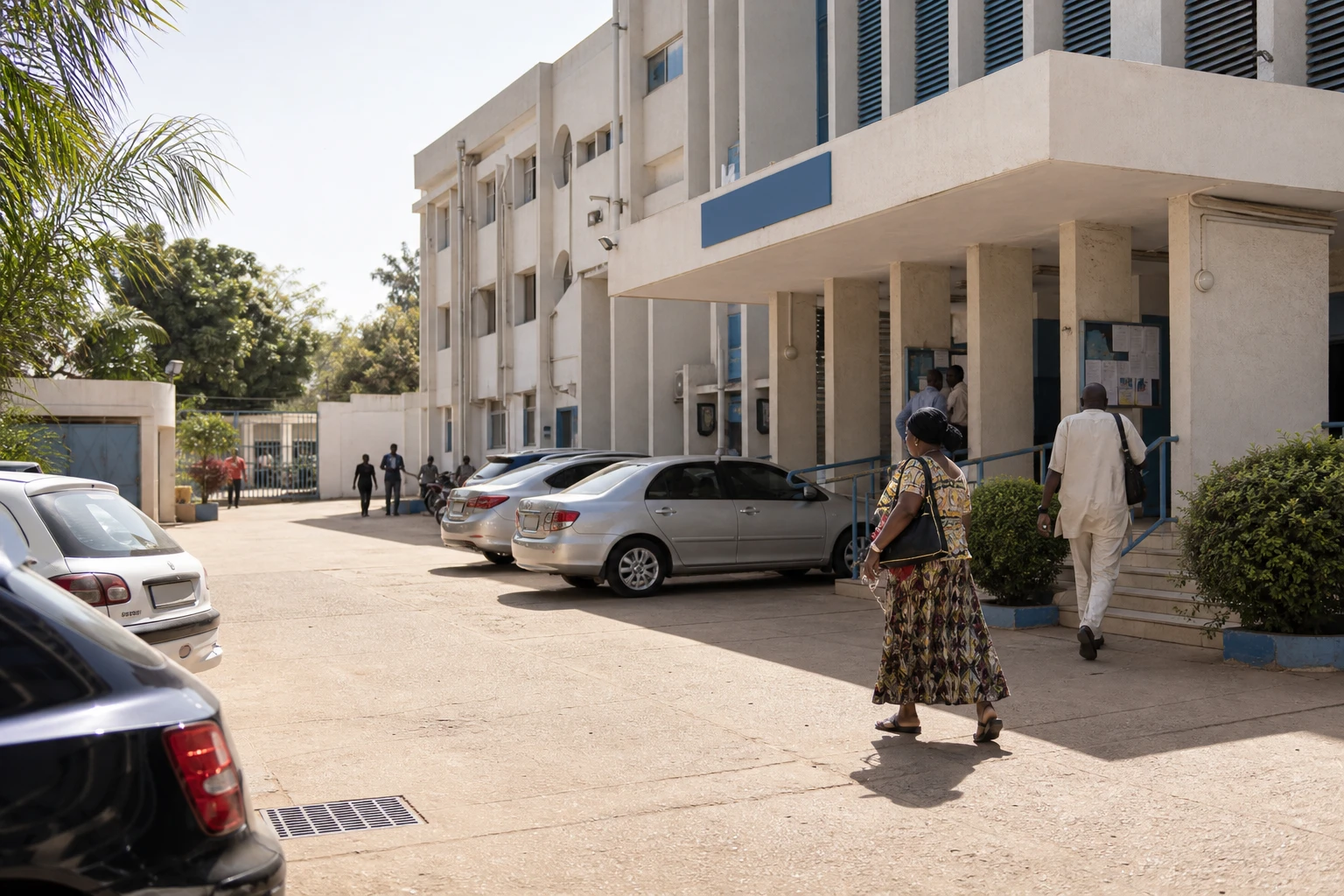
In Bamako, security is no longer decided solely on the battlefield
In Mali, every security announcement is now read on two levels. First, as a response to the expansion of armed groups. Second, as a political test for the capital, Bamako, which wants to show that it still has the situation under control as pressure spreads well beyond the military front.
The debate in the United States over possible strikes against Al-Qaeda affiliate JNIM comes amid this acute fragility. It concerns more than just an armed group. It also touches on the balance of power between Bamako, its Russian partners, the United States and West African regional organisations, already under strain from the continued deterioration of security in the Sahel. Mali left ECOWAS alongside its neighbours Burkina Faso and Niger to form the Alliance of Sahel States, but the security fault lines remain regional.
What Washington is watching, and what the situation in Mali already shows
According to several US media outlets, the Trump administration is considering the possibility of targeted strikes against JNIM. The option has not been confirmed by the State Department, which has limited itself to reiterating that the United States unequivocally condemns terrorist activities in Mali. But the fact that the option is being discussed says something about how the conflict is evolving: Washington no longer sees Mali solely as a diplomatic issue, but as a possible theatre for direct action.
JNIM is not a marginal actor. The National Counterterrorism Center describes it as a violent Salafist organisation aligned with Al-Qaeda ideology, formed in 2017 through the merger of several groups based in Mali. The US State Department designated it a foreign terrorist organisation in 2018. In other words, for Washington, the question is not whether the group exists, but what method to use to contain it.
Developments on the ground are already clear. On 25 April 2026, coordinated attacks struck several locations in Mali, including Kati, near Bamako, as well as towns in the centre and north of the country. Reuters reported explosions and gunfire near Kati’s main military base at dawn. The Associated Press and Reuters also confirmed that Mali’s Defence Minister, Sadio Camara, was killed in the assault on his residence. This point matters: contrary to a claim circulating in some dispatches, this was not a suicide attack on a living minister, but a deadly assault on a senior government figure.
The same episode demonstrated the extent of coordination between JNIM and Tuareg separatist groups, notably the Azawad Liberation Front. News reports described the offensive as the largest in more than a decade. The African Commission on Human and Peoples’ Rights also expressed deep concern after the coordinated attacks on 25 April, citing deaths, injuries and material destruction.
Russia’s presence complicates any US option
Since the gradual breakdown in relations between Bamako and several Western partners, the Malian authorities have relied on Russia to support their operations. Wagner initially provided that support, followed by Africa Corps, a force linked to Russia’s Defence Ministry. Reuters and the AP have confirmed that these forces operate alongside the Malian army on the ground, including in convoys and bases attacked in July 2026.
In this context, a US strike would pose a problem far broader than counterterrorism alone. It would create a situation of indirect military coexistence between Washington and Moscow in the same theatre. This is not an abstract scenario. Observers already cite “deconfliction” mechanisms, such as those used in Syria, to avoid incidents between powers. But Mali is not Syria: the terrain is more fragmented, chains of command more opaque, and areas of control more fluid. That is precisely what makes any external intervention riskier.
The human cost remains central. Several human rights organisations have for months raised the alarm over abuses attributed to all parties, including during counterterrorism operations. Human Rights Watch has documented abuses in the context of security cooperation in Mali, while a report covered by the international press in June 2026 cited civilian casualties linked to air strikes and military repression. Bamako rejects these allegations, but they weigh on the legitimacy of any further military response.
What this means for Malians and for West Africa as a whole
For residents of Bamako, the centre and the north, the issue is not a contest between great powers. It is access to fuel, the movement of goods, road safety, the continued operation of markets and daily life. JNIM has already disrupted fuel supplies and weighed on the urban economy as well as on villages dependent on road links. Attacks on convoys, stations, bases and logistics hubs show that the war also targets the material foundations of state power.
The challenge for the Malian state is twofold. It must prove that it controls the territory while avoiding becoming locked into a purely military strategy. Chatham House noted after the April attacks that security cannot be provided by force alone. This view echoes that of African actors who stress the need to combine security with local dialogue and control of economic routes. Mali thus remains a test for the Alliance of Sahel States, but also for ECOWAS, which continues to monitor the deterioration in security even after the three countries left the organisation.
At continental level, the situation in Mali sends a clear signal. On the one hand, armed groups are becoming more capable and know how to strike at nerve centres. On the other, security partnerships are multiplying without any guarantee of lasting stability. Mali is thus becoming a test case for what many African states seek to avoid: sovereignty proclaimed but undermined by overlapping dependencies, interlinked regional crises and military responses that fail to address the causes of conflict. The coming weeks will show above all whether Washington keeps the option on the table or turns the debate over strikes into a decision.



