Algeria
 Egypt
 Libya
 Morocco
 Sudan
 Tunisia
 Benin
 Burkina Faso
 Cabo Verde
 Côte d'Ivoire
 Ghana
 Guinea
 Guinea-Bissau
 Liberia
 Mali
 Mauritania
 Niger
 Nigeria
 Senegal
 Sierra Leone
 The Gambia
 Togo
 Cameroon
 Central African Republic
 Chad
 DR Congo
 Equatorial Guinea
 Gabon
 Republic of the Congo
 São Tomé and Príncipe
 Burundi
 Comoros
 Djibouti
 Eritrea
 Ethiopia
 Kenya
 Malawi
 Mauritius
 Mozambique
 Rwanda
 Seychelles
 Somalia
 South Sudan
 Tanzania
 Uganda
 Angola
 Botswana
 Eswatini
 Lesotho
 Namibia
 South Africa
 Zambia
 Zimbabwe
In Antananarivo, concern is no longer just about the numbers
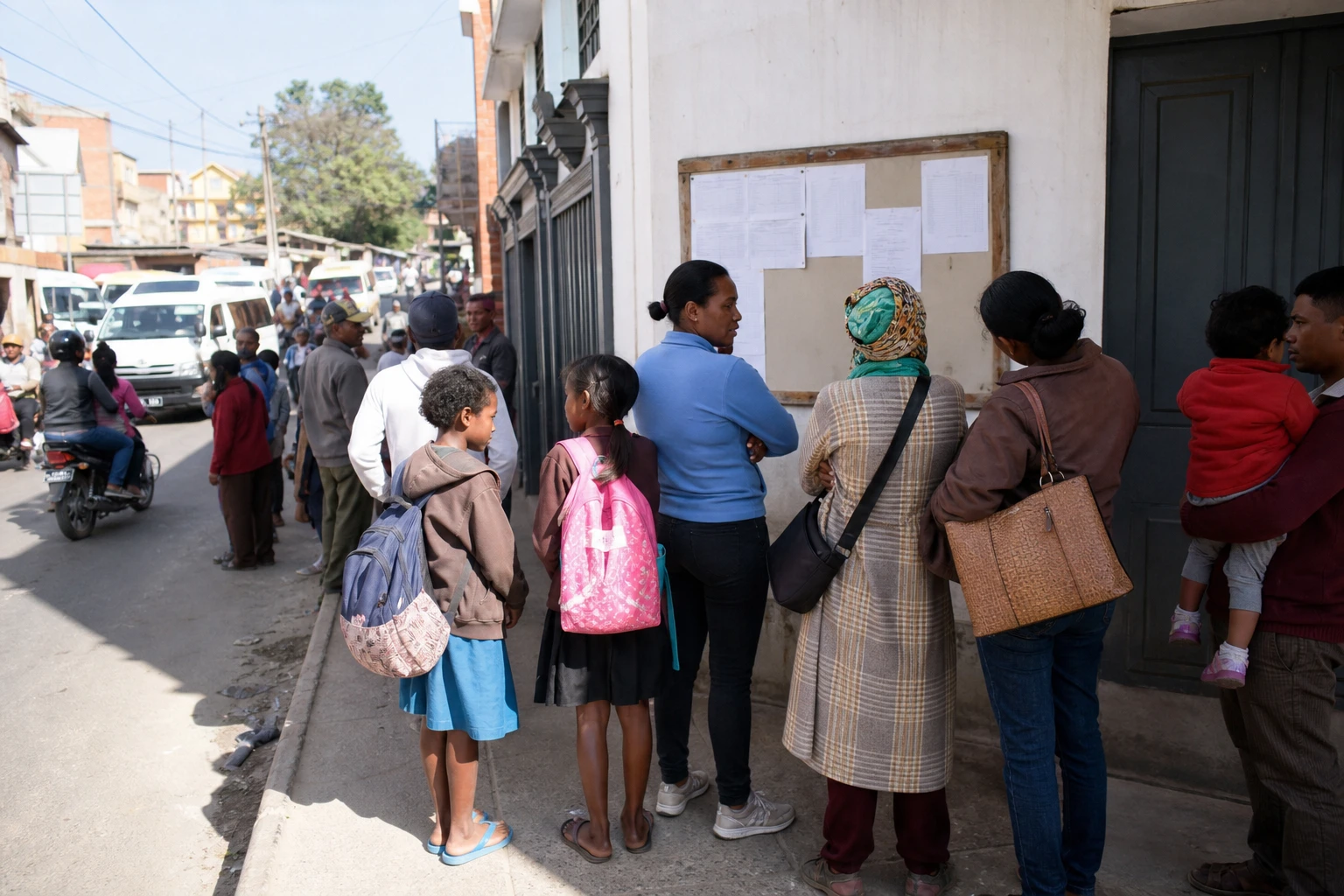
In the Malagasy capital, a child’s disappearance is no longer an isolated news story. It becomes an alert for the family, the neighbourhood and then the nation. Since late June, several bodies have been found after missing-person reports, and Antananarivo’s residents are living amid rumours, searches and calls for vigilance.
The issue strikes at the heart of the social contract. In Madagascar, where Antananarivo is home to institutions, government departments and a large share of public services, anxiety goes beyond policing alone. It also raises questions about the state’s ability to protect minors, coordinate investigations and reassure families who want neither slogans nor promises, but precise answers.
The facts, and what the authorities acknowledge
The first available information points to a serious situation. The national police reported 172 cases of missing children and teenagers in the first half of 2026 across Madagascar. Reports are particularly numerous in the Analamanga region, which includes Antananarivo. Malagasy media report that 90 cases were recorded in the capital and its outskirts, although some of the children were later found or are thought to have returned home without the police being notified.
The events of July heightened unease. A Malagasy news outlet recorded four people reported missing and later found dead in one week: a 12-year-old girl, a 35-year-old father, a 17-year-old teenager and a 19-year-old student. Other cases were also reported in the capital and elsewhere in the country, fuelling the perception of a widespread phenomenon involving runaways, unexplained disappearances and suspected homicides.
As concern mounted, the authorities made a series of announcements about coordination. An operations centre was opened at Tsaralalàna central police station to centralise efforts to tackle disappearances. The police, for their part, mobilised their specialist units, while the Ministry of Population and the Morals and Child Protection Brigade launched awareness campaigns.
On 13 July, the Conference of Bishops of Madagascar also took a position, saying it could not remain a spectator to this reality. The Catholic Church’s intervention reflects the gravity of the social situation: when religious leaders enter the security debate, it is often a sign that public trust is eroding and that people expect more than a routine statement.
Why the issue weighs so heavily on the Malagasy capital
The issue goes beyond crime alone. In Antananarivo, families’ fears are also fuelled by familiar urban vulnerabilities: densely populated neighbourhoods, difficult daily traffic, uneven social oversight, and a stark divide between central areas and the outskirts. When a child disappears, the alert spreads quickly through the fokontany, neighbourhood units that serve as a local level of monitoring and an administrative link.
The case also highlights the question of trust. If the number of disappearances is high but partly uncertain because not every return home is reported, this complicates investigators’ work. But the scale of the complaints is already enough to show that this is not a marginal episode. The authorities therefore face a twofold challenge: to establish a reliable picture of the cases and to prevent fear from taking the place of information.
The impact varies between groups. For families, every hour counts. Schools, churches and neighbourhood associations must work to prevent incidents without causing panic. The executive must show it is in control of internal security. And for law enforcement, the challenge is practical: investigate quickly, link cases and preserve evidence, while avoiding the trivialisation of disappearances as mere runaways.
In this context, turning to specialist units and centralised coordination makes sense. But it will not be enough if investigations remain scattered among the police, gendarmerie, local administration and families. Madagascar has already shown, in other public security crises, that the response cannot be purely repressive. It must also be local, social and swift.
A Malagasy alarm that resonates across the region
Madagascar is a member of SADC, the Southern African Development Community, and the African Union. In other words, child protection is not strictly a national matter. It also concerns regional standards on security, justice and human rights. The Malagasy capital, Antananarivo, is not only a political centre: it is also a point of contact between national expectations and the country’s continental commitments.
SADC lists peace, security and development among its objectives. In this context, member states are regularly urged to strengthen institutional cooperation. For Madagascar, the challenge is to turn this crisis into a test of credibility: not just an emotional episode, but a signal of the true state of the system for protecting minors, from police investigations to local prevention.
The coming days will be decisive. It remains to be seen whether the authorities publish more detailed data, whether cases are better classified as disappearances, runaways or homicides, and whether families receive answers more quickly. In Antananarivo, the debate is no longer just about insecurity. It is now about the Malagasy state’s ability to identify the threat, document it and respond without allowing fear to take control of the city.