Algeria
 Egypt
 Libya
 Morocco
 Sudan
 Tunisia
 Benin
 Burkina Faso
 Cabo Verde
 Côte d'Ivoire
 Ghana
 Guinea
 Guinea-Bissau
 Liberia
 Mali
 Mauritania
 Niger
 Nigeria
 Senegal
 Sierra Leone
 The Gambia
 Togo
 Cameroon
 Central African Republic
 Chad
 DR Congo
 Equatorial Guinea
 Gabon
 Republic of the Congo
 São Tomé and Príncipe
 Burundi
 Comoros
 Djibouti
 Eritrea
 Ethiopia
 Kenya
 Malawi
 Mauritius
 Mozambique
 Rwanda
 Seychelles
 Somalia
 South Sudan
 Tanzania
 Uganda
 Angola
 Botswana
 Eswatini
 Lesotho
 Namibia
 South Africa
 Zambia
 Zimbabwe
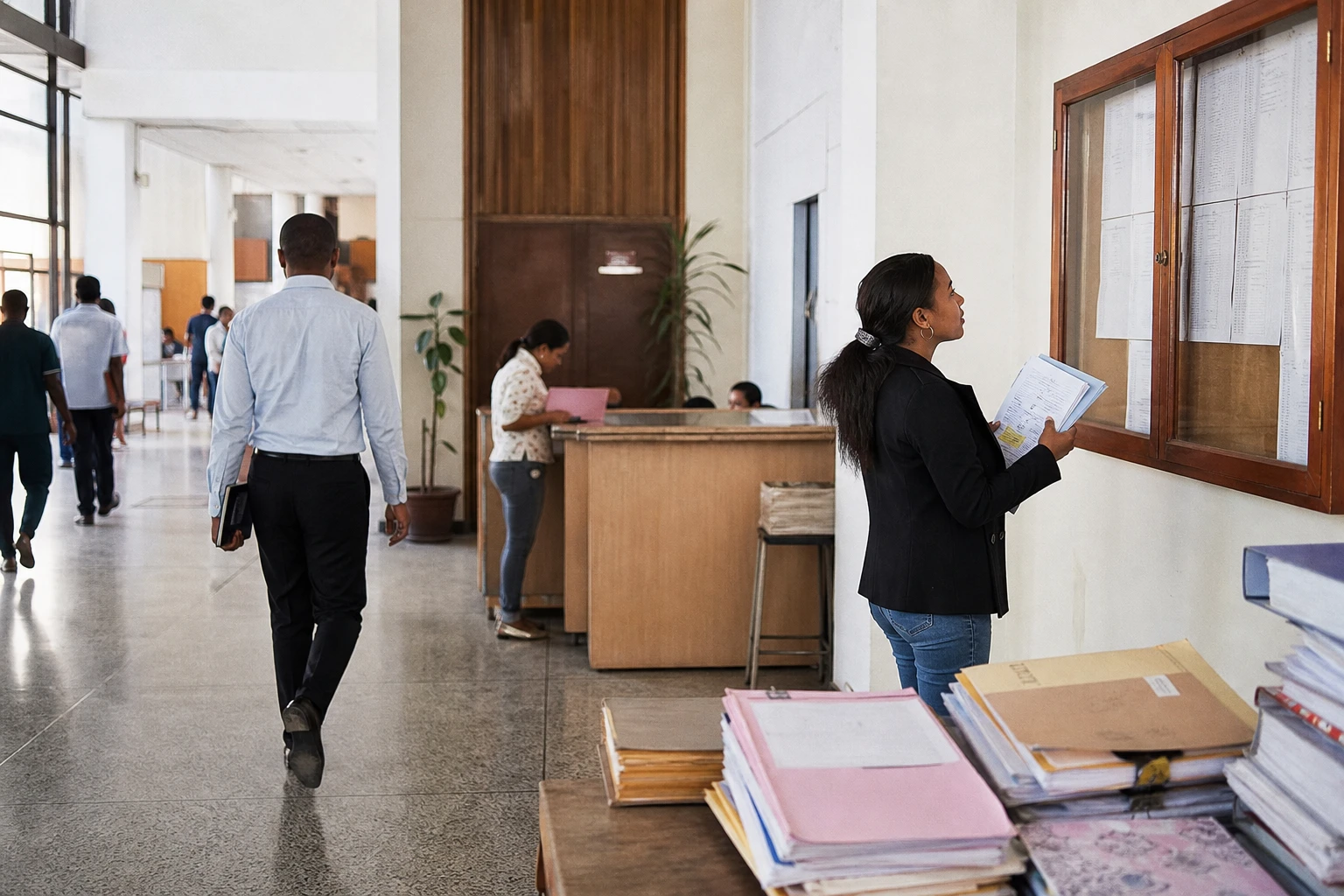
In Madagascar, rare earths become a test of economic sovereignty
In Antananarivo, the issue is no longer just mining. It now concerns how the Malagasy state wants to negotiate with major powers without losing control of its resources. In north-western Madagascar, the Ampasindava project sits on this new fault line: attracting capital while also preventing a strategic deposit from being captured too early by a foreign value chain.
The debate is taking shape as Madagascar’s mining sector already accounts for a significant share of the country’s exports, and the authorities are expressing a clearer desire to process critical minerals locally. The Mines Ministry’s official guide notes that Madagascar has diverse potential, with projects already well advanced in ilmenite, monazite, graphite and other strategic substances. It also points out that the sector still accounts for only a limited share of GDP, while contributing substantially to exports.
US funding for Ampasindava opens a longer chapter
On 22 July 2026, Harena Rare Earths announced that it had signed a development funding agreement with the US International Development Finance Corporation (DFC), the US federal agency dedicated to international investment. The agreement provides for up to $4.84 million for the Ampasindava rare earths project in Madagascar. The company says the funds will be used for permits, environmental and social studies, and the technical work needed before any potential construction.
The most sensitive aspect is not just the amount. The agreement also gives the DFC a right of first review for future direct financing or investment in the project. In other words, Washington is not merely helping to prepare the project; it is securing a place for itself when the asset moves from paper to construction. Harena presents this mechanism as the start of a deeper financing relationship as the project moves towards an investment decision.
Harena describes Ampasindava as a future rare earth oxide site, with construction targeted to begin by 2027. The map of mining projects in the SADC region also identifies Madagascar as a country with rare earth potential at Ampasindava. This regional perspective matters: in the Southern African Development Community, critical minerals are now seen as levers for building value chains, not merely as volumes to export.
The US approach is clear: secure the upstream end of supply chains
The Madagascar project is not an isolated case. The DFC itself says it can support rare earth and critical minerals projects in certain countries. Its remit covers Madagascar, among other African countries, and its mandate was extended in December 2025 by a new six-year authorisation. The agency has also recently said it wants to strengthen US economic security by supporting supply chains it considers vulnerable.
Across Africa, the approach is recurring. A modest initial funding package often helps advance studies, permits and legal structuring. Then comes the most strategic phase: when larger-scale financing or an equity stake can lock in the mineral’s future destination. In Angola, the DFC has already supported the Longonjo project; in Malawi, it has also backed Songwe Hill. The Ampasindava case therefore confirms a broader sequence, designed to align African projects with US industrial needs.
This is where the balance of power is at stake. For investors, US backing reduces political risk and improves a project’s bankability. For the host state, the challenge is different: it must secure revenue, jobs and infrastructure, and, above all, local decision-making power over the timetable, environmental standards and industrial benefits. A deposit’s value is no longer measured solely by its geological grade. It also depends on what remains in the country after extraction.
For Malagasy people, the stakes go beyond the mine itself
In Madagascar, the expected benefits of a mining project are not distributed equally across regions. The central authorities focus first on tax revenue, the trade balance and the signal sent to investors. In communities near the site, the questions are more immediate: access to land, local jobs, traffic, water, compensation and ecosystem protection. The environmental and social studies announced in the DFC agreement are therefore as much a political step as a technical one.
The national context also explains this vigilance. The overhaul of Madagascar’s mining code, outlined in the Mines Ministry’s official guide, aims to attract more investment while ensuring more balanced social and environmental benefits. The document describes a sector still dominated by a few large-scale operations and artisanal mining, while also highlighting the ambition to increase local added value. This is precisely the crux of the Ampasindava project: Madagascar is seeking to move from being a mere resource base to becoming an industrial partner.
The question is all the more sensitive because the country has already seen tensions over certain mining projects and their territorial impacts. In the African language of resources, sovereignty does not mean shutting the door to partners. Rather, it means being able to set the rules, enforce standards and choose how much processing should remain in the country. In the case of rare earths, this room for manoeuvre is crucial, because these minerals feed the permanent magnets used in electric vehicles and wind turbines, two sectors at the heart of the global energy transition.
What Madagascar’s case says about critical minerals in Africa
The Ampasindava project resonates far beyond Madagascar. In the SADC region, the African Economic Union has recently highlighted a regional initiative on sustainable value chains for minerals essential to the energy transition. The message is clear: southern Africa wants greater influence over downstream industry, not just extraction. Madagascar, with its rare earths, monazite and other critical minerals, is part of this movement.
What is at stake here is therefore continental. If the project moves forward, it will serve as a reference point for other African cases where states are seeking to attract financing without surrendering all their economic sovereignty. If, on the other hand, the benefits remain concentrated abroad, the project will add another example to a long history of raw exports whose value is captured elsewhere. Either way, what happens next will depend on construction decisions, permits, environmental safeguards and Madagascar’s ability to impose its own industrial priorities.