Algeria
 Egypt
 Libya
 Morocco
 Sudan
 Tunisia
 Benin
 Burkina Faso
 Cabo Verde
 Côte d'Ivoire
 Ghana
 Guinea
 Guinea-Bissau
 Liberia
 Mali
 Mauritania
 Niger
 Nigeria
 Senegal
 Sierra Leone
 The Gambia
 Togo
 Cameroon
 Central African Republic
 Chad
 DR Congo
 Equatorial Guinea
 Gabon
 Republic of the Congo
 São Tomé and Príncipe
 Burundi
 Comoros
 Djibouti
 Eritrea
 Ethiopia
 Kenya
 Madagascar
 Malawi
 Mauritius
 Mozambique
 Rwanda
 Seychelles
 Somalia
 South Sudan
 Tanzania
 Angola
 Botswana
 Eswatini
 Lesotho
 Namibia
 South Africa
 Zambia
 Zimbabwe
At the crossroads of crises, a health alert that crosses administrative borders
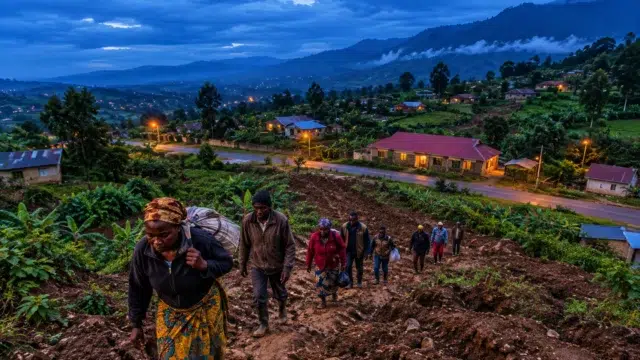
In eastern Democratic Republic of the Congo, Ebola is never just a medical issue. It is also a matter of roads, trust and security. When an outbreak hits Ituri, attention immediately turns to Uganda, Rwanda, South Sudan and, beyond them, the entire Great Lakes region. Population movements, cross-border trade and local insecurity turn every suspected case into a regional concern.
The World Health Organization has confirmed that the current outbreak is caused by the Bundibugyo virus, a rarer Ebola strain for which there is still no approved vaccine or specific treatment. The alert came in May 2026, as Kinshasa and Kampala simultaneously reported cases on either side of the border. Since then, the outbreak has crossed the threshold of a public health emergency of international concern, and then of a continental public health emergency for Africa CDC.
The latest figures available from the WHO, reported in late July, show more than 2,400 confirmed cases in DR Congo and 19 confirmed cases in Uganda as of early June, with the outbreak still active on the Congolese side. The death toll has also continued to rise, while Uganda has started its 42-day countdown after the recovery of the last known patient. On this point, health authorities reiterate a simple rule: a country is not declared Ebola-free until no new cases have appeared for 42 days after the last negative test of the last patient.
In Ituri, the response is advancing, but still has to win people over
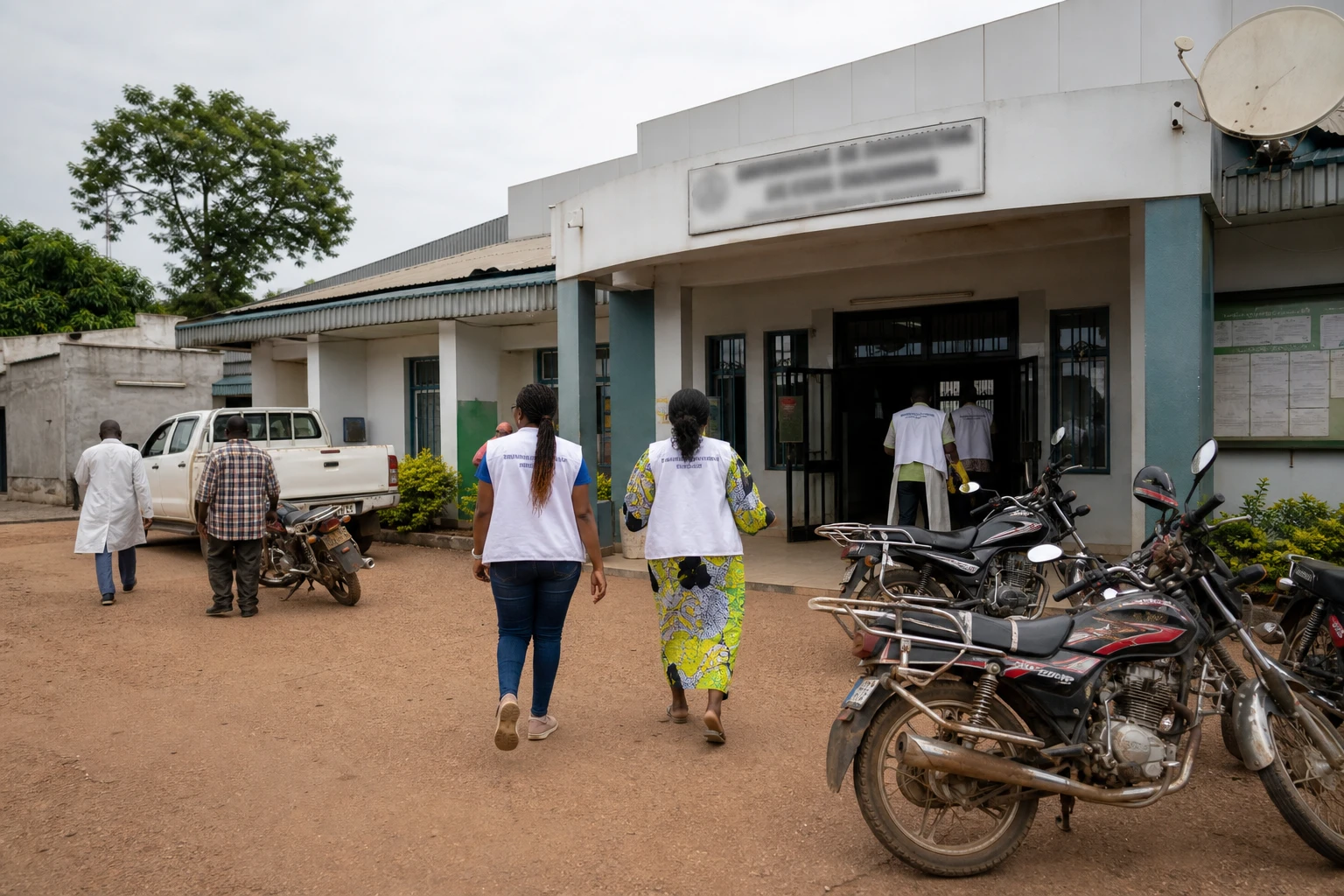
Ituri province remains the epicentre of the Congolese outbreak. It is also an area where the health response faces very concrete obstacles: forced displacement, mistrust of health teams, attacks on healthcare facilities and hard-to-reach areas. The WHO and several partners have stressed one point: without rapid community alerts, the virus spreads faster than surveillance teams can respond.
The heart of the problem is not just the virus’s virulence. It is late detection. According to available data, a significant share of new infections still comes from unknown chains of transmission, indicating that infected people are slipping through screening nets. Under these conditions, the response cannot be limited to hospitals. It must include community leaders, local associations, religious networks, frontline health workers and families. In practice, this is where the difference between a contained outbreak and a regional crisis is made.
The trials being discussed in DR Congo are part of this emergency response. On the one hand, researchers are testing an experimental antiviral drug in people already infected. On the other, a preventive protocol targets high-risk contacts. But caution is needed: for the Bundibugyo strain, the WHO and CDC stress that there is still no authorised vaccine or validated treatment. In other words, science can help, but it cannot replace early detection or community engagement.
Ituri’s civil society has understood the importance of this lever. Local organisations have presented a three-month awareness plan in Bunia, aiming to embed the response in residents’ daily lives. This is essential in a province where official voices alone do not always win people’s support. Public health there depends as much on logistics as on the credibility of those delivering the message.
In Sudan, war continues to block a way out of the crisis
As eastern Africa tries to contain Ebola, Sudan remains mired in a war that has already upended the balance across the Horn of Africa. Since April 2023, the Sudanese army and the Rapid Support Forces have been fighting for control of the country. Truce efforts are multiplying, but they keep running up against a recurring red line: the role of the army in Sudan’s political future.
Recent diplomatic initiatives have been led by Washington, the African Union, IGAD and several international partners. They agree on one point: a humanitarian truce must come first, followed by a lasting ceasefire, before any credible political transition. But on the ground, negotiators are dealing with a fragmented country where fighting, mass displacement and the collapse of public services have already destroyed civic space.
US sanctions and targeted measures by the European Union show that external pressure is not letting up. Even so, official UN and African Union statements converge on a clear assessment: there is no lasting military solution. The challenge is therefore not only to isolate those responsible. It is also to prevent the war from continuing to fund itself, drag on and spill over into neighbouring countries.
Two issues, one warning for the continent
These two stories tell the same tale from different angles. In Ituri, a rare disease is testing the strength of health systems, chains of trust and cross-border mechanisms. In Sudan, a protracted war shows the cost of diplomacy that fails to influence the weapons. In both cases, Africa has no shortage of institutions or expertise. What it lacks above all is a stable political and financial environment in which to act early enough.
The continental implications are clear. For Ebola, the alert concerns the entire Great Lakes region, where movement, mines, markets and border crossings make surveillance essential. For Sudan, the risk is broader still: a prolonged war weakens the Horn of Africa, puts pressure on neighbouring states and fuels regional instability. In both cases, the coming weeks will matter more than slogans. On the health front, vigilance remains focused on reducing new chains of transmission and protecting healthcare workers. On the diplomatic front, attention is turning to whether mediators can turn a humanitarian truce into a verifiable ceasefire.