Algeria
 Egypt
 Libya
 Morocco
 Sudan
 Tunisia
 Benin
 Burkina Faso
 Cabo Verde
 Côte d'Ivoire
 Ghana
 Guinea
 Guinea-Bissau
 Liberia
 Mali
 Mauritania
 Niger
 Nigeria
 Senegal
 Sierra Leone
 The Gambia
 Togo
 Cameroon
 Central African Republic
 Chad
 DR Congo
 Equatorial Guinea
 Gabon
 Republic of the Congo
 São Tomé and Príncipe
 Burundi
 Comoros
 Djibouti
 Eritrea
 Ethiopia
 Kenya
 Madagascar
 Malawi
 Mauritius
 Mozambique
 Rwanda
 Seychelles
 Somalia
 South Sudan
 Tanzania
 Uganda
 Angola
 Botswana
 Eswatini
 Lesotho
 Namibia
 Zambia
 Zimbabwe
Johannesburg arrest goes beyond the criminal case
When a suspect wanted for a crime committed in the United Kingdom is found in South Africa, the case is not simply a police transfer. It involves judicial cooperation, the credibility of security services and Pretoria’s ability to prevent its territory from becoming a destination for international fugitives. In this case, 45-year-old Ndodana Mkhanyisi Tshuma is at the centre of proceedings involving both South African and British authorities.
Tshuma’s name has been in circulation since 10 July 2026, when he was arrested in Kensington, in the Johannesburg suburbs, during an operation conducted by South African police with Interpol’s support. British authorities are seeking him in connection with an investigation opened after the bodies of his wife and two daughters were found in Great Denham, near Bedford, north of London. The victims were identified as 42-year-old Nothabo Zandile Tshuma, 15-year-old Natalie and five-year-old Nala.
South Africa’s legal framework and the extradition process
In South Africa, extradition is not a simple administrative exchange. It involves specific judicial steps, beginning with an initial local court appearance, followed by the examination of formal requests between states. The South African Department of Justice says extradition requests are handled by its Directorate of International Legal Relations, while the National Prosecuting Authority manages extradition cases and requests for international legal assistance. The country has also designated the United Kingdom as a state covered by its extradition arrangements.
Interpol acts as an intermediary in this case. Its National Central Bureau in South Africa is based in Pretoria, at the heart of the South African police system. This network makes it possible to link an investigation opened in the UK with checks carried out by South African services and, subsequently, proceedings before local courts. In practice, an arrest in southern Africa does not bring proceedings to an end: it opens them in another jurisdiction.
This framework matters for the region. South Africa is a major gateway to SADC, the Southern African Development Community. Every cross-border case therefore involves the police, magistrates, migration services and cooperation with neighbouring countries. In a region with high levels of mobility, coordination between states remains crucial in cases involving serious crime, as well as for public trust in institutions.
What the Johannesburg court decided
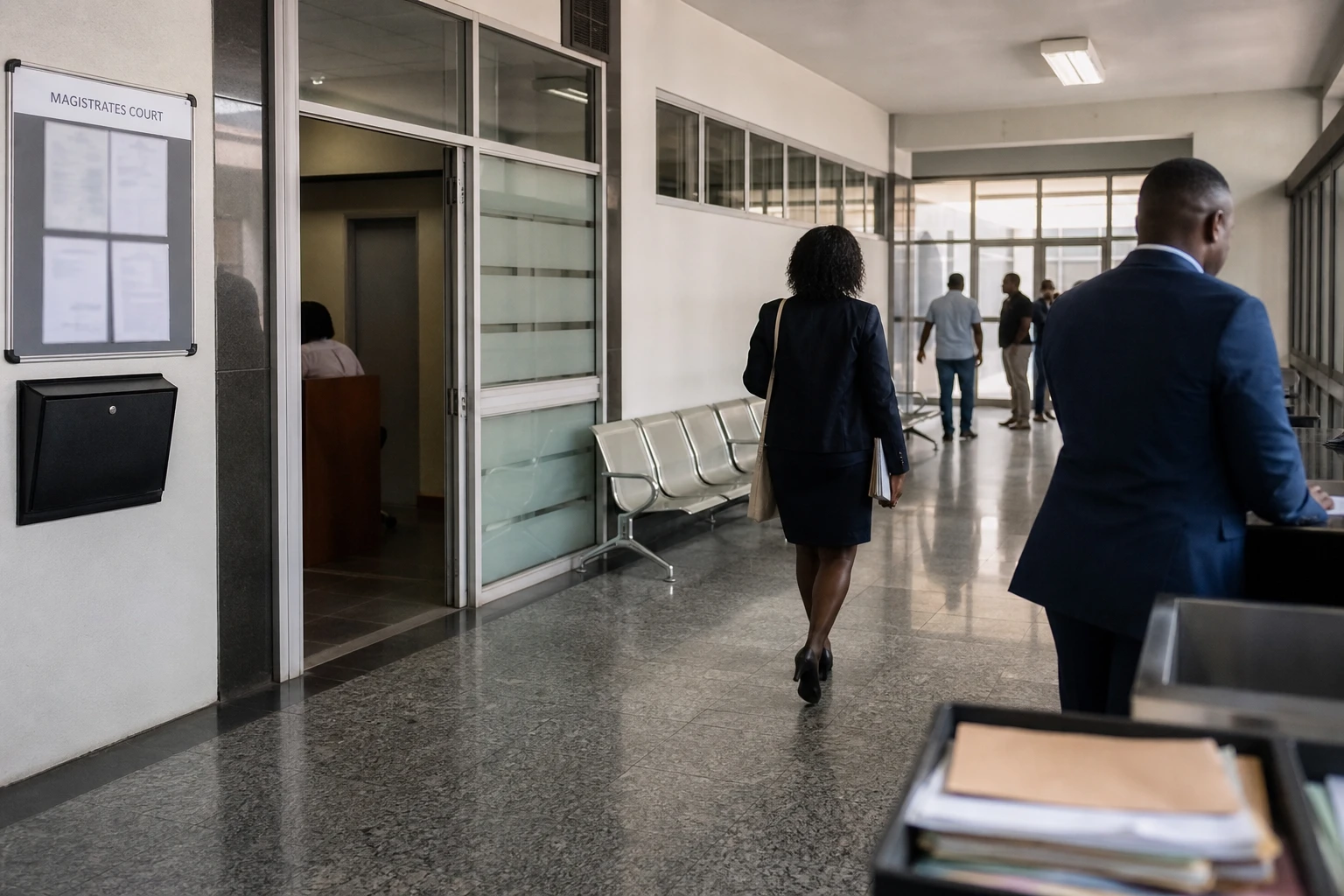
According to information made public at the first appearance, the Johannesburg Magistrates’ Court postponed the case until 27 August 2026. The magistrate said investigations were continuing, particularly into the chain of witness testimony and ballistic results that were still missing from the case file. Tshuma also withdrew his application for bail, leaving him in pre-trial detention until the next hearing.
This stage is significant. It shows that the South African justice system is not simply processing a request from abroad. It first checks the procedural elements, the identity of the person arrested and the validity of the case file before any further action. This is a safeguard for the accused, but also for the requesting state, which must provide a complete case file before it can expect a transfer to the United Kingdom.
British authorities, for their part, have begun their own judicial process. Bedfordshire Police confirmed Tshuma’s arrest in South Africa and said the investigation involved several partners, including the National Crime Agency, Interpol and authorities in southern Africa. This cooperation illustrates a central point: serious crimes committed in a European country can now trigger searches and arrests thousands of miles away, including on the African continent.
A criminal case, but also a test of judicial sovereignty
For South Africa, the issue goes beyond the presence of a foreign suspect on its soil. Pretoria wants to show that it can cooperate with international partners without surrendering control of its own proceedings. This is a sensitive stance in a country often facing criticism over crime, porous borders and the movement of fugitives. Demonstrating an orderly judicial response is also a way to defend the reputation of its institutions.
For South Africans, the case raises a practical question: how can intelligence, criminal policing and migration controls be better coordinated without turning public spaces into places of widespread suspicion? Authorities have said the arrest resulted from an intelligence-led operation. But what happens next will depend above all on the quality of exchanges between the prosecution service, investigative agencies and their British counterparts.
Across SADC, this kind of case is also a reminder that cross-border crime no longer has clear boundaries. Escape networks, family movements, dual national ties and complex migration routes require states to communicate more with one another. South Africa, which accounts for a share of the region’s flows, regularly finds itself at the centre of such cases. Its response is therefore being watched well beyond Johannesburg.
What to watch before 27 August
The next key date is 27 August 2026. By then, the case will need to clarify several points: the strength of the evidence, Tshuma’s legal status in South Africa and the precise timetable for any possible extradition to the United Kingdom. British authorities will need to complete their case file if they want to move to the next stage.
This case will say as much about the ability to locate a suspect as it will about how South Africa handles international criminal cases. In a regional context where police cooperation is growing, Pretoria wants to show that it is neither a grey area nor a safe haven. The political verdict on this episode will therefore depend on strict adherence to procedure, without haste or showmanship.