Algeria
 Egypt
 Libya
 Morocco
 Sudan
 Tunisia
 Benin
 Burkina Faso
 Cabo Verde
 Côte d'Ivoire
 Ghana
 Guinea
 Guinea-Bissau
 Liberia
 Mali
 Mauritania
 Niger
 Nigeria
 Senegal
 Sierra Leone
 The Gambia
 Togo
 Cameroon
 Central African Republic
 Chad
 DR Congo
 Equatorial Guinea
 Gabon
 Republic of the Congo
 São Tomé and Príncipe
 Burundi
 Comoros
 Djibouti
 Eritrea
 Ethiopia
 Kenya
 Madagascar
 Malawi
 Mauritius
 Mozambique
 Rwanda
 Seychelles
 Somalia
 South Sudan
 Tanzania
 Angola
 Botswana
 Eswatini
 Lesotho
 Namibia
 South Africa
 Zambia
 Zimbabwe
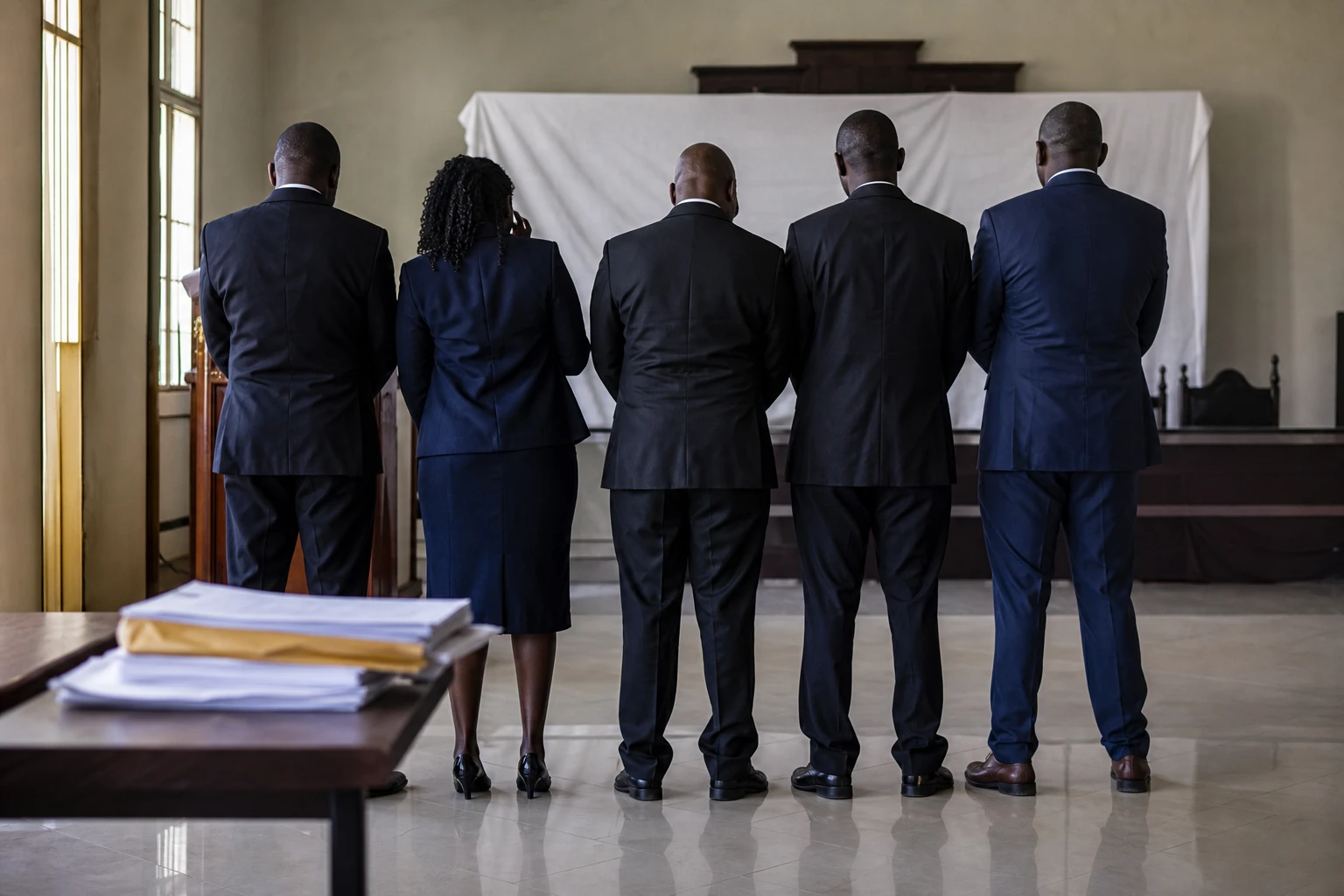
A disappearance that goes beyond the Kivumbi case
In Uganda, a political disappearance is almost never just a crime story. It says something about the relationship between the justice system, security services and the opposition in a country where Kampala often concentrates national tensions before they spill over into the districts. The case of Muhammad Muwanga Kivumbi, a senior figure in Robert Kyagulanyi’s National Unity Platform, known as Bobi Wine, is part of this climate of sustained pressure on critical voices.
Uganda is a member of the East African Community, where political movements, electoral disputes and the rights of opposition figures are closely scrutinised. In this case, the question is not only where a political leader is. It is also about how far coercive methods can go as electoral competition intensifies.
Specific facts, followed by administrative silence
Muwanga Kivumbi was granted bail on 9 July 2026, after about 169 days in pre-trial detention in a case involving terrorism charges and violence that took place after the January 2026 elections. The ruling was handed down by the High Court’s International Crimes Division in Kampala, with bail set at 10 million Ugandan shillings for him, according to several Ugandan media outlets and the judicial case record available online.
The following day, 10 July, as he was travelling from Butambala to Kampala, his vehicle was intercepted on the road at Mpigi. His lawyers and several local media outlets describe armed men, some in uniform, forcing him out before taking him away in an unmarked minibus locally nicknamed a “drone”. Since then, his family and party say they have no official record of his whereabouts.
In response, the authorities adopted a line of denial. The police said they were not holding Kivumbi and had found no record of his arrest or detention in their units, while the army said it did not know the circumstances of his alleged disappearance. Opposition leaders, meanwhile, petitioned the courts to demand that he be produced before a judge.
A legal case, but also a political test
The Kivumbi case cannot be viewed solely through the lens of criminal proceedings. It also points to a broader political stand-off between President Yoweri Museveni’s government and the main opposition, represented by Bobi Wine. In parliament, the opposition warned that the country could be facing a pattern of enforced disappearances and detentions outside due process, citing other cases of elected representatives or activists who were arrested and brought before the courts only later.
The choice of words matters. An enforced disappearance is not simply an absence. According to the definition cited by Human Rights Watch, it is an arrest or deprivation of liberty that is incompletely acknowledged or denied, combined with concealment of the person’s fate or whereabouts. In such situations, basic guarantees of the right to a defence disappear, fuelling fear among opposition parties, lawyers and residents of neighbourhoods where the presence of security services is already being felt.
For the National Unity Platform, the loss of a senior figure such as Kivumbi comes at an immediate cost. He was the party’s vice-president for the Buganda region, the political and demographic heart of the country’s centre. His absence weakens its ability to organise locally, at a time when the opposition is still trying to preserve its networks after the January 2026 presidential election, which the opposition widely disputed.
Human rights advocates take an even broader view. Livingstone Sewanyana sees the case as an example of a phenomenon that goes beyond one person and encompasses disappearances, secret detention and impunity for certain forms of treatment. Human Rights Watch, for its part, warned on 16 July that the use of force against government critics and seizures by men in uniform or civilian clothes risk further narrowing Uganda’s political space.
What this says about Kampala and the region
The stakes extend beyond Kampala. In the East African Community, Uganda remains a central player because of its size, security weight and diplomatic influence. When a political disappearance case gains prominence in the capital, it affects the country’s regional image, at a time when African and international partners are already closely monitoring the management of civil liberties in the post-election period.
The court timetable also sets out a clear next step. Several media outlets and parliamentary sources say the case is due back before the courts on 29 July 2026, following applications seeking to compel the state to explain where Kivumbi is. That date will show whether institutions can secure a verifiable response or whether security-related silence will continue to prevail.
Ultimately, the case exposes a familiar but still sensitive divide in Uganda: on one side, a state that says it is maintaining order after episodes of electoral violence; on the other, an opposition that says it is living under surveillance, with the sense that the line between arrest, rearrest and disappearance has become too blurred. For Kampala residents, voters in Buganda and families involved in public life, the Kivumbi case is above all a measure of the institutions’ ability to be held to account when a citizen is removed from the protection of the law.