Algeria
 Egypt
 Libya
 Morocco
 Sudan
 Tunisia
 Benin
 Burkina Faso
 Cabo Verde
 Côte d'Ivoire
 Ghana
 Guinea
 Guinea-Bissau
 Liberia
 Mali
 Mauritania
 Niger
 Nigeria
 Senegal
 Sierra Leone
 The Gambia
 Togo
 Cameroon
 Central African Republic
 Chad
 DR Congo
 Equatorial Guinea
 Gabon
 Republic of the Congo
 Burundi
 Comoros
 Djibouti
 Eritrea
 Ethiopia
 Kenya
 Madagascar
 Malawi
 Mauritius
 Mozambique
 Rwanda
 Seychelles
 Somalia
 South Sudan
 Tanzania
 Uganda
 Angola
 Botswana
 Eswatini
 Lesotho
 Namibia
 South Africa
 Zambia
 Zimbabwe
A clear victory, but a country still on an even keel
In São Tomé and Príncipe, a presidential election is about more than a score. It also reflects the state of a coalition, the strength of institutions and the confidence a small island state has in its own democratic mechanisms. The July 2026 vote confirmed this reality: incumbent president Carlos Vila Nova was credited with a first-round victory, in a context where turnout remains a central issue and the next political contest is already shifting to the legislative elections in September.
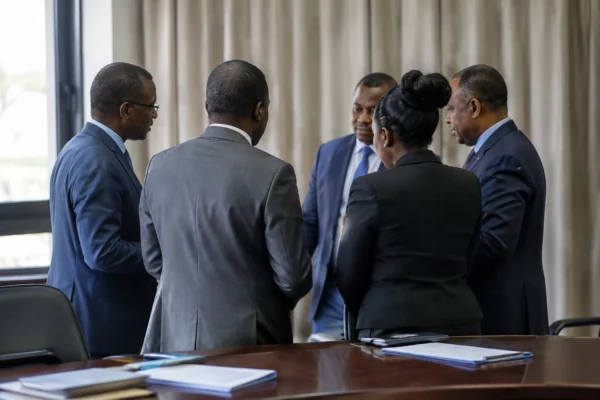
The result also comes amid a national trajectory marked by recent tensions within the executive. The head of state dismissed Prime Minister Patrice Trovoada in January 2025, amid political differences and divisions within the Independent Democratic Action (ADI). For a country of fewer than half a million people, this kind of crisis is more than a palace affair: it affects governance, budgetary choices and how voters interpret promises of stability.
Election figures and the architecture of power
According to provisional results published by the national electoral commission, Carlos Vila Nova won 55.94% of the vote. His main challenger, Nito Viegas D’Abreu, received 41.42%. The two other candidates, Eugénio Tiny and Miques João, won 1.07% and 1.58%, respectively. The campaign unfolded in a fragmented political landscape, with the incumbent president backed outside his original party by a platform bringing together forces from the MLSTP and MDFM, as well as a dissident wing of the ADI.
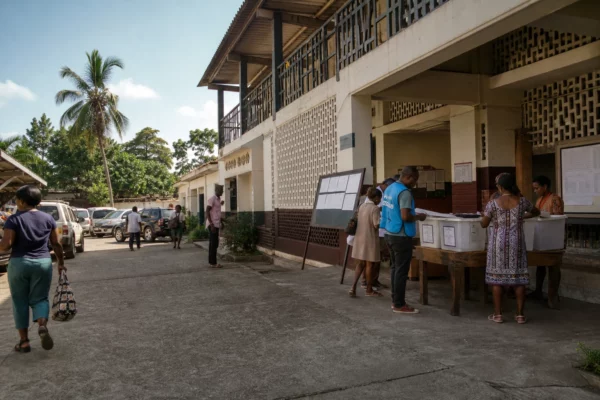
The vote was held on 19 July 2026. More than 142,000 voters were registered, including just over 121,000 in the archipelago and more than 20,000 in the diaspora. Abstention reached 58.81%, a high level that highlights a simple fact: in a small democracy, formal legitimacy can be strong without being broad. The president of São Tomé and Príncipe acts as arbiter, commander-in-chief and guardian of the functioning of institutions, giving the election particular weight, even in a system where day-to-day executive power rests largely with the government and the National Assembly.
In his first remarks after the results were announced, Carlos Vila Nova promised governance «with everyone and for everyone», a formula intended to mend the divisions of the past year. The message is as political as it is institutional: it is aimed at voters, but also at members of the majority, ADI dissidents and an administration that must now work to a packed schedule, with the presidential result confirmed and legislative elections due on 27 September 2026.
What this vote means for the archipelago
In the short term, the re-election consolidates continuity of the state. But it does not resolve the political tensions running through São Tomé and Príncipe. The fact that a president had to stand without the official backing of his party shows that a realignment is under way. In such a system, the real challenge is not just to win. It is also to rebuild working majorities, stabilise relations between the presidency and the government, and prevent rivalry between political camps from turning into administrative gridlock.
The economy makes this stability even more necessary. The World Bank estimates that economic activity in São Tomé and Príncipe grew by 2.1% in 2025, driven by improved electricity supply and tourism, with average growth of 3.7% expected between 2026 and 2028 thanks to reforms in energy, tourism and agriculture. The institution also projects GDP per capita at around $4,222.3, while poverty at the international threshold of $3 a day was expected to remain close to 13% in 2024 before edging down to 12.8% in 2027. In other words, growth is happening, but it remains too limited to transform daily life quickly.
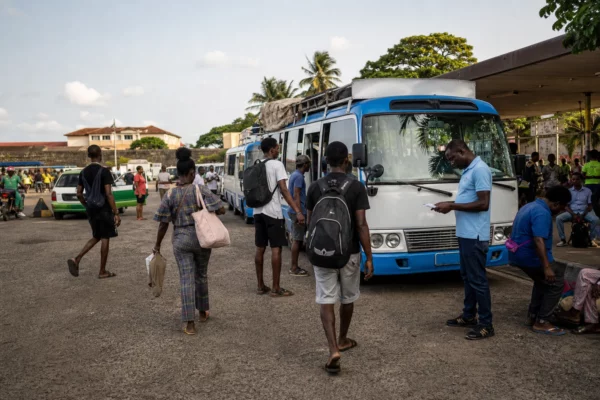
This structural weakness is reflected in the country’s priorities: energy, public-sector company bills, formal jobs, cash crops, tourism and social protection. In an archipelago dependent on imports, every supply difficulty quickly affects households, small businesses and transport. The next executive, whether presidentialist in its rhetoric or pragmatic in practice, will have to contend with this reality: an electoral victory eases neither budget constraints nor external vulnerability.
A useful regional perspective for Central Africa
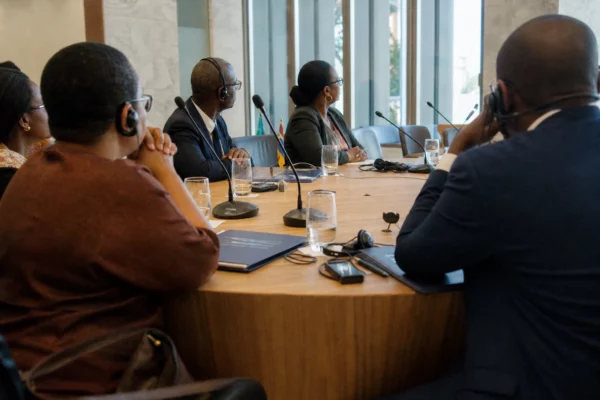
São Tomé and Príncipe belongs to ECCAS, the Economic Community of Central African States, and is also closely connected diplomatically to the CPLP, the Community of Portuguese Language Countries. Several observation missions were deployed for the vote, including those of the European Union, UNOCA, the CPLP, the g7+ and partner organisations. This network shows that the archipelago retains a reputation for monitored but generally peaceful electoral contests, in a sub-region where institutional stability can never be taken for granted.
The significance for the continent is clear. For Central Africa, the vote serves as a test on two fronts. First, it gauges a small state’s ability to organise a competitive election without a major crisis. Second, it is a reminder that transfers of power, even in a peaceful setting, remain fragile when they rely on divided parties, strong social expectations and an undiversified economy. In the coming weeks, the main point to watch will not only be the final proclamation of the presidential result. It will also be how the São Toméan presidency approaches the September legislative elections and the balance of power that emerges from them.