Algeria
 Egypt
 Libya
 Morocco
 Sudan
 Tunisia
 Benin
 Burkina Faso
 Cabo Verde
 Ghana
 Guinea
 Guinea-Bissau
 Liberia
 Mali
 Mauritania
 Niger
 Nigeria
 Senegal
 Sierra Leone
 The Gambia
 Togo
 Cameroon
 Central African Republic
 Chad
 DR Congo
 Equatorial Guinea
 Gabon
 Republic of the Congo
 São Tomé and Príncipe
 Burundi
 Comoros
 Djibouti
 Eritrea
 Ethiopia
 Kenya
 Madagascar
 Malawi
 Mauritius
 Mozambique
 Rwanda
 Seychelles
 Somalia
 South Sudan
 Tanzania
 Uganda
 Angola
 Botswana
 Eswatini
 Lesotho
 Namibia
 South Africa
 Zambia
 Zimbabwe
A release that goes beyond the legal case alone
In Abidjan, the release of six local PDCI-RDA officials does not, by itself, bring to a close the political chapter that opened ahead of the 25 October 2025 presidential election. Above all, it highlights how closely justice, political parties and the campaign were intertwined in a Côte d’Ivoire still marked by tensions over the vote.
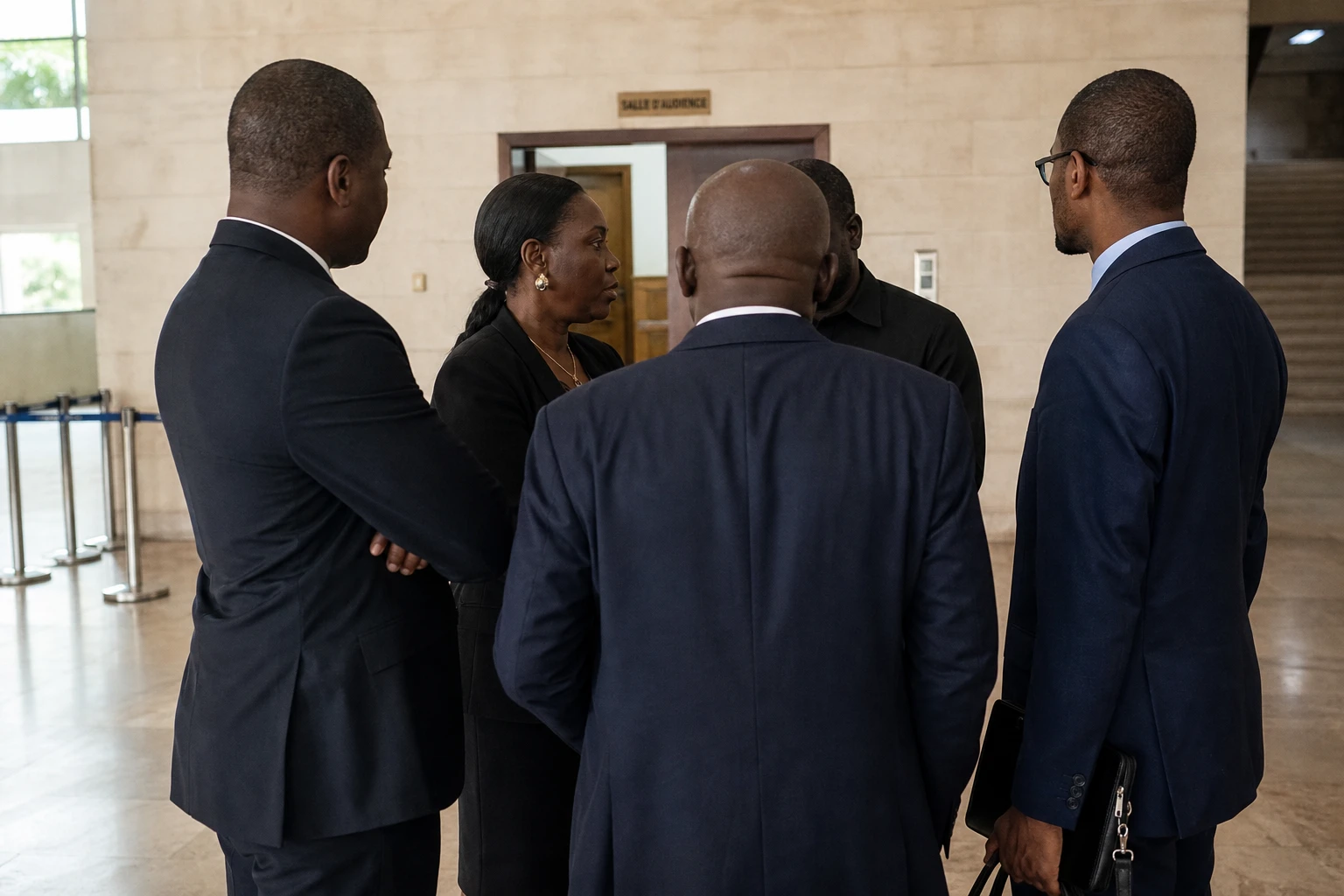
The six activists were released on Monday 20 July 2026, after a hearing before Abidjan’s anti-terrorism chamber and nine months behind bars. Their lawyer, Me Ange Rodrigue Dadjé, announced their release and said he did not wish to give details of the reasons for the decision.
Abidjan, Yamoussoukro and the weight of an election period under close watch
In Côte d’Ivoire, the political and administrative capital is Yamoussoukro, while Abidjan remains the country’s main institutional and economic centre. The 2025 presidential election took place amid heightened vigilance, with the launch of a security operation dubbed « Espérance », involving 44,000 members of the defence and security forces, and the presence of a joint ECOWAS-African Union mission to observe the vote.
The Independent Electoral Commission had set the candidate registration period from 25 July to 26 August 2025 for a vote scheduled for 25 October 2025. In the end, five candidacies were approved by the Constitutional Council, with around 8.7 million voters eligible to cast ballots.
Arrests linked to the campaign, followed by partial gestures of appeasement
The six people released belong to a group of at least eight local PDCI-RDA officials arrested between late September and early October 2025, on the eve of the vote. Two other local officials from the same party had already been released in May 2026, pointing to a gradual evolution rather than a clear-cut shift.
Names appearing in reports of the release include Pacôme Didier Allo, Manhenin Kouléon, Gnangoran N’cho, Koffi Jean Marc Mabo, Kinjinlman Ouattara and N’guessan Édouard Niangoran. The party has not publicly detailed the subsequent legal proceedings in their case.
The arrests took place during a period when several opposition figures denounced increased judicial pressure. The PDCI of Tidjane Thiam and Laurent Gbagbo’s PPA-CI had at the time drawn closer, arguing that the exclusion of their leaders weakened the balance of electoral competition.
What the case says about the relationship between justice and political competition
Alassane Ouattara’s government denied that the arrests were politically motivated. But in practice, the judicial timetable weighed on the campaign, as hundreds of protesters accused of taking part in banned gatherings were also convicted and around ten people lost their lives, according to figures reported at the time.
The case of the PDCI activists illustrates a pattern now familiar in several African countries during election periods: justice becomes a central arena of political competition. When a specialised anti-terrorism chamber handles cases involving local activists, the message goes beyond the individuals concerned. It affects the party’s grassroots, neighbourhood branches, young people mobilised on social media and, more broadly, voters’ confidence in the fairness of the process.
The effects are not the same for everyone. For party leaders, each release can be read as a sign of openness. For activists, it often remains incomplete as long as proceedings continue. For families, however, it first marks the end of a long period of uncertainty. And for the authorities, such gestures of appeasement allow them to show that the state remains in control of the judicial timetable without abandoning the firmness displayed during the campaign.
An Ivorian issue, but also a West African one
Côte d’Ivoire occupies a particular place in West Africa. Its economic weight, its role in ECOWAS and its political history make it a country closely watched when tensions rise around an election. That is precisely why ECOWAS and the African Union dispatched a joint observation mission, with more than 250 observers, and why regional authorities closely monitored the 2025 presidential process.
The case also matters to the continent because it says something broader about how states manage—or fail to manage—democratic competition when the opposition feels under pressure and judicial remedies become central. In a region already shaped by military transitions, party realignments and debates over the rule of law, the treatment of Ivorian opposition figures is seen as a test of institutional stability.
In the short term, the key question is straightforward: will the July 2026 releases herald lasting calm, or merely a temporary easing of pressure? The answer will depend on what happens to the other people facing prosecution, the PDCI-RDA’s stance and the degree of openness the authorities are prepared to allow in the political phase following the presidential election.