Algeria
 Egypt
 Libya
 Morocco
 Sudan
 Tunisia
 Benin
 Burkina Faso
 Cabo Verde
 Côte d'Ivoire
 Ghana
 Guinea
 Guinea-Bissau
 Liberia
 Mali
 Mauritania
 Niger
 Nigeria
 Senegal
 Sierra Leone
 The Gambia
 Togo
 Cameroon
 Central African Republic
 Chad
 DR Congo
 Equatorial Guinea
 Gabon
 Republic of the Congo
 São Tomé and Príncipe
 Burundi
 Comoros
 Djibouti
 Eritrea
 Ethiopia
 Madagascar
 Malawi
 Mauritius
 Mozambique
 Rwanda
 Seychelles
 Somalia
 South Sudan
 Tanzania
 Uganda
 Angola
 Botswana
 Eswatini
 Lesotho
 Namibia
 South Africa
 Zambia
 Zimbabwe
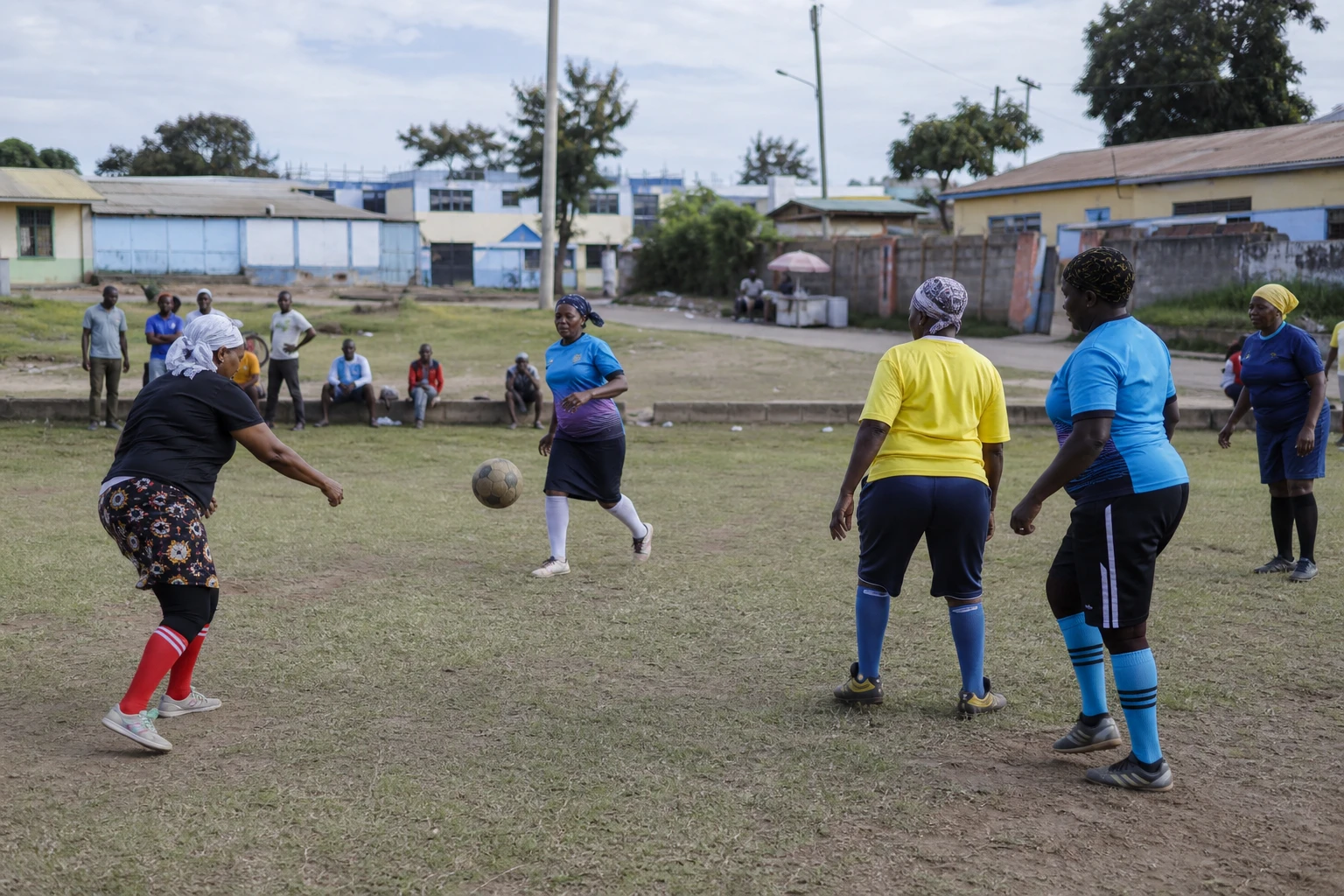
The pitch, long past the age of stereotypes
At first glance, the scene is surprising. Older women, many of them grandmothers, take over a football pitch in Kenya with the same energy as a neighbourhood team. Yet behind this scene lies far more than a viral curiosity: it is a practical response to inactivity, isolation and the burden of chronic diseases. The World Health Organization says physical activity reduces the risk of death, diabetes, high blood pressure and falls, and also improves mental health in adults and older people.
In Kenya, this movement is taking root in villages and counties where leisure facilities remain scarce, but local solidarity is strong. It is also part of a broader national context: Kenya’s Ministry of Health estimates that physical inactivity contributes significantly to the burden of non-communicable diseases, while recent public policies are promoting a broader approach to prevention for all age groups.
When grandmothers get back on the ball
Several recent reports have documented the rise of groups of older women players in the country, particularly in northern and western Kenya. The women involved are aged between 50 and 80, according to press articles and African media, and they describe football as a place for health, socialising and rediscovered confidence. Some say they walk more easily, sleep better or feel less pain since they began playing regularly.
The initiative did not begin in the stands of a major stadium. It has grown at community level, sometimes under the impetus of local leaders and former sportswomen, with simple training sessions and solidarity matches. In West Pokot county, for example, tournaments for older women have also been used as a tool for social mobilisation, particularly against female genital mutilation and early marriage. Football then becomes a useful pretext to bring people together, talk and take action.
A public health issue, not just entertainment
What happens on these pitches goes far beyond sporting performance. The WHO says physical activity improves mental health, cognition and sleep, while reducing depression and anxiety. For older people, it also helps preserve mobility, balance and independence. In other words, a ball can become as practical a prevention tool as a medical advice session, particularly in areas where regular access to healthcare remains uneven.
The Kenyan government has also begun to formalise this understanding. A recent national guide on physical activity lists older people among its target groups and explicitly links the fight against inactivity to reducing non-communicable diseases, including cardiovascular disease, diabetes and some cancers. The document also stresses that unsafe urban environments and a lack of accessible facilities discourage physical exercise. In this context, grassroots initiatives fill a gap that the state cannot ignore.
The issue is also social. Older women often play a central role in Kenyan families, but remain largely invisible in public life. Football gives them a platform, a routine and a group. It reduces loneliness, creates habits and strengthens their sense of usefulness. This dimension matters in a country where longer life expectancy coexists with an incomplete response to ageing. The WHO says that as people grow older, the risks of loneliness and isolation become major factors in psychological vulnerability.
A signal from East Africa
Kenya is not alone in this trend. Across the continent, similar initiatives show that sport can serve as a lever for health, cohesion and dignity for older people. In the East African Community, where states are seeking to harmonise their social and health policies further, these local experiences are a testing ground. They show that sports policy is not just about young people or elite stadium athletes, but also about groups long left on the sidelines.
For Nairobi, the stakes are clear. The rise in non-communicable diseases requires the authorities to consider local, low-cost solutions suited to the realities of the counties. Neighbourhood sport, amateur football and intergenerational activities fit this approach precisely. They do not replace the health system, but they ease the pressure on it and strengthen prevention. The grandmothers playing football in Kenya are therefore telling a broader story: that of an Africa devising its own responses to the challenges of ageing, physical activity and social connection, without waiting for them to be dictated from outside.
The next steps remain to be seen. If these groups gain visibility, they could inspire municipal programmes, partnerships with sports federations and more structured community health initiatives. That is when the story becomes political in the fullest sense: when a practice born on a dusty pitch begins to influence public priorities.