Algeria
 Egypt
 Libya
 Morocco
 Sudan
 Tunisia
 Benin
 Burkina Faso
 Cabo Verde
 Côte d'Ivoire
 Ghana
 Guinea
 Guinea-Bissau
 Liberia
 Mali
 Mauritania
 Niger
 Senegal
 Sierra Leone
 The Gambia
 Togo
 Cameroon
 Central African Republic
 Chad
 DR Congo
 Equatorial Guinea
 Gabon
 Republic of the Congo
 São Tomé and Príncipe
 Burundi
 Comoros
 Djibouti
 Eritrea
 Ethiopia
 Kenya
 Madagascar
 Malawi
 Mauritius
 Mozambique
 Rwanda
 Seychelles
 Somalia
 South Sudan
 Tanzania
 Uganda
 Angola
 Botswana
 Eswatini
 Lesotho
 Namibia
 South Africa
 Zambia
 Zimbabwe
More than a Shell case, a test of environmental remediation in Nigeria
In the Niger Delta, the debate is no longer only about the departure of an oil company. It touches on a broader question: who pays to restore a region that for decades has produced a large share of Nigeria’s oil wealth? In Bayelsa, a coastal state in southern Nigeria, the court ruling has, for now, not tipped the balance towards communities that are demanding above all that the damage be repaired.
The case is part of a broader sequence of events. In March 2025, Shell completed the sale of its Nigerian onshore subsidiary, SPDC, to Renaissance Africa Energy, a consortium of Nigerian companies, after years of gradually withdrawing from its onshore assets. The British group remains active in other parts of the country, however, including deepwater gas, where it says it continues to invest.
What the court in Yenagoa decided
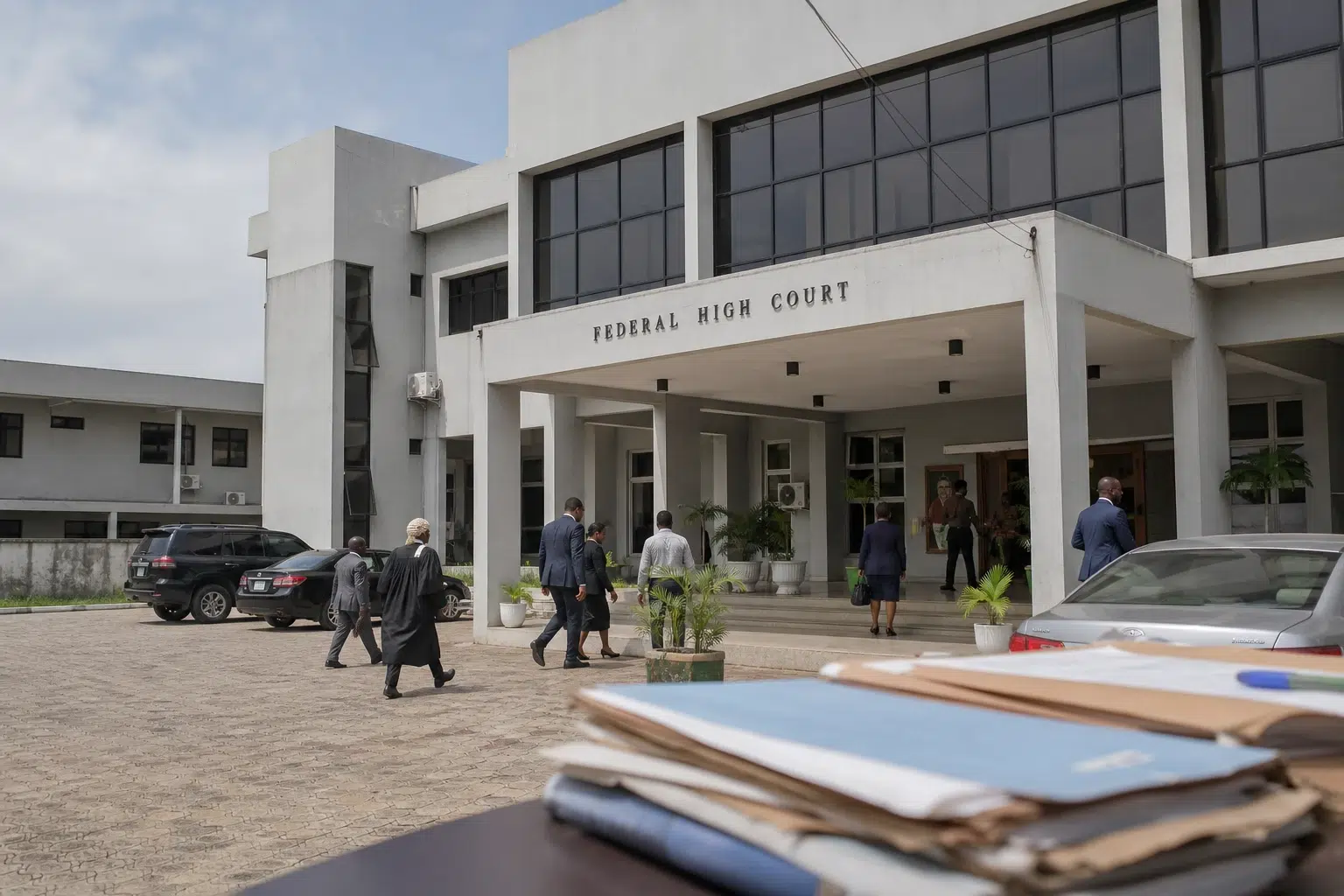
On Friday 17 July 2026, the Yenagoa division of the Federal High Court dismissed an application filed by Bubaraye Dakolo, traditional ruler of Ekpetiama in Bayelsa State. He had sought to block the transfer of Shell’s onshore assets and compel the group to repair environmental damage attributed to decades of oil operations. Judge Ayo Emmanuel ruled that the case was “premature and inadmissible” and held that the claims were time-barred under Nigerian law.
In his reasoning, the judge also noted that the action was primarily concerned with compensation for environmental damage, negligence and stopping the transfer of commercial assets. In his view, it was not an action based on fundamental rights. Shell, for its part, said it was pleased with the ruling. Its spokesperson reiterated that most pollution in the region was caused mainly by oil theft, sabotage and illegal refining. The ruler’s lawyer said he would appeal.
The decision does not, therefore, bring the conflict to an end. It shifts the battleground. The fight now moves from a bid to block the sale to a possible challenge before the Supreme Court, amid a broader debate over the liability of former operators and the limitation periods applicable to historical pollution.
Bayelsa, oil heartland and ecological frontier
Bayelsa is no bit player. It is one of the states most exposed to the Niger Delta, a region that accounts for most of Nigeria’s oil production. It was also where the country’s first oil field was discovered in the 1950s. Since then, oil spills, gas flaring and hydrocarbon leaks have fuelled a prolonged environmental, health and economic crisis. In several communities, fishing and farming have declined, while the social costs have remained high.
A 2023 report by the Bayelsa State Oil and Environmental Commission gives an indication of the scale of the task: it estimates that at least $12bn over 12 years would be needed to repair and restore the environment and public health, while preparing for an economic transition. The commission also cites a pollution legacy inherited from more than six decades of oil operations. This figure has become a benchmark in local public debate because it finally links the ecological question to development.
This context explains the sensitivity of the case. For residents, Shell’s exit does not automatically mean the end of the harm. The assets may have changed hands, but contaminated soil, affected waterways and degraded production sites remain. For regional authorities, the challenge is twofold: to prevent responsibility from being evaded and to ensure that new operators take a serious approach to restoration.
What the stand-off says about Nigeria and Africa’s oil industry
Nigeria remains West Africa’s largest oil economy, but its sector is caught in a contradiction now visible across the Gulf of Guinea: major operators want to reorganise, while oil-producing regions are demanding remediation before or during their departure. In Abuja, the authorities’ priority remains the stability of production, investment and public revenues. In the delta, the priority is first and foremost environmental safety and livelihoods.
Shell’s sale of its onshore assets to Renaissance Africa Energy, completed in March 2025, also illustrates the growing role of Nigerian companies in a sector long dominated by international majors. It represents a change in governance as much as a change of shareholder. But this shift does not erase the central question: who inherits the liabilities, who pays for clean-up, and what oversight mechanisms will be used?
Shell, for its part, is not leaving Nigeria entirely. The group points to other investments, particularly in gas, including an offshore project presented in 2025 as a major commitment. In other words, the company is reducing its onshore exposure while remaining a significant player elsewhere in the country. This strategy prompts sharply different interpretations: industrial diversification for some, incomplete disengagement for others.
At continental level, the case matters because it touches on a question now central to Africa’s energy transition: can the continent attract capital and modernise the sector while also enforcing genuine remediation of inherited damage? Nigeria is not alone in facing this equation, but its political and oil-sector weight makes it a closely watched case for other producing countries, from ECOWAS to the rest of the continent. What happens next will depend above all on the announced appeal, and on how the courts and regulators deal with the environmental liabilities in the months ahead.