Algeria
 Egypt
 Libya
 Morocco
 Sudan
 Tunisia
 Benin
 Burkina Faso
 Cabo Verde
 Côte d'Ivoire
 Ghana
 Guinea
 Guinea-Bissau
 Liberia
 Mali
 Mauritania
 Niger
 Senegal
 Sierra Leone
 The Gambia
 Togo
 Cameroon
 Central African Republic
 Chad
 DR Congo
 Equatorial Guinea
 Gabon
 Republic of the Congo
 São Tomé and Príncipe
 Burundi
 Comoros
 Djibouti
 Eritrea
 Ethiopia
 Kenya
 Madagascar
 Malawi
 Mauritius
 Mozambique
 Rwanda
 Seychelles
 Somalia
 South Sudan
 Tanzania
 Uganda
 Angola
 Botswana
 Eswatini
 Lesotho
 Namibia
 South Africa
 Zambia
 Zimbabwe
An industrial asset becomes a test for Nigeria’s market
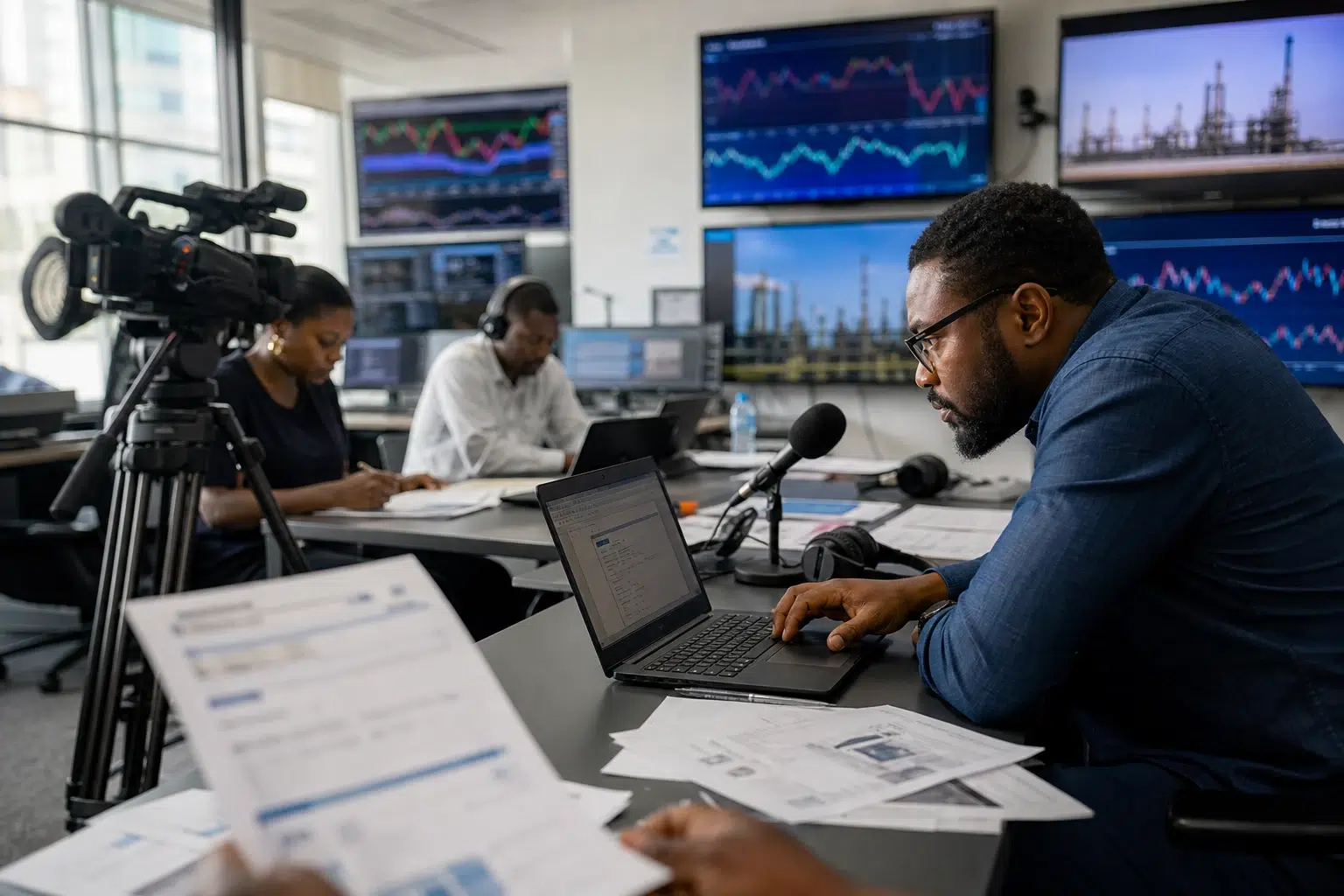
In Nigeria, the big question is no longer just about oil. It is also about how the country turns its industrial assets into capital, foreign currency and regional influence. At Lekki, in Lagos State, the Dangote refinery has gone in a matter of months from being an industrial gamble to a financial instrument closely watched by markets in West Africa and beyond.
This expansion comes in a particular context. Nigeria, whose capital is Abuja, remains the continent’s largest crude producer, but for a long time it has depended on imports of refined fuels. Commercial operations at the Lekki refinery, announced in January 2024, were presented precisely as a response to this dependence and to the vulnerability of supplies.
Private fundraising, separate from the expected listing
The starting point for this new phase is financial. The Dangote Group confirmed that it had raised $2.5bn through a private sale of shares, according to the group’s executive director, Devakumar Edwin, cited on 17 July. The transaction is not yet the initial public offering expected in Lagos. It involves about 6% of the capital, sold to a small group of institutional investors at an announced price of $0.35 per share.
The structure chosen reflects the cautious nature of the transaction. The shares, according to information published in the financial press, are expected to be locked up for 365 days. Demand is said to have reached nearly $4bn, demonstrating investors’ appetite for an industrial asset backed by a brand that has become central to Nigeria’s economy.
Meanwhile, the initial public offering is still to be developed. Investment banks, including Stanbic IBTC Capital, Vetiva Capital Management and FirstCap, have been appointed to lead the process on the Nigerian Exchange. But on 23 June, the Securities and Exchange Commission said that no application to register a public offering had been filed or approved as of that date. In other words, the market is still waiting for regulatory approval.
Why the deal matters in Nigeria
For the Nigerian market, the stakes go beyond the refinery itself. Local analysts believe a listing could take the Lagos exchange to a new scale. In June, Bismarck Rewane of Financial Derivatives Company outlined a scenario in which the NGX’s market capitalisation would rise sharply if fresh capital genuinely flowed into the exchange. That possibility remains contingent on the final form of the transaction and the depth of local demand.
The pensions sector could also play a role. Nigerian pension funds, which manage more than $17bn in assets, according to the local financial press, have been authorised to participate. This would give the domestic market exposure to a strategic industrial asset in a country where long-term savings remain relatively undiversified.
The Nigerian reading of the deal is clear: it is not simply a fundraising exercise for a private industrial company. It is also a signal of the country’s ability to finance major infrastructure through its own capital market, rather than relying solely on external financing. Amid pressure on the naira and high import costs, this logic matters as much as production itself.
Lekki, a refinery designed for the region
Industrially, the Lekki complex remains unrivalled in Africa. The refinery is located in the Lekki Free Zone in Lagos, on a 2,500-hectare site. Its nameplate capacity is 650,000 barrels per day, making it the world’s largest single-train refinery. Construction costs are estimated at around $20bn.
The project is not limited to fuels sold in Nigeria. Since 2026, the refinery has increased exports of refined products to other African countries, notably gasoline and urea, amid international supply disruptions. Reuters reported on 6 April that fuel cargoes were also helping to ease pressure on African markets hit by supply shocks. The US Energy Information Administration, for its part, notes that the refinery’s output has already changed the profile of Nigerian petroleum exports, with a marked increase in refined products in 2024.
This regional focus matters for West Africa. In the ECOWAS region, where economies remain heavily exposed to fuel imports, a major local refiner can influence margins, delivery times and prices. For WAEMU countries, which often source supplies through the same channels, the impact can be felt directly in port markets and distribution costs.
What to watch next
What happens next depends on three stages. First, the finalisation of the timetable for the Lagos listing. Second, the formal filing of the documentation with Nigeria’s regulator. Finally, decisions on the balance between private financing, an offer to the general public and possible secondary listings discussed in the press in Johannesburg, Nairobi, Accra and Abidjan. For now, these markets remain possibilities, not confirmed decisions.
Ultimately, the Dangote deal says something broader about Nigeria today. The country is seeking to turn an extractive power that has long been undervalued into a manufacturing power. If the refinery can raise capital on a sustainable basis, maintain its exports and stabilise domestic sales, it will become a continental symbol of what a large African market can achieve when industry, finance and regulation move forward at the same pace.