Algeria
 Egypt
 Libya
 Morocco
 Sudan
 Tunisia
 Benin
 Burkina Faso
 Côte d'Ivoire
 Ghana
 Guinea
 Guinea-Bissau
 Liberia
 Mali
 Mauritania
 Niger
 Nigeria
 Senegal
 Sierra Leone
 The Gambia
 Togo
 Cameroon
 Central African Republic
 Chad
 DR Congo
 Equatorial Guinea
 Gabon
 Republic of the Congo
 São Tomé and Príncipe
 Burundi
 Comoros
 Djibouti
 Eritrea
 Ethiopia
 Kenya
 Madagascar
 Malawi
 Mauritius
 Mozambique
 Rwanda
 Seychelles
 Somalia
 South Sudan
 Tanzania
 Uganda
 Angola
 Botswana
 Eswatini
 Lesotho
 Namibia
 South Africa
 Zambia
 Zimbabwe
African representation reaches a new scale
African football is no longer waiting for the door to be opened. It is now pushing it open with its own results. At the 2026 World Cup, the continent secured an unprecedented level of representation, with ten teams taking part in total: nine qualifying directly and a tenth coming through the intercontinental play-offs. In a tournament expanded to 48 teams, this is more than a statistical detail: it reflects growing sporting strength, as well as a lasting struggle to compete on equal terms with Europe and South America in major competitions.
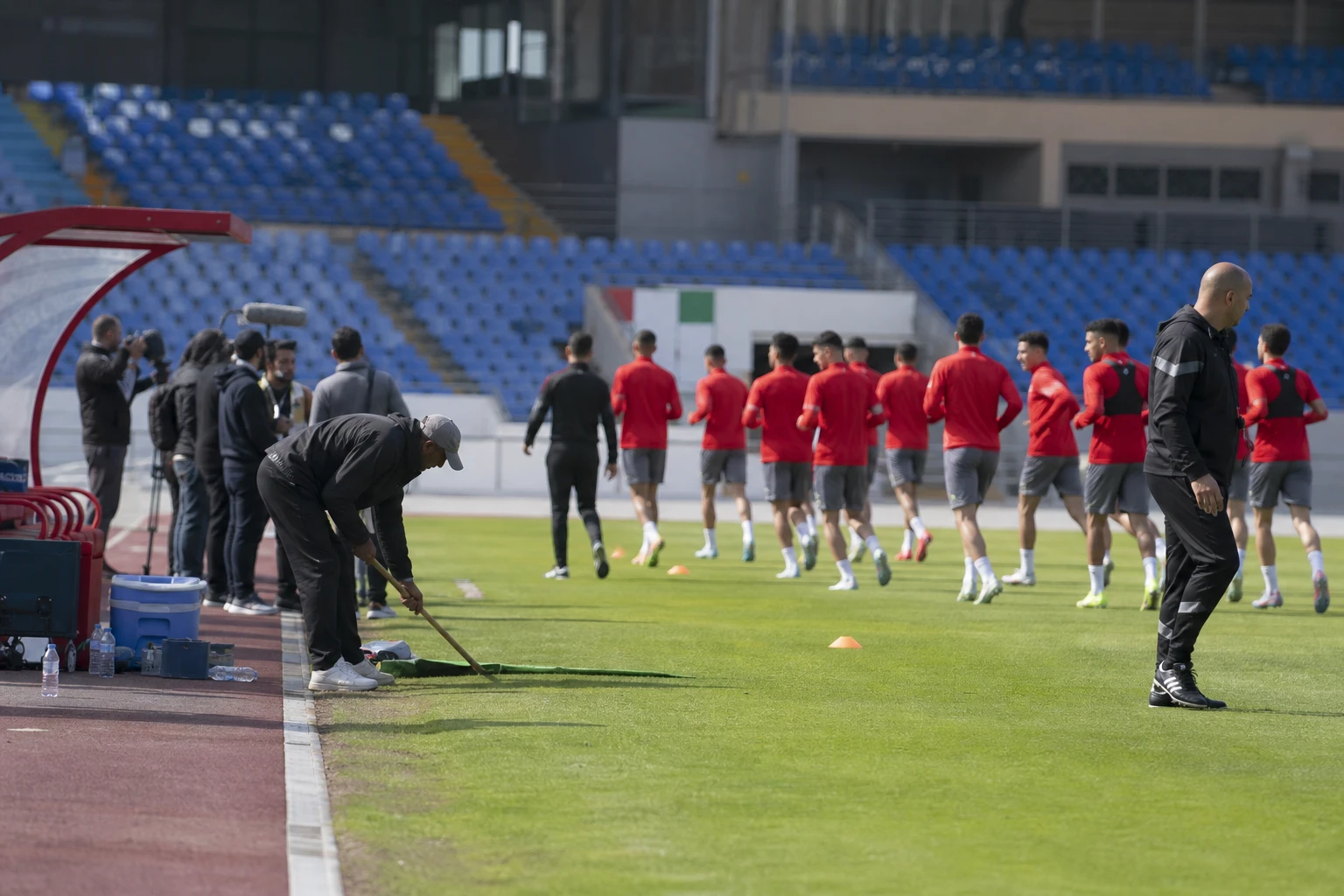
Morocco occupies a central place in this momentum. The Atlas Lions were the first African team to secure their place at the 2026 World Cup, after a perfect qualifying campaign, and FIFA presented them as a side already set to compete in a third consecutive World Cup. The achievement matters as much as the symbol: in Rabat, the national team is no longer simply a source of popular pride; it has become a marker of stability and ambition in an African landscape where consistency remains rare.
Morocco, from Rabat to the world stage
Morocco is no longer talking only about performance, but about continuity. Since its historic 2022 campaign in Qatar, the country has consolidated a regular presence at the highest level. Qualification secured against Niger at the Prince Moulay Abdellah Stadium in Rabat confirmed a trend: the Moroccan team now knows how to turn a talented generation into sustained results. CAF praised a side that qualified before the end of the campaign, following a run of convincing victories.
This status is not purely sporting. It is part of a broader trajectory, as the country is set to co-host the 2030 World Cup with Spain and Portugal, a decision ratified by FIFA in December 2024. For Morocco, the event is already a matter of infrastructure, international image and investment in the sports sector. For the continent, it is also a signal: Africa will not only be represented on the pitch; it will also have a role in organising the global game.
Lessons from an expanded World Cup
Expansion to 48 teams has automatically created more space for Africa. But the raw figure does not tell the whole story. CAF has highlighted nine African teams qualifying for the competition’s knockout stage, a level of success showing that the continent is no longer content merely to take part. It now knows how to get through the tournament’s first stage. Progress remains uneven, however, as not all teams are advancing at the same pace or with the same resources for coaching, preparation and top-level competition in their domestic leagues.
Morocco illustrates this change in scale. FIFA notes that the Atlas Lions won all eight of their qualifying matches, with a very solid defence and an efficient attack. This command of the game offers a useful benchmark for the rest of the continent. Other teams, by contrast, have sometimes struggled with inconsistency or imperfect management of decisive moments. The gap is not down to talent alone. It also reflects the intensity of matches played throughout the year, the quality of mental preparation and the depth of the bench.
This applies to several levels of African football. The teams making the fastest progress often share a common foundation: better-structured development, players accustomed to major leagues, more stable federations and a more coherent calendar. Morocco has built on these factors. Other countries are still working to create the same conditions. The 2026 World Cup therefore measures more than qualification. It also highlights the differences in how national projects are being built.
Beyond the pitch, a question of access and representation
The significance of this edition extends beyond the pitch. Travel around the tournament has also highlighted the inequalities in access that some Africans still face when a major event is held outside the continent. Debates have emerged over visas, application fees required in some cases and the place afforded to African supporters at major global events. These issues matter because they affect the continent’s visibility as well as the mobility of its audiences, journalists and referees.
Against this backdrop, CAF’s reticence on some issues contrasts with the growing sporting strength of its teams. The continental body supports their success, but is also expected to act on another front: more firmly defending African interests in discussions with FIFA, organisers and partner confederations. As the number of places for Africa increases, the debate is no longer just about the number of slots. It is about the real conditions needed to sustain this football at the highest level.
The next steps are already taking shape. The 2026 World Cup must confirm whether the progress seen in qualifying translates into sustained results. Over the longer term, Morocco, co-hosting the 2030 tournament with Spain and Portugal, will serve as a continental testing ground. If the country succeeds in this dual role, it will reinforce a simple idea: African football is no longer waiting for validation. It is now building its own standards, from Rabat to other capitals across the continent.