Algeria
 Egypt
 Libya
 Morocco
 Sudan
 Tunisia
 Benin
 Burkina Faso
 Cabo Verde
 Ghana
 Guinea
 Guinea-Bissau
 Liberia
 Mali
 Mauritania
 Niger
 Nigeria
 Senegal
 Sierra Leone
 The Gambia
 Togo
 Cameroon
 Central African Republic
 Chad
 DR Congo
 Equatorial Guinea
 Gabon
 Republic of the Congo
 São Tomé and Príncipe
 Burundi
 Comoros
 Djibouti
 Eritrea
 Ethiopia
 Kenya
 Madagascar
 Malawi
 Mauritius
 Mozambique
 Rwanda
 Seychelles
 Somalia
 South Sudan
 Tanzania
 Uganda
 Angola
 Botswana
 Eswatini
 Lesotho
 Namibia
 South Africa
 Zambia
 Zimbabwe
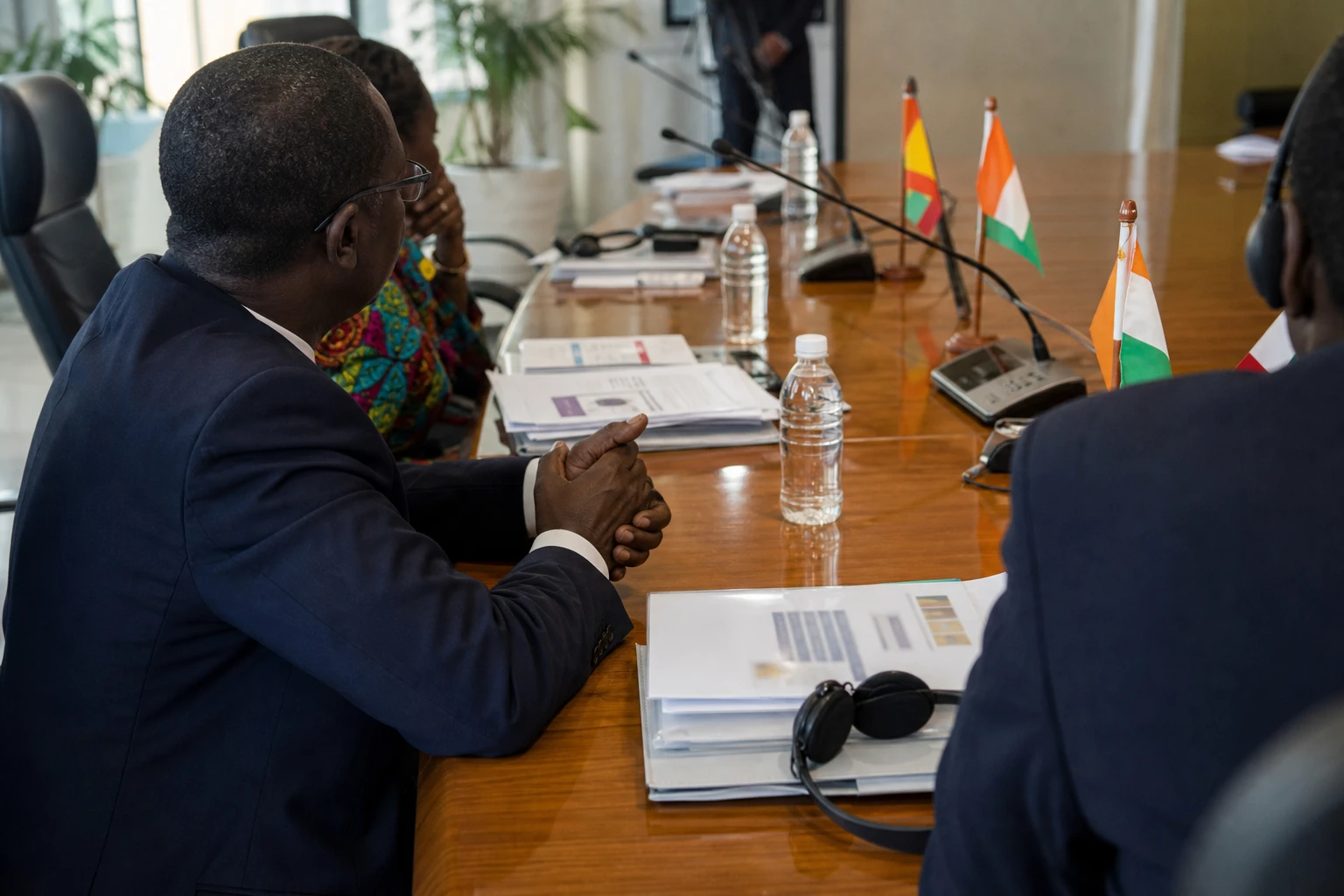
In Abidjan, an opposition without seats seeks a foothold in public debate
In Côte d’Ivoire, having no elected representatives does not necessarily mean political silence. When a party such as the PPA-CI finds itself outside parliament, it must devise other ways to make its presence felt in public life, especially in a country where legislation directly affects the daily lives of households, informal businesses and local authorities. It is into this gap that Laurent Gbagbo’s party has chosen to establish an Observatory of Parliamentary Decisions.
The initiative comes at a particular political moment. The legislative elections of 27 December 2025 ushered in the new 2026-2030 legislature, after a campaign marked by the PPA-CI’s boycott. The Independent Electoral Commission subsequently announced provisional and then final results, and submitted the list of elected MPs to the National Assembly. Côte d’Ivoire has therefore entered a new institutional phase without parliamentary representation for Laurent Gbagbo’s party.
What the PPA-CI is setting up, and why now
The decision signed by Laurent Gbagbo establishes a nine-member body, presented as a watchdog and counter-proposal organisation. Its mission is clear: to monitor bills and draft legislation examined by MPs, produce analyses for the general public, assess the economic and social effects of legislation, and then put forward amendments, counter-proposals and warnings when the party believes a provision threatens the interests of the population. The idea, then, is not to take a seat, but to intervene from outside parliament.
The context explains this choice. In November 2025, the PPA-CI announced it would not take part in the legislative election on 27 December, arguing that the conditions for a free, fair and transparent process were not in place. In the aftermath, several senior party figures were sanctioned for seeking seats despite the party’s instructions. After the election, the PPA-CI had no MPs, closing off the route of direct opposition in parliament.
This episode illustrates a familiar political strategy, adapted to new circumstances. When a party chooses to boycott, it gives up the parliamentary tool. It can, however, continue to take part in debate through analysis, criticism and alternative proposals. The PPA-CI is betting on turning the absence of elected office into an intellectual and campaigning presence. This cannot replace a vote, but it can influence public opinion, particularly in Abidjan, in major cities and among audiences exposed to debates about the cost of living, youth employment and taxation.
Real influence, but not in the legislative balance of power
Political scientist Geoffroy Julien Kouao, cited by several media outlets, considers the approach interesting in form, but limited in substance. His point is simple: an observatory can inform debate, but cannot by itself block or amend a decision passed in parliament. In other words, the body can document, warn and propose. It cannot replace a majority, a parliamentary group or committee work.
This limitation is important for understanding what is at stake. In Côte d’Ivoire, the National Assembly remains a central forum for approving public policy, whether on budgets, taxation, investment or social reforms. When an opposition party operates from outside, it loses direct access to amendments, written questions and behind-the-scenes negotiations. It can still influence public debate, but it no longer has control over the final text. The observatory thus becomes an instrument of pressure, not decision-making.
For the population, the impact could be tangible if the body produces accessible analyses. Laws are often seen as remote, even though they determine municipal budgets, access to services, labour rules and social protection. For businesses, particularly small firms and the informal sector, this monitoring could help explain the impact of certain bills on costs, taxes and compliance. But the observatory will need to publish quickly and clearly, without jargon.
An Ivorian perspective with a West African reach
The PPA-CI’s move also says something about Ivorian politics, from Abidjan to the regions: the battle is not only electoral, but also about the narrative. In a country at the heart of ECOWAS, one of West Africa’s major regional organisations, every realignment in the opposition is watched beyond the country’s borders. Parties are grappling with the same question: how can they remain audible without a parliamentary group?
The PPA-CI’s answer is to occupy the terrain of political expertise. This echoes other forms of modern opposition in West Africa: producing briefings, explainers, alternative budgets and citizen alerts. Such practices can enrich democratic life if they are rigorous and accessible. They can also be reduced to a slogan if they lead neither to specific proposals nor to support from civil society, trade unions, lawyers and academics.
The political phase that began at the end of 2025 will therefore bear close watching. The new legislature’s parliament must now work in a landscape where Laurent Gbagbo’s main party is no longer represented. The real test will come with the next contentious bills: the budget, economic reforms, electoral issues or laws affecting civil liberties. That is when the observatory will show whether it serves merely to maintain a symbolic presence or can establish a lasting counter-narrative in Ivorian political life.