
 Algeria
 Egypt
 Libya
 Morocco
 Sudan
 Tunisia
 Benin
 Burkina Faso
 Cabo Verde
 Côte d'Ivoire
 Ghana
 Guinea
 Guinea-Bissau
 Liberia
 Mali
 Mauritania
 Niger
 Nigeria
 Senegal
 Sierra Leone
 The Gambia
 Togo
 Cameroon
 Central African Republic
 Chad
 DR Congo
 Equatorial Guinea
 Gabon
 Republic of the Congo
 São Tomé and Príncipe
 Burundi
 Comoros
 Djibouti
 Eritrea
 Ethiopia
 Kenya
 Madagascar
 Malawi
 Mauritius
 Mozambique
 Rwanda
 Seychelles
 Somalia
 South Sudan
 Tanzania
 Uganda
 Angola
 Botswana
 Eswatini
 Lesotho
 Namibia
 Zambia
 Zimbabwe
A state response to social tensions that cross borders
In Pretoria, the immigration debate is no longer confined to speeches. It is now weighing on the streets, in the courts and in relations between southern African countries. In a matter of weeks, South Africa has toughened its response to irregular stays, while seeking to prevent social anger from turning into a witch-hunt against foreigners.
The issue is sensitive because it touches on unemployment, security, the functioning of public services and migrants’ place in the informal economy. It is also regional. The main countries concerned are members of SADC, the Southern African Development Community, where the movement of workers, traders and families has long been a reality.
What the South African authorities say
According to the South African government, 53,449 foreign nationals had been processed for deportation or repatriation by 11 July 2026. The authorities say Malawians make up by far the largest group, ahead of Zimbabweans and Mozambicans. Pretoria also says the operations are continuing and the total could still rise.
The figures are part of the strategy launched by President Cyril Ramaphosa on 7 June 2026 and outlined by the government in late June and early July. The plan rests on several pillars: tighter border controls, more intensive checks, the establishment of specialised courts to speed up immigration cases, and co-operation with countries of origin to organise returns described as “dignified” and “co-ordinated”.
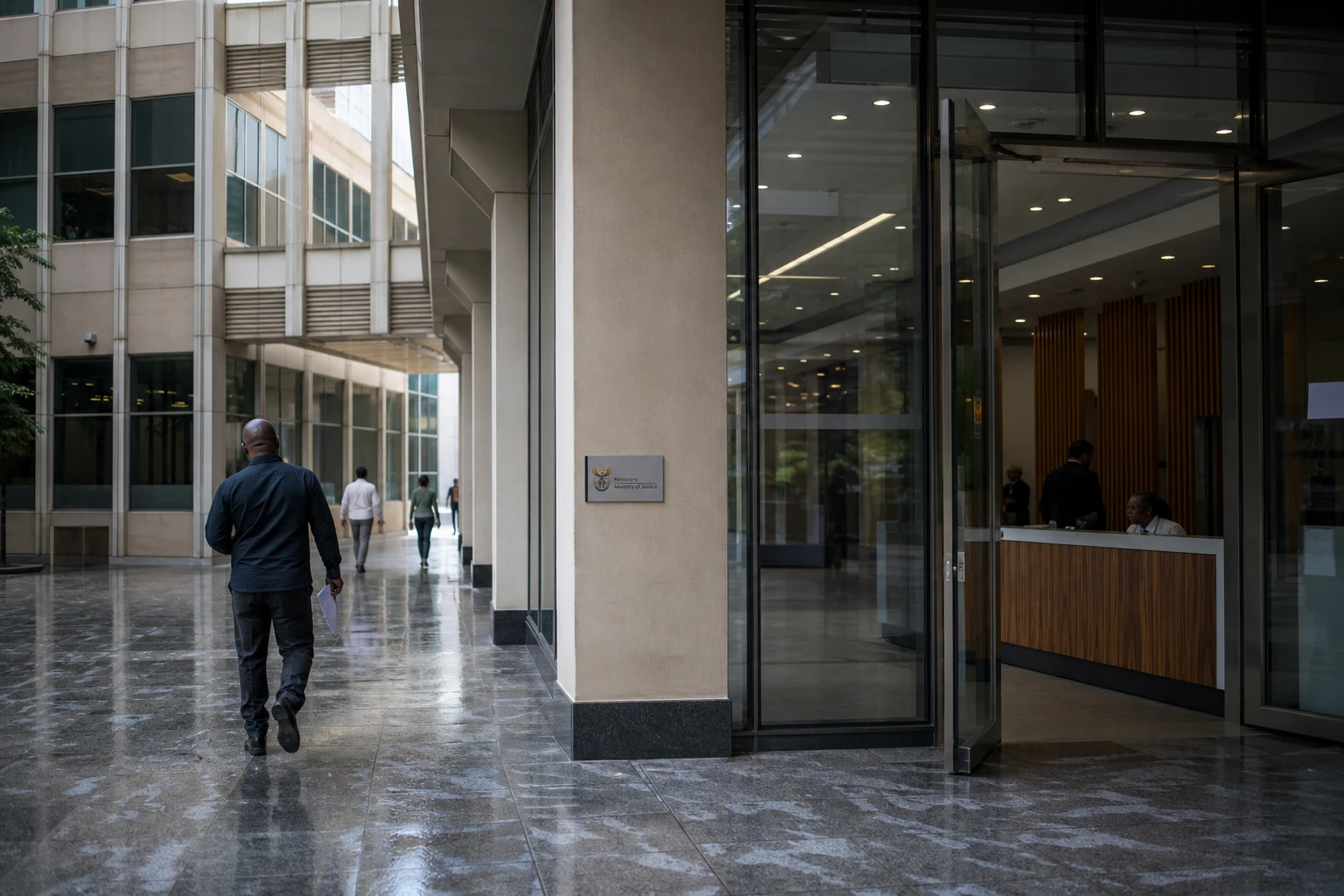
In Pretoria, Justice and Constitutional Development Minister Mmamoloko Kubayi presented the operation as a public-order and regularisation policy, while stressing that only the state can control immigration. The government has also warned groups seeking to carry out their own checks or neighbourhood expulsions. The authorities have insisted that unauthorised private actions are not lawful.
Street pressure and the risk of escalation
The administrative campaign cannot be understood without reference to the anti-immigration protests in June. On 30 June, marches took place in several South African cities. Protesters denounced irregular migrants, accusing them of putting pressure on jobs, fuelling crime and burdening public services. Several gatherings took place under heavy police surveillance, after weeks of mounting tensions.
Groups hostile to foreigners had set what amounted to a deadline of 30 June to push undocumented migrants to leave the country. This pressure prompted some to depart early, at times in fear. Reuters reported that some migrants had gone into hiding or left their homes for fear of attacks, while activist networks adopted a more hardline tone.
The South African government has condemned vigilantism. It has also pointed out that criminal cases have been opened against some suspects detained during the checks. At the same time, the government acknowledges that the operation responds to genuine concern in a society marked by high unemployment, deep inequalities and a large informal economy.
What this means for neighbouring countries and migrants
The first impact is human. For workers from Malawi, Mozambique or Zimbabwe, the South African border is not merely a political line. It is also a means of economic survival, cross-border trade and family movement. The current crackdown therefore affects people who do not all fit the same profile: some are staying irregularly, others are seeking asylum, and still others live between formal status and precarity.
The second impact is diplomatic. When deportations rise, countries of origin mobilise. In recent days, several African states have repatriated their nationals or negotiated return arrangements. At regional level, this is a reminder that migration management cannot be handled country by country without co-ordination with SADC and ongoing consular dialogue.
The third impact is institutional. South Africa is trying to show that it can both enforce its laws and uphold its Constitution. This is a delicate balance. The country has faced criticism over delays in its asylum system, while the Constitutional Court recently issued a ruling on the Refugees Act, a sign that the legal framework remains under strain and judicial scrutiny.
A test for Pretoria, and for southern Africa
The South African episode goes beyond the issue of undocumented migrants. It raises questions about states’ ability to manage migration without allowing social frustrations to turn into collective violence. It also poses a central question for the region: how can migration that benefits the economy be organised while maintaining credible borders and safeguards for fundamental rights?
For southern Africa, the issue will serve as a barometer. If Pretoria manages to reduce abuses without fuelling hostility towards foreigners, SADC will see it as a useful precedent. If, on the other hand, administrative toughness fuels street tensions, the repercussions will be felt far beyond South Africa, including in relations with Malawi, Mozambique, Zimbabwe and the other countries concerned.



