Algeria
 Egypt
 Libya
 Morocco
 Sudan
 Tunisia
 Benin
 Burkina Faso
 Cabo Verde
 Côte d'Ivoire
 Ghana
 Guinea
 Guinea-Bissau
 Liberia
 Mali
 Mauritania
 Niger
 Nigeria
 Senegal
 Sierra Leone
 The Gambia
 Togo
 Cameroon
 Central African Republic
 Chad
 DR Congo
 Equatorial Guinea
 Gabon
 Republic of the Congo
 São Tomé and Príncipe
 Burundi
 Comoros
 Djibouti
 Eritrea
 Ethiopia
 Kenya
 Madagascar
 Malawi
 Mauritius
 Mozambique
 Rwanda
 Seychelles
 Somalia
 South Sudan
 Tanzania
 Angola
 Botswana
 Eswatini
 Lesotho
 Namibia
 South Africa
 Zambia
 Zimbabwe
A decisive phase for Kampala, but the risk is not over
In Kampala, health authorities are not declaring victory, but marking a milestone. Uganda has begun the 42-day countdown that precedes the official closure of an Ebola outbreak, after the last confirmed patient was discharged and tested negative for a second time. In practice, this countdown is the point at which the country seeks to turn an emergency response into a return to normal, without easing surveillance.
This cautious approach says much about Uganda’s methods. The country has already managed several Ebola outbreaks, enabling it to develop stronger operational routines. But its proximity to the Democratic Republic of the Congo, where the virus is still circulating, requires vigilance at the border that goes beyond health measures alone.
A public health protocol, not a simple administrative deadline
The 42-day threshold is not arbitrary. The World Health Organization uses it as a benchmark before declaring an Ebola outbreak over, as it corresponds to two maximum incubation periods for the Bundibugyo virus. If no new confirmed case emerges during this period, the end of the epidemic can be officially announced.
The latest milestone was reached when the last patient tested negative for a second time and was then allowed to leave hospital. Uganda’s Ministry of Health says the response team nevertheless remains on standby. The authorities continue to speak of active surveillance, a reminder that an epidemic does not end simply because case numbers fall. It ends when the chain of transmission is truly broken.
The available figures point to a limited but serious toll. Uganda had confirmed 20 cases and two deaths as of 16 July 2026. Fifteen cases were linked to imports from the Democratic Republic of the Congo, and five to local transmission. These figures show the role of cross-border movements in spreading the virus.
Contacts monitored, districts reinforced, borders under scrutiny
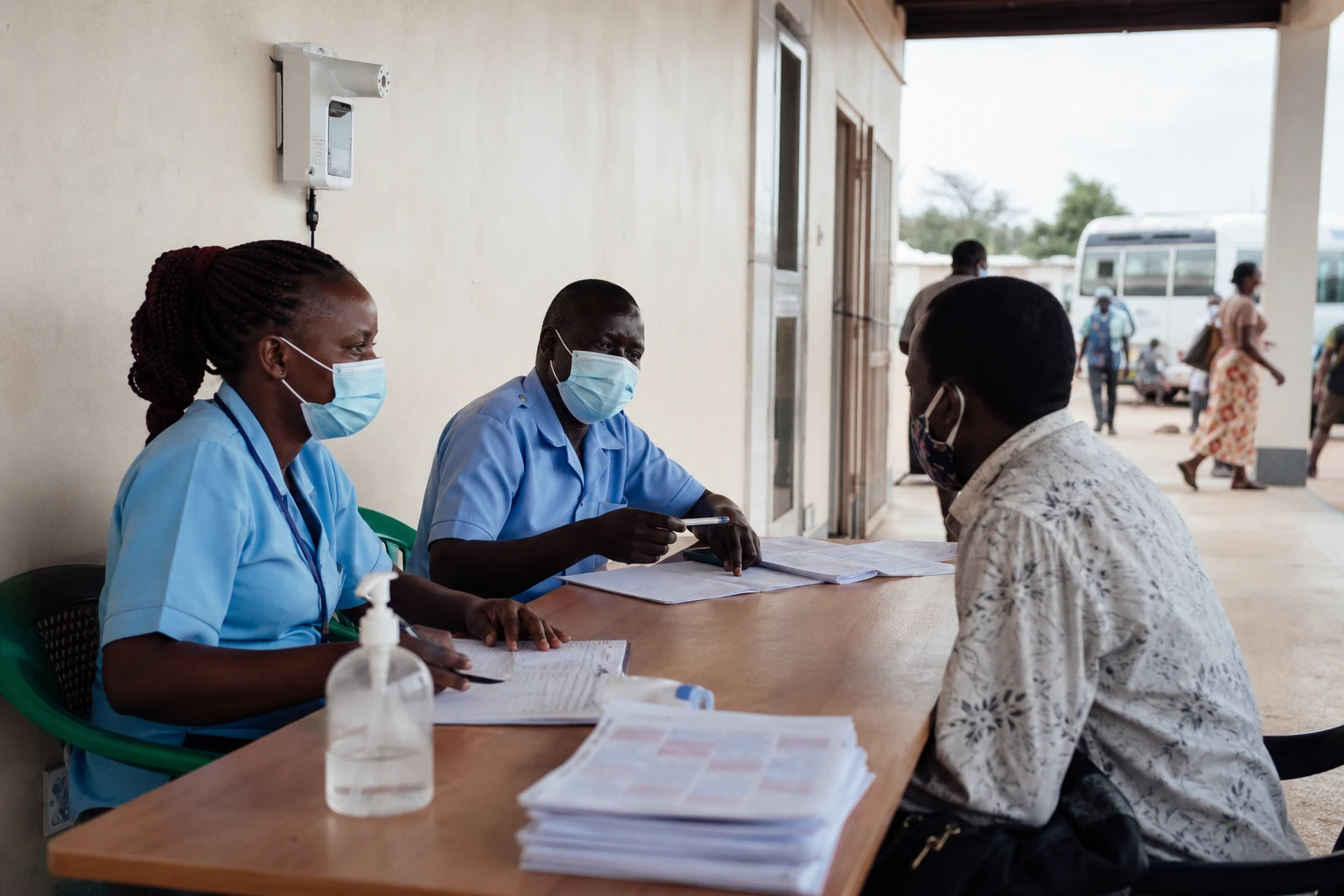
Uganda’s response relied on several standard measures, but implemented rigorously: rapid detection, laboratory confirmation, contact tracing, infection prevention, patient care and community outreach. According to the WHO, 836 contacts were monitored through to the end of their surveillance period. The response was also stepped up in 36 high-risk districts and at 38 points of entry into the country.
This network has a very practical impact. For residents of border areas, it means more checks, more reporting and a stronger health presence. For the authorities, it makes it possible to detect a resurgence quickly. For markets, transport and small businesses, it helps prevent a health alert from turning into a prolonged shutdown. In a country where the informal economy plays a major role, every day gained in containing the spread also matters for daily incomes.
The response was also designed to extend beyond national borders. The WHO has highlighted cooperation between Uganda and the Democratic Republic of the Congo, particularly on cross-border surveillance. This is crucial in the Great Lakes region, where family, commercial and work-related travel does not stop at border posts.
Pressure from eastern Congo remains the main risk factor
Uganda’s caution is also explained by the situation in the Democratic Republic of the Congo. The WHO has reported an ongoing outbreak of Ebola virus disease caused by the Bundibugyo virus there. In mid-July, the agency reported that the epidemic was continuing to spread and assessed the regional risk as high. The Democratic Republic of the Congo and Uganda are therefore facing the same epidemiological corridor.
The risk is not theoretical. The WHO has said that several Ugandan cases resulted from imports from the Democratic Republic of the Congo. In eastern Congo, difficulties in tracing contacts, insecurity and the movement of displaced populations make it harder to contain transmission. When borders are porous, public health becomes a regional issue before it becomes a national one.
In this context, Kampala cannot simply wait for the countdown to end. The country has launched a new six-month operational plan to strengthen surveillance, preparedness and response. This is an important decision. It shows that bringing an epidemic to an end is not just a matter of issuing a final statement. It also requires building local capacity, particularly in laboratories, treatment centres and surveillance teams.
What this episode says about Uganda and East Africa
The outbreak confirms a reality that is often underestimated: Uganda is among the African countries best equipped to respond to haemorrhagic epidemics, but its geography leaves it exposed. Kampala, the capital, is at the centre of the response, but the front lines are often in border districts, at checkpoints, in markets and at peripheral health centres.
At regional level, the episode directly concerns the East African Community, where cross-border health coordination is becoming a strategic issue. It also highlights that the most effective responses are those that bring together national authorities, community surveillance and cooperation between neighbouring states. In this part of the continent, the spread of the virus can be slowed only if health information travels as quickly as people do.
The final stretch is therefore above all a test of discipline. If no new case is confirmed for 42 days, Uganda will be able to declare the end of this outbreak. But the real challenge for Kampala and its neighbours will be to turn this contained alert into lasting preparedness. That is what comes next: the ability to detect cases quickly, isolate patients without delay and cooperate across borders.