Aljeria
 Libya
 Misri
 Sudan
 Tunisia
 Benin
 Burkina Faso
 Gambia
 Ghana
 Gine
 Ginebisau
 Kepuvede
 Kodivaa
 Liberia
 Mali
 Moritania
 Niger
 Nigeria
 Senegal
 Sierra Leone
 Togo
 Chadi
 Gaboni
 Guinea ya Ikweta
 Jamhuri ya Afrika ya Kati
 Jamhuri ya Kidemokrasia ya Kongo
 Kamerun
 Kongo
 Sao Tome na Principe
 Burundi
 Eritrea
 Ethiopia
 Jibuti
 Kenya
 Komoro
 Madagaska
 Malawi
 Morisi
 Msumbiji
 Rwanda
 Shelisheli
 Somalia
 Sudan Kusini
 Tanzania
 Uganda
 Afrika Kusini
 Angola
 Botswana
 Eswatini
 Lesoto
 Namibia
 Zambia
 Zimbabwe
In Fnideq, the border is more than a line on a map
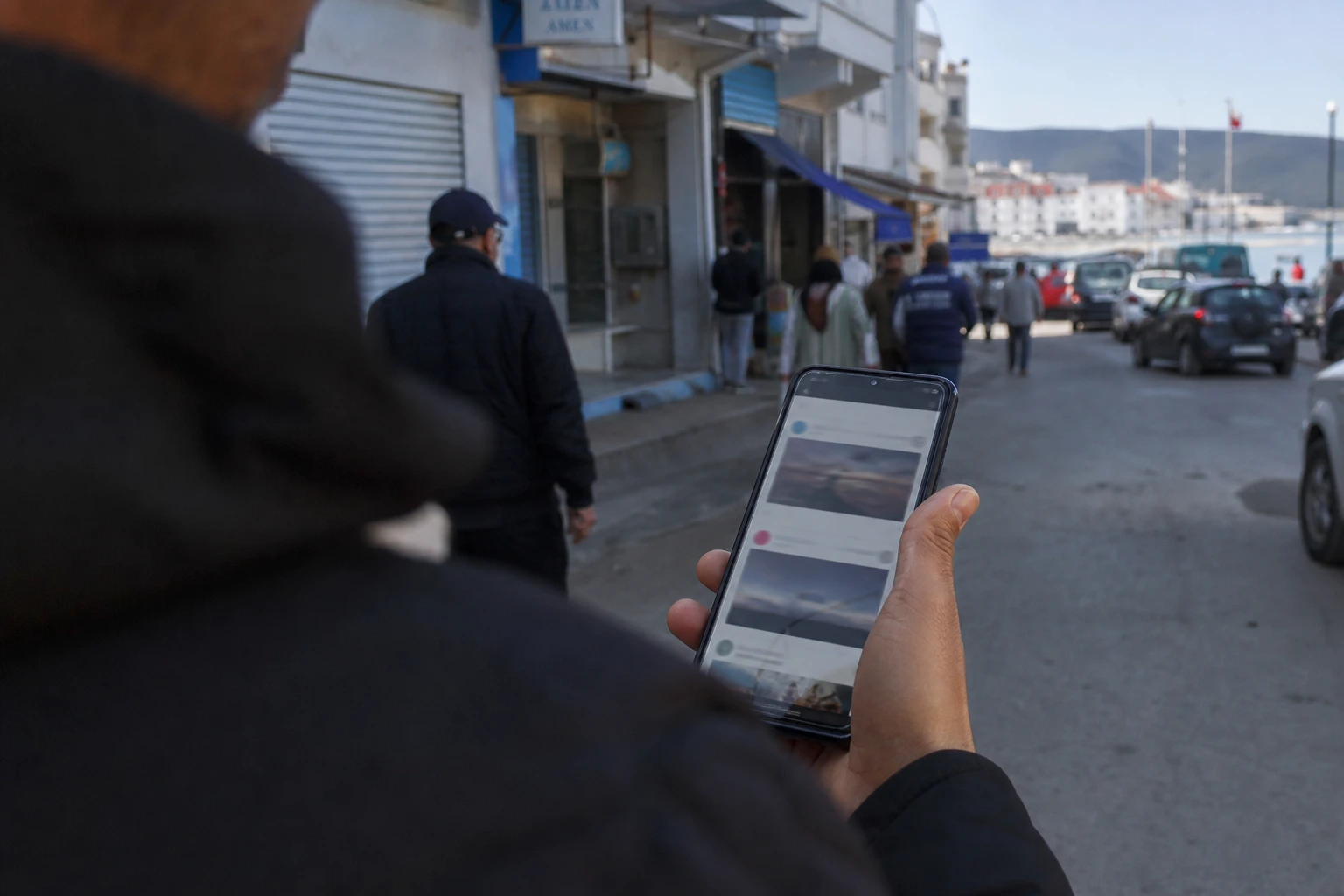
In this part of northern Morocco, the sea, the road and the fence tell the same story: when hopes of crossing spread on mobile phones, the city can change within hours. In Fnideq, tensions are not confined to the border post. They affect beaches, secondary roads, shops and families whose lives revolve around neighbouring Ceuta, the Spanish enclave.
This latest episode follows an earlier mass movement towards Ceuta, when tens of thousands of people reached the enclave within hours as rumours of the border opening circulated online. Moroccan authorities have since reinforced their deployment in the prefecture of M’diq-Fnideq, a territory where border surveillance has become a constant feature of local life.
A broad security response, from the coastline to inland roads
Since 15 September 2024, and again in response to calls shared on social media, Moroccan forces have multiplied checkpoints and patrols around Fnideq, along the road to Tarajal and as far as the access routes from Tangier. International and local media have described a visible presence of police, the Royal Gendarmerie, auxiliary forces and plainclothes officers, with interceptions on beaches and in wooded areas near Belyounech.
Moroccan authorities said they had taken “all necessary measures” to prevent further attempts at irregular crossings. This tough stance follows a familiar policy: Rabat cooperates closely with Madrid on securing the enclaves of Ceuta and Melilla, the two Spanish territories that form the European Union’s only land borders on the African continent.
At the same time, pressure has not been confined to the border city. Checks have also been reported in Tangier and on several routes linking the north with the rest of the country. This is a strategy of depth: preventing gatherings before they reach the coast, while also keeping collective momentum from turning into a crowd movement that would be impossible to contain.
The underlying issue: jobs, mobility and young people without a clear future
Behind the security measures lies a broader social problem. Morocco’s Economic, Social and Environmental Council has noted that about 1.5 million young people aged 15 to 24 were not in employment, education or training, and that a total of 4.3 million Moroccans aged 15 to 34 fell into this NEET category—that is, young people outside the labour market and education system. The Kingdom continues to be marked by high youth unemployment, estimated at 22.4% in 2024 by the World Bank.
In northern Morocco, this reality takes a concrete form. Fnideq is a seaside town, but also a border town. Tourism brings seasonal activity, without resolving structural vulnerabilities. For some young people, the proximity of Ceuta sustains the idea of a quick route to a job, an income or simply another chance. For families, that same proximity fuels anxiety, as it makes the call to leave more immediate, more visible and sometimes more dangerous.
This context also explains the emotional dimension of the issue. Residents have said they saw bodies washed ashore or lost sight of relatives who had left to try their luck. These accounts are a reminder that the border is not just a diplomatic issue. It is also a place of grief, fear and separation for Moroccan families living just a few hundred metres from another political space.
Ceuta, Rabat and Madrid: a local border, a regional issue
The Ceuta crisis extends far beyond Fnideq. It affects relations between Morocco and Spain, as well as the way Europe views its southern border. In May 2021, a dramatic surge in migration had already turned Ceuta into a major diplomatic issue. In 2024, and in the latest alerts, the same pattern has recurred: a viral message, gatherings, a massive security deployment, then a partial ebb under the control of Moroccan forces.
For Morocco, the stakes are twofold. It must secure the border and preserve cooperation with Madrid, while ensuring that migration is not used to portray northern youth as a threat. For Spain, the priority remains controlling Ceuta, where every surge from the other side of the fence reignites debate over asylum, border control and the European Union’s place in North Africa.
The situation should also be followed at the continental level. In North Africa, mixed mobility—that is, journeys combining the search for work, family migration, exile or simply cross-border travel—is increasingly encountering tougher control measures. In this context, Ceuta serves as a barometer. When crossing becomes more difficult in Fnideq, the entire migration balance between the Maghreb, Spain and the European Union often shifts. The next point to watch will be the Moroccan authorities’ ability to maintain the effectiveness of the controls without deepening the social divide that drives these departures.