
 Aljeria
 Libya
 Misri
 Sudan
 Tunisia
 Benin
 Burkina Faso
 Gambia
 Ghana
 Gine
 Ginebisau
 Kepuvede
 Kodivaa
 Liberia
 Mali
 Moritania
 Niger
 Nigeria
 Senegal
 Sierra Leone
 Togo
 Chadi
 Gaboni
 Guinea ya Ikweta
 Jamhuri ya Afrika ya Kati
 Jamhuri ya Kidemokrasia ya Kongo
 Kamerun
 Kongo
 Sao Tome na Principe
 Burundi
 Eritrea
 Ethiopia
 Jibuti
 Kenya
 Komoro
 Madagaska
 Malawi
 Morisi
 Msumbiji
 Rwanda
 Shelisheli
 Somalia
 Sudan Kusini
 Tanzania
 Uganda
 Afrika Kusini
 Angola
 Botswana
 Eswatini
 Lesoto
 Namibia
 Zambia
 Zimbabwe
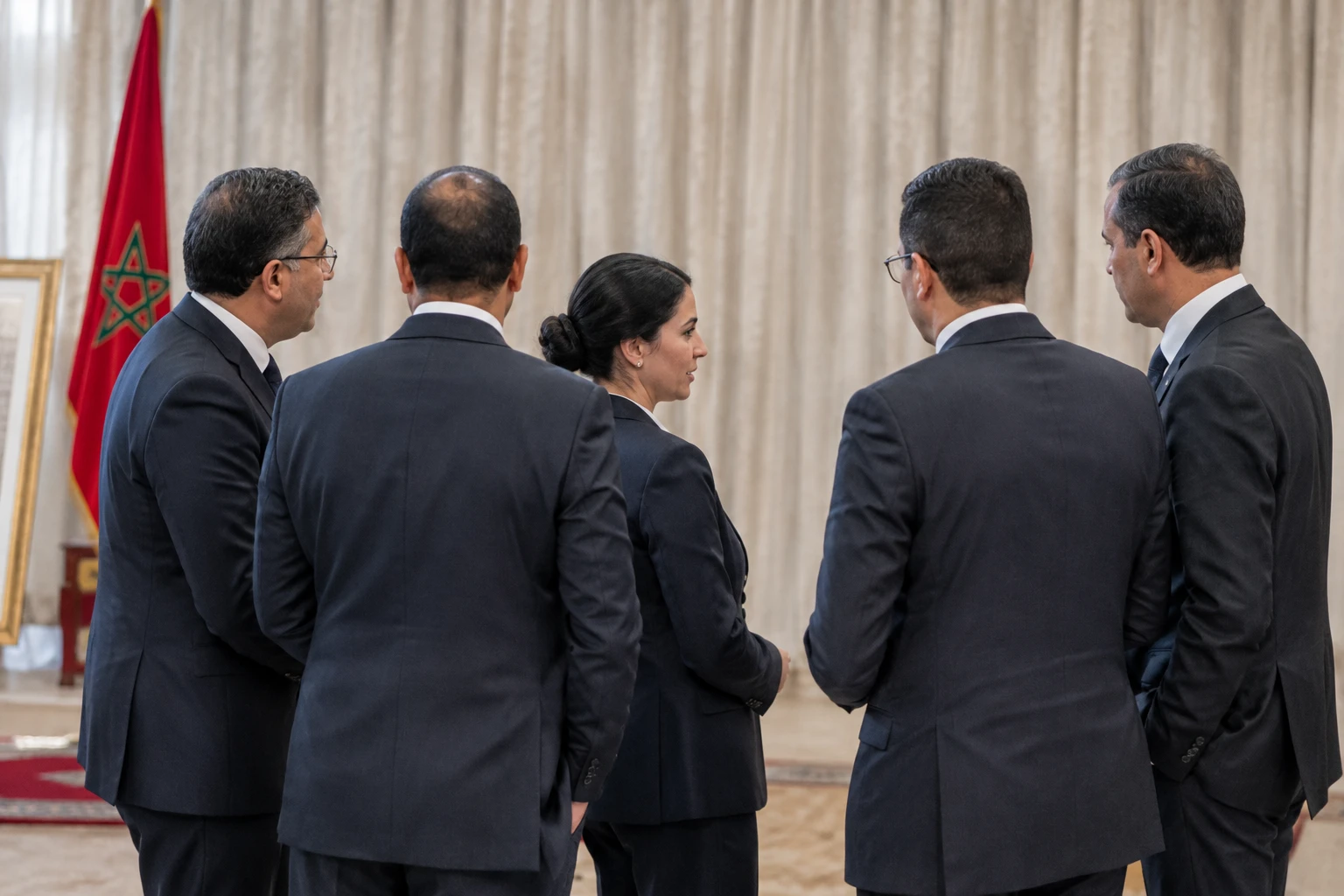
In Morocco, the formation of a government is also measured by what it can decide quickly: the new executive must find its footing as preparations begin for the 2027 budget. Appointed head of government after the legislative elections, Fatima Ezzahra El Mansouri now leads a 32-member team, where returning ministers sit alongside some significant changes.
A majority built around four parties
The 23 September vote put the National Rally of Independents (PAM) in first place, with 97 of the 395 seats in the House of Representatives. This result did not give it a majority on its own. The coalition formed with Istiqlal, the Socialist Union of Popular Forces (USFP) and the Party of Progress and Socialism (PPS) brings together 207 MPs, according to the official announcement of its formation. The announcement of the government coalition in Morocco states that the four parties intend to support the new executive.
King Mohammed VI had tasked Fatima Ezzahra El Mansouri with forming the government on 29 September, in accordance with Article 47 of the Constitution, which provides for the appointment of the head of government from the party that comes first in the elections. The new team was appointed on 16 October at the royal palace in Rabat. The ceremony formalised the end of consultations and the shift to managing public policy.
The coalition has enough seats to command a majority in the House. But its size alone does not guarantee agreement on every bill: the partners will have to maintain their understanding on priorities and budget trade-offs. The government will also have to present its programme to Parliament, where the first stages of its work will be played out.
Continuity on sovereign portfolios, changes elsewhere
The new team has 32 members: the head of government, 19 ministers, a secretary-general of the government and 11 deputy ministers. Seven women sit in the team, according to information published after the ceremony. This figure should be distinguished from the number of ministries alone: women deputy ministers are included in the total number of women.
Several ministers are keeping their portfolios, notably in Foreign Affairs and the Interior. This continuity retains established counterparts on diplomatic, security and administrative matters. Other appointments signal renewal, particularly at the Ministry of Economy and Finance, which has been entrusted to Fouzi Lekjaa, until now president of the Royal Moroccan Football Federation. Moroccan and international media have reported the team’s composition and the main changes. The Moroccan report on the formation of the government details the team’s overall balance.
A woman leading the government is a first for Morocco. However, this alone is not enough to establish a transformation in political representation. According to figures published after the legislative elections, women hold 107 of the new House’s 395 seats, or about 27%. The composition of the government and that of Parliament thus provide two different indicators of women’s place in institutions.
The political symbolism is therefore real, but it must be considered alongside parliamentary power dynamics and the actual distribution of responsibilities. For Moroccan women, the question will also be whether this presence at the top is accompanied by lasting influence over public decisions. For the coalition parties, the challenge is to turn their agreement into government choices without reducing their unity to the distribution of posts alone.
The 2027 budget, the first immediate test
The financial calendar gives the new government its first looming deadline. The 2027 finance bill is due to enter the parliamentary process in October. The bill sets the state’s revenue and expenditure for the following year. It will make the executive’s priorities visible, particularly in public services, investment and economic measures.
Budget trade-offs do not affect all Moroccans in the same way. Decisions on services and investment can have different impacts in large cities, small municipalities and rural areas. Likewise, workers in the informal economy do not experience tax or social measures in the same way as registered employees. The government will therefore have to test its commitments against varied realities, and the House will be one of the places where these choices are debated.
The room for manoeuvre will also depend on the four parties’ ability to defend a common programme. A majority of 207 seats makes it easier to pass bills, but it also gives the partners shared responsibility: they must stand by decisions, including when these involve competing priorities. The continuity of some ministers may help keep ongoing work on track; the new officeholders, for their part, will have to show quickly how they intend to act.
A regional significance to watch with caution
Moroccan politics is rooted in North Africa, a region where the Arab Maghreb Union brings together Morocco, Algeria, Tunisia, Libya and Mauritania, but where political cooperation remains limited. The new government will have to manage the kingdom’s relations with its neighbours and African partners, particularly on trade, infrastructure and diplomacy. This is not an executive appointed by a regional organisation: its choices remain primarily national.
At the continental level, the Moroccan political episode is a reminder that elections lead to coalitions whose strength is tested in institutions and in the implementation of policies. The first concrete indicator will be the El Mansouri government’s ability to meet the budget timetable and secure adoption of its priorities. Parliamentary debates will then show whether the agreement between the PAM, Istiqlal, the USFP and the PPS withstands the trade-offs.



