
 Aljeria
 Libya
 Misri
 Moroko
 Sudan
 Tunisia
 Benin
 Burkina Faso
 Gambia
 Ghana
 Gine
 Ginebisau
 Kepuvede
 Kodivaa
 Liberia
 Mali
 Moritania
 Niger
 Nigeria
 Senegal
 Sierra Leone
 Togo
 Chadi
 Gaboni
 Guinea ya Ikweta
 Jamhuri ya Afrika ya Kati
 Kamerun
 Kongo
 Sao Tome na Principe
 Burundi
 Eritrea
 Ethiopia
 Jibuti
 Kenya
 Komoro
 Madagaska
 Malawi
 Morisi
 Msumbiji
 Rwanda
 Shelisheli
 Somalia
 Sudan Kusini
 Tanzania
 Uganda
 Afrika Kusini
 Angola
 Botswana
 Eswatini
 Lesoto
 Namibia
 Zambia
 Zimbabwe
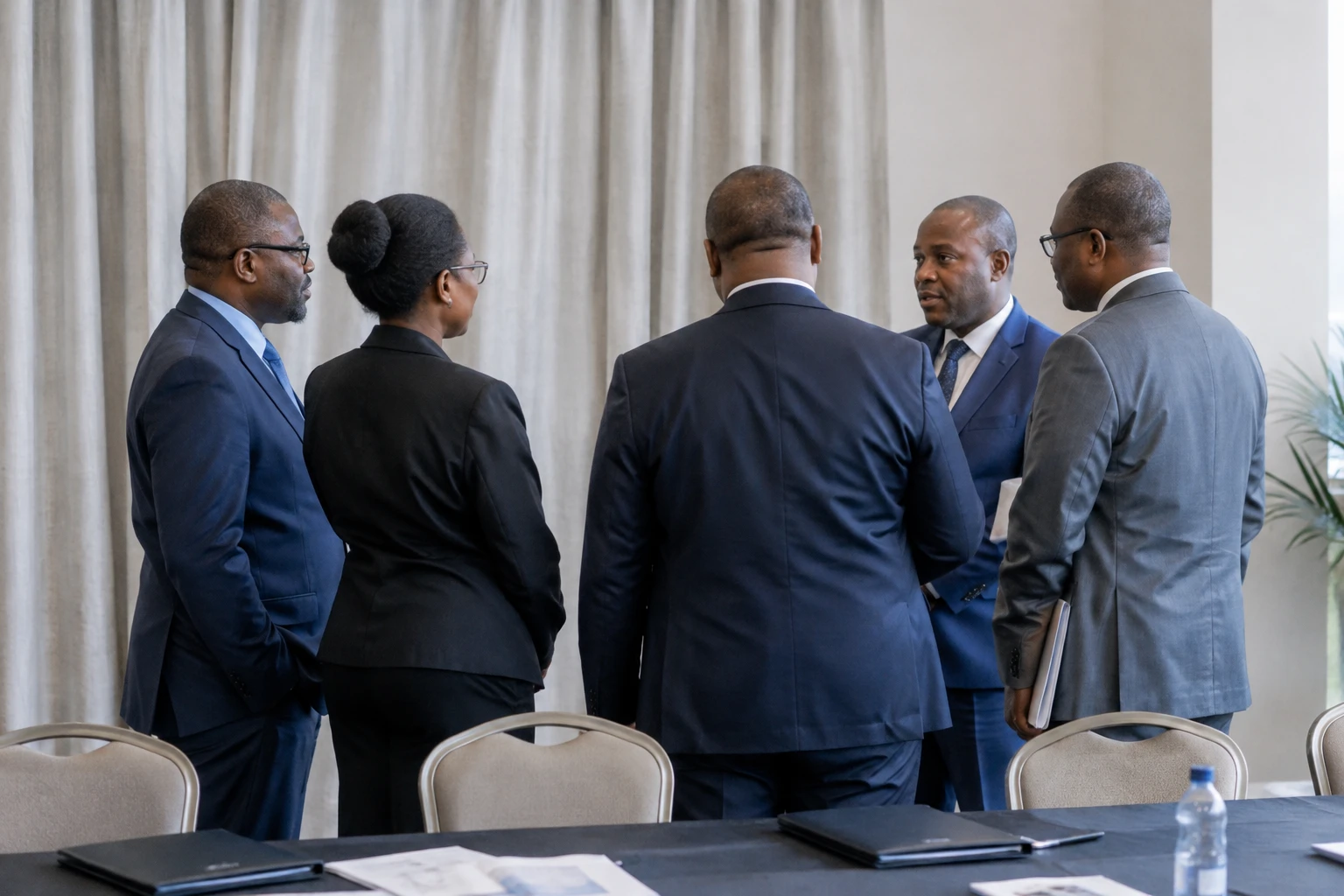
In Goma, a new coalition bringing together political figures and armed groups is further blurring the line between opposition and insurgency. For residents of eastern Democratic Republic of the Congo, the immediate concerns remain security and the continuation of negotiations, as the conflict reshapes the balance of power in Kinshasa.
An armed alliance joins fragile diplomacy
The war in eastern Congo is being fought on several fronts: combat, national political rivalries and international negotiations. The Congo River Alliance (AFC), a politico-military coalition associated with the M23, is taking part in the Doha process with the Congolese government. Rwanda is also party to separate discussions launched in Washington on tensions between the two countries.
These frameworks have not ended hostilities. In August 2026, representatives of Kinshasa and the AFC/M23 met in Switzerland with Qatar, the United States, Togo, the African Union and Switzerland to assess the Doha commitments. They discussed, among other things, ceasefire monitoring and a roadmap for the next stages of negotiations.
Togo’s role as an African Union mediator is a reminder that the search for a solution does not depend solely on foreign capitals. But the proliferation of mediation efforts has yet to produce a lasting settlement. Civilians in the eastern provinces remain exposed to fighting, displacement and disruption of essential services.
FRN puts Kabila in the spotlight
On 12 October in Goma, Joseph Kabila took the lead of the Front for the Refoundation of the Nation (FRN). The coalition brings together groups that had previously been united within the AFC, including the M23. His adviser Claude Ibalanky said the movement intended to act “by all necessary means, including the use of force”. The creation of the FRN was reported by several media outlets, including the Associated Press; the Congolese Press Agency relayed reactions it prompted in the country.
The choice of Goma is significant. The city in North Kivu has been under M23 control since its offensive in January 2025. By announcing the coalition in the city, its founders are asserting a political presence in a territory where Kinshasa’s institutions no longer control the situation as they once did.
Joseph Kabila led the DRC from 2001 to 2019. On 30 September 2025, the High Military Court sentenced him to death in absentia on several charges, including treason and insurrection. He contests the accusations, which his camp describes as politically motivated. The verdict, reported by the Congolese Press Agency and international media, has sharpened the confrontation between the former president and the current authorities.
Belgium’s reaction came in this context. On 21 October, Foreign Minister Maxime Prévot called it “deplorable, incomprehensible and unacceptable” that a former head of state should lead a politico-military movement seeking power by force. He urged the parties to preserve the Doha and Washington processes, respect the ceasefire and protect civilians.
Condemnation does not resolve the political question
Brussels’ statement explicitly condemns the use of arms as a route to power. It also highlights a central contradiction: a coalition that claims to seek political refoundation includes a group engaged in a war against the Congolese state. This divide between its stated political project and its military means will affect the FRN’s credibility among Congolese actors and mediators.
Belgium’s reaction is not, however, the only view expressed in the DRC. On 18 October, the Alliance for a Citizen Generation, a Congolese political party, denounced the creation of the front and called on the African Union, SADC and the East African Community to become more involved. This position reflects part of the political debate; it does not by itself represent the full range of Congolese opinion.
For Kinshasa, the coalition is an additional political and military challenge. For people in the affected provinces, the consequences are measured less by diplomatic statements than by whether they can travel, attend school and regain living conditions less exposed to fighting. The national authorities must also keep institutions functioning in territories where their control is contested.
The issue is also testing regional mechanisms. The DRC is a member of SADC and the East African Community, two organisations expected to coordinate their positions with the African Union. Tensions between Kigali and Kinshasa give the conflict a regional dimension, without reducing Congolese actors to mere proxies of neighbouring countries.
The next test will be the negotiations
The diplomatic priority is to establish whether the FRN intends to take part in commitments already made under the Doha framework or is seeking to impose a new balance of power. In August, representatives of the AFC/M23 and the Congolese government had reaffirmed their willingness to continue discussions and agreed on a monitoring mechanism. The realignment announced in Goma could complicate this work, but its practical effects remain to be determined.
The developments also engage the responsibility of African and regional mediators. They will have to maintain channels for negotiation without conflating political dialogue with automatic legitimisation of violence. For people in the East, the most immediate measure will remain the verifiable implementation of the ceasefire and the protection of civilians.



