Aljeria
 Libya
 Misri
 Sudan
 Tunisia
 Benin
 Burkina Faso
 Gambia
 Ghana
 Gine
 Ginebisau
 Kepuvede
 Kodivaa
 Liberia
 Mali
 Moritania
 Niger
 Nigeria
 Senegal
 Sierra Leone
 Togo
 Chadi
 Gaboni
 Guinea ya Ikweta
 Jamhuri ya Afrika ya Kati
 Jamhuri ya Kidemokrasia ya Kongo
 Kamerun
 Kongo
 Sao Tome na Principe
 Burundi
 Eritrea
 Ethiopia
 Jibuti
 Kenya
 Komoro
 Madagaska
 Malawi
 Morisi
 Msumbiji
 Rwanda
 Shelisheli
 Somalia
 Sudan Kusini
 Tanzania
 Uganda
 Afrika Kusini
 Angola
 Botswana
 Eswatini
 Lesoto
 Namibia
 Zambia
 Zimbabwe
A year after GenZ 212’s first protests, Morocco’s protest movement has changed shape. Gatherings are less visible than in autumn 2025, but the issue of detainees remains at the centre of public debate. In Casablanca, Rabat and several European cities, activists are now seeking to maintain ties between families, lawyers and former protesters.
A mobilisation sparked by public services
GenZ 212 emerged on social media at the end of September 2025. Its name refers to Morocco’s international telephone dialling code. The collective, with no officially established leadership, initially championed demands related to health, education, employment and the cost of living.
The movement grew amid high social expectations. The disparities between major cities and the regions remain evident. Rabat, Casablanca and Tangier account for a significant share of investment and skilled jobs. In other areas, access to healthcare, transport and training remains more limited.
The first demonstrations denounced, among other things, the state of public hospitals. In Agadir, the protests grew particularly intense after several deaths at a hospital. The authorities announced administrative measures in the health sector. Protesters, for their part, called for more fundamental changes in the management of essential services.
The Moroccan government acknowledged several difficulties while highlighting investments made in health and social infrastructure. In October 2025, King Mohammed VI also called for faster public responses in the fields of employment, education and health.
Detention has become the main point of tension
The security response quickly shifted the debate. Morocco’s Ministry of the Interior reported several hundred arrests in the first days of the mobilisation. The Moroccan Association for Human Rights gave higher figures, including people who were arrested and then released.
A year later, it remains difficult to establish precisely how many people are still detained. The Moroccan Association for Human Rights puts the figure at about 650 people in prison or awaiting trial. Other estimates, made at the beginning of the movement, spoke of more than 600 detainees. These figures do not necessarily cover the same categories: temporary arrests, pre-trial detention, final convictions or people released after their trial.
This difference is not a statistical detail. It reveals the absence of a single public tally that is regularly updated and accessible to families. It also fuels mistrust between the authorities, human rights organisations and support groups.
The Moroccan authorities maintain that the prosecutions concern specific acts, including violence, property damage or blocking roads. Those defending the detainees, for their part, believe some proceedings also target online expression, calls to demonstrate or activities supporting the movement.
The courts have already issued several rulings in cases linked to GenZ 212. In June 2026, the Casablanca Court of Appeal secured the release of many young people prosecuted after blocking an urban motorway. Several sentences were reduced or deemed served by the time already spent in detention. The decision was seen as a de-escalation in a case that had attracted particular attention.
In Casablanca, solidarity brings generations together
In the economic capital, activists organised a gathering devoted to political detainees. The term is disputed by the authorities, which describe the proceedings as ordinary criminal cases. Participants, however, sought to link the GenZ 212 arrests to earlier protests.
Portraits on the walls recalled the Hirak of the Rif, a social movement that emerged in northern Morocco in 2016. Figures from that protest, including Nasser Zefzafi, were sentenced to lengthy prison terms before receiving a royal pardon in 2021. Their symbolic presence shows that young protesters see their actions as part of the longer history of social demands in Morocco.
The gathering brought together former protesters, relatives of detainees, lawyers and civil society activists. Some participants say they spent several months in prison. They argue that the social movements are part of a continuum, while acknowledging that GenZ 212 operates in a more decentralised and digital way.
The slogan #FreeKoulchi, meaning “free everyone”, has become the rallying cry of this new phase. It refers not only to those prosecuted over the demonstrations. It also expresses a demand for judicial clarity, guarantees for families and respect for the right to freedom of expression.
A leaderless movement, but not without networks
GenZ 212’s decentralised structure has enabled it to spread rapidly. However, it complicates negotiations and representation of the collective. No single spokesperson can speak on behalf of all participants. This structure protects the most exposed activists, but also makes it harder to formulate a common programme.
The support campaign has now spread beyond Morocco. Gatherings or initiatives have been announced in Paris, Brussels and Madrid. The Moroccan diaspora plays an important role in documenting trials and circulating testimonies. It also helps families maintain international visibility when protests at home subside.
This international dimension does not mean that the movement is directed from abroad. Rather, it reflects the reality of a transnational Moroccan society. Families live in Morocco, while some relatives, lawyers or supporters have networks in Europe.
The next challenge will be political as well as judicial
The protests have revealed a divide between stated national priorities and the daily experience of some young people. Morocco is investing in infrastructure, industry and major projects. But these advances do not have the same impact everywhere. Young people in medium-sized cities and rural areas are calling for more equitable access to public services and jobs.
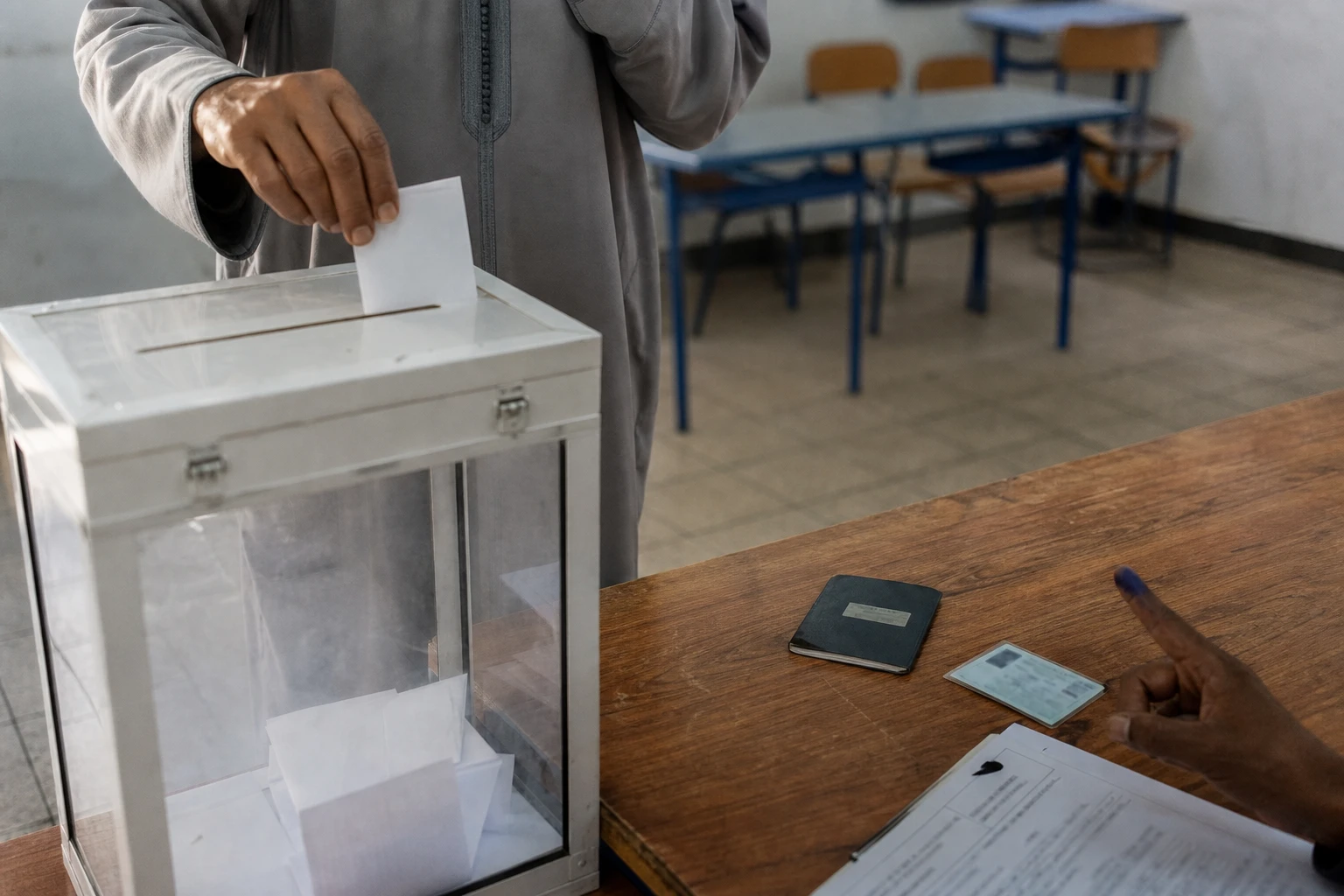
The political calendar will offer a new measure of this divide. The September 2026 legislative elections confirmed how difficult it is for parties to mobilise a young population that feels distant from institutions. Several observers link this abstention to the impact of the arrests and the feeling that the demands of 2025 have not received an adequate response.
The GenZ 212 case will therefore continue to be followed on two fronts. The first concerns court rulings and the fate of detainees still in prison. The second is about the ability of Moroccan institutions to respond to social demands without reducing protests to a matter of public order.
Across North Africa, this period shows that youth movements do not necessarily disappear when demonstrations stop. They can turn into legal campaigns, mutual-aid networks or electoral abstention. For the authorities and political parties alike, the challenge now is to treat these signals as a lasting issue of public trust.