Aljeria
 Libya
 Misri
 Moroko
 Sudan
 Tunisia
 Benin
 Burkina Faso
 Gambia
 Ghana
 Gine
 Ginebisau
 Kepuvede
 Kodivaa
 Liberia
 Moritania
 Niger
 Nigeria
 Senegal
 Sierra Leone
 Togo
 Chadi
 Gaboni
 Guinea ya Ikweta
 Jamhuri ya Afrika ya Kati
 Jamhuri ya Kidemokrasia ya Kongo
 Kamerun
 Kongo
 Sao Tome na Principe
 Burundi
 Eritrea
 Ethiopia
 Jibuti
 Kenya
 Komoro
 Madagaska
 Malawi
 Morisi
 Msumbiji
 Rwanda
 Shelisheli
 Somalia
 Sudan Kusini
 Tanzania
 Uganda
 Afrika Kusini
 Angola
 Botswana
 Eswatini
 Lesoto
 Namibia
 Zambia
 Zimbabwe
In Bamako, training is also about sovereignty
In Mali, the struggle to develop skills is not abstract. It directly affects young people seeking their first trade, companies struggling to recruit and a state seeking to make employment a source of stability. In this context, the opening of a major training centre in Bamako goes beyond a simple diplomatic gesture: it says something about the alliances Mali is choosing to strengthen, at a time when demand for training remains high and the labour market is struggling to absorb new entrants.
The development comes in a country where vocational training must contend with an economy that remains largely informal and with young people exposed to underemployment. At the end of June 2026, the Malian government relaunched a study in Bamako on the transition to the formal economy, a sign that the issue is not limited to qualifications but is also about access to sustainable livelihoods. Regionally, Mali remains within the West African orbit, even after tensions with ECOWAS, and continues to seek useful partnerships in a space where movement, occupations and opportunities remain interconnected.
What was handed over to the Malian state
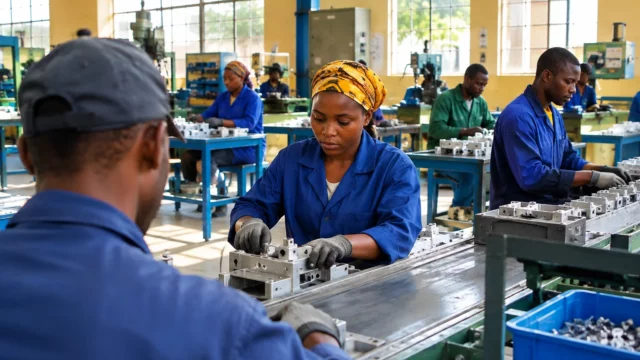
On Friday, 24 July 2026, in Bamako, Morocco officially handed over the Mohammed VI Vocational Training Complex to the Malian authorities. It was built by the Mohammed VI Foundation for Sustainable Development. Morocco’s Ministry of Foreign Affairs says the facility covers 5,200 m² and is expected to train nearly 1,000 trainees a year in 21 fields, including 12 in construction and public works, and nine in hospitality, tourism and catering. Oumou Sall Seck, Mali’s minister responsible for employment and vocational training, described the gesture as “highly significant”, according to Morocco’s official communications.
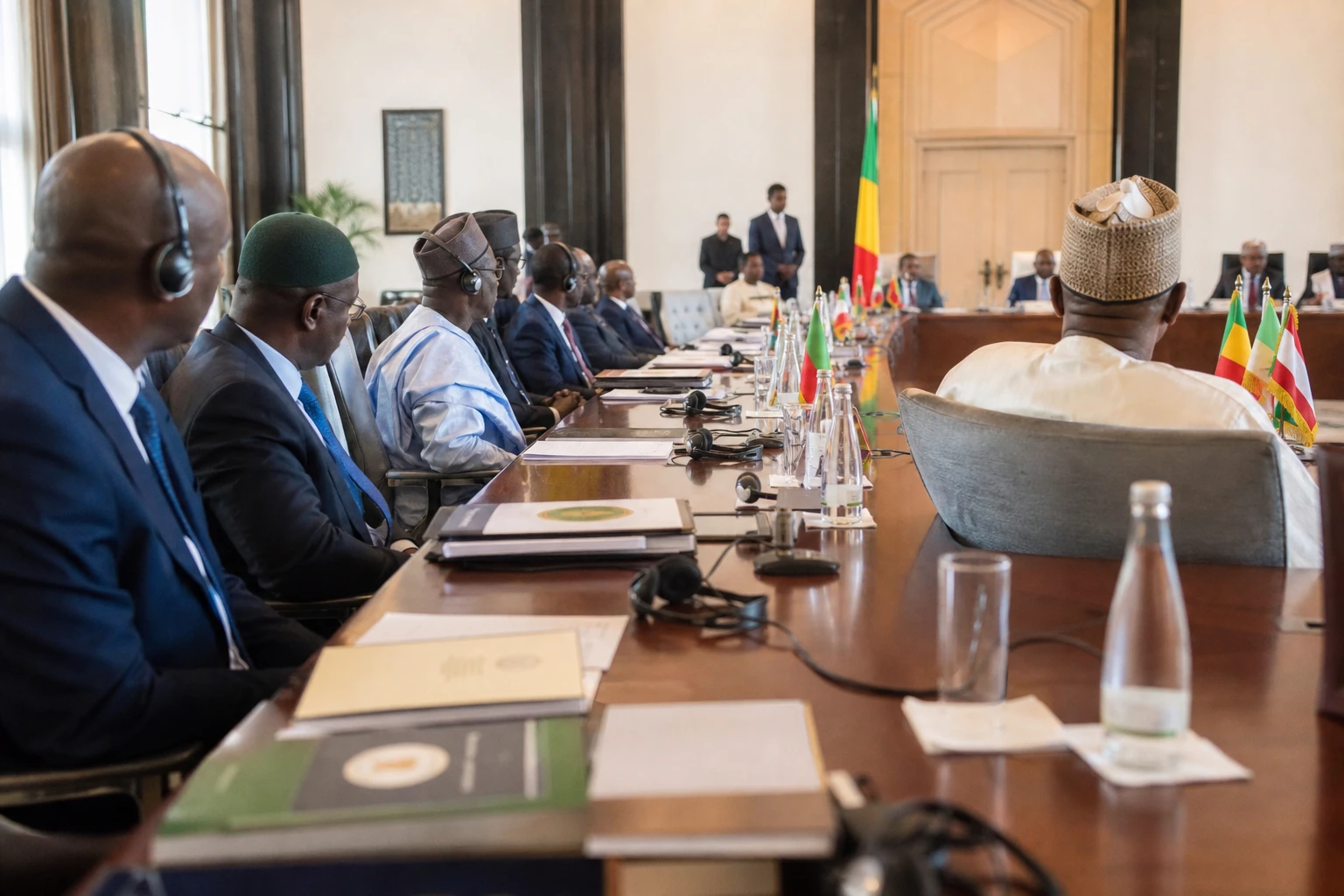
The handover did not take place in isolation. It was held during the fourth session of the Morocco-Mali Joint Cooperation Commission, which took place in Bamako from 21 to 24 July 2026 after a 26-year hiatus. The session also resulted in the signing of 21 sectoral agreements and the holding of the first bilateral business forum, two signs that relations between Rabat and Bamako go beyond symbolism. They are now underpinned by a clearer economic agenda.
The political context is significant. At the same time, Mali reaffirmed its support for Moroccan sovereignty over Western Sahara, while Rabat reiterated its vision of inter-African cooperation based on solidarity and the sharing of expertise. In a Sahel undergoing diplomatic realignments, this convergence gives vocational training a significance that extends beyond education.
Morocco has long invested in Africa’s human capital
The Bamako complex is part of a longer-standing Moroccan strategy. The Office of Vocational Training and Promotion of Work (OFPPT) says on its website that, since 2002, it has concluded 94 framework agreements and specific conventions with 35 African countries. The agency also says it has trained more than 900 trainers and technical and educational managers, and hosted around 8,472 African trainees in initial training programmes. It now reserves 1,000 places a year for trainees from across the continent.
In other words, Morocco has made training a diplomatic tool in its own right. This is neither new nor improvised. The OFPPT also says it has supported the creation of eight sectoral training centres in Africa, including one in Mali, in fields such as construction and public works, hospitality and catering, entrepreneurship, logistics, water and irrigation. For Bamako, this kind of support is tangible. It provides technical facilities, training methods and courses in occupations aligned with visible needs in the local market.
The fact that the Sébénicoro centre focuses on sectors that can generate income quickly matters greatly. In Mali, the quickest routes to work are often in construction, services, catering, transport and urban trades. In a country where a large share of economic activity still takes place outside formal channels, vocational training can help secure incomes—but only if it remains connected to the realities of neighbourhoods, municipalities and regions, not just the capital.
Figures that shed light on social pressures
The needs are real. The World Bank database indicates that in Mali, 42.7% of young people were not in employment, education or training in 2023. This NEET rate—“youth not in education, employment or training”—measures the precarious transition from school to work better than unemployment alone. It does not tell the whole story, but it gives an idea of the scale of disengagement.
Afrobarometer, for its part, reported in an analysis published in 2024 that half of Malians disapprove of the government’s performance in creating jobs. The same report notes that around one-tenth of the working-age population is unemployed. The challenge is not simply to provide more training. It is to provide better training, linked to the needs of businesses, local administrations and productive sectors that are actually hiring.
The centre handed over in Bamako therefore responds to a specific social need. For young people in urban areas, it can provide more structured access to sought-after occupations. For families, it represents an alternative to lengthy general studies that offer no guaranteed path into work. For the state, it serves a broader goal: showing that it is taking action on employment without relying solely on short-term programmes. And for Morocco, it strengthens a diplomacy that prioritises visible results over statements of principle.
Significance beyond the Bamako-Rabat axis
Across West Africa, this development sends a clear signal. In a region where political transitions, security tensions and budgetary constraints weigh on public action, states are seeking partners able to deliver practical solutions. Vocational training is one of these understated but far-reaching responses. It connects education, employment, internal mobility and, at times, economic migration to other African or Mediterranean markets.
For Mali, the next challenge will be to make the centre its own. A modern facility does not, by itself, create jobs. Everything depends on its governance, the quality of its trainers, the cost of access for learners, the tracking of graduates and its ability to build links with local businesses. The real test will therefore begin after the ceremony: filling the classrooms, establishing the training programmes and proving that this South-South cooperation can lead to more than political rapprochement.