Algeria
 Egypt
 Libya
 Morocco
 Sudan
 Tunisia
 Benin
 Burkina Faso
 Cabo Verde
 Côte d'Ivoire
 Ghana
 Guinea
 Guinea-Bissau
 Liberia
 Mali
 Mauritania
 Niger
 Nigeria
 Senegal
 Sierra Leone
 The Gambia
 Togo
 Cameroon
 Central African Republic
 Chad
 DR Congo
 Equatorial Guinea
 Gabon
 Republic of the Congo
 São Tomé and Príncipe
 Burundi
 Comoros
 Djibouti
 Eritrea
 Ethiopia
 Kenya
 Madagascar
 Malawi
 Mauritius
 Mozambique
 Rwanda
 Seychelles
 Somalia
 South Sudan
 Tanzania
 Uganda
 Angola
 Botswana
 Eswatini
 Lesotho
 Namibia
 South Africa
 Zambia
A monetary lull changing daily life, not just the dashboards
In Harare, the real test of a currency is not found in a statement. It can be seen in the market, in rents, transport fares and the price of bread. In Zimbabwe, the decline in inflation measured in ZiG, the local currency launched in 2024, tells precisely this story: stabilisation is beginning to filter through to everyday life, even if confidence still needs to be strengthened.
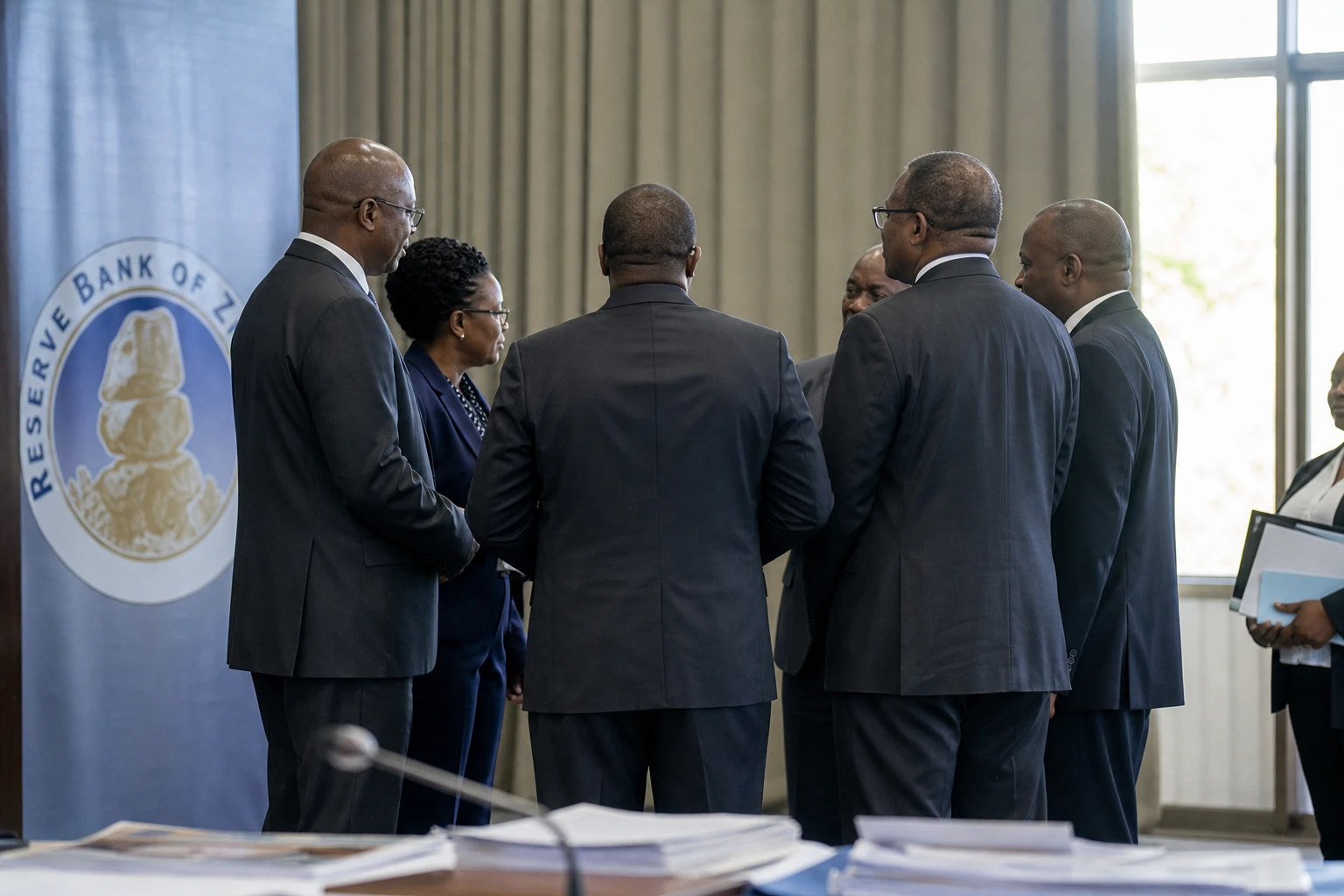
This is not Zimbabwe’s first attempt to restore monetary order. The ZiG replaced the Zimbabwean dollar in April 2024, amid deep distrust of the local currency. Since then, the Reserve Bank of Zimbabwe has maintained a tight monetary stance, before cutting its policy rate from 35% to 30% in June 2026, saying it was acting in an environment where inflation was now structurally lower.
What the figures published in Harare say
Official data published at the end of August 2026 show a further easing. Annual inflation measured in ZiG fell to 2.9% in August, from 3.2% in July. In US dollars, it remained at 3.1%. ZIMSTAT also said monthly inflation in ZiG remained very low, while dollar prices were virtually unchanged over the month.
This extends a trend already established since the start of the year. In its mid-year monetary policy review, the Reserve Bank of Zimbabwe said single-digit inflation had been reached in January 2026 and had been maintained for seven months through July. The same document emphasised exchange-rate stability and prudent monetary policy.
The table below summarises the most useful indicators for tracking this trend. It also shows why the issue remains sensitive for businesses, households and banks.
| Indicator | Value | Interpretation |
|---|---|---|
| Annual ZiG inflation, August 2026 | 2.9% | Recent low, according to ZIMSTAT |
| Annual ZiG inflation, July 2026 | 3.2% | Down 0.3 percentage points in one month |
| Annual USD inflation, August 2026 | 3.1% | Stable prices in foreign currency |
| RBZ policy rate, June 2026 | 30% | Down from 35% |
| GDP growth, 2025 | 7.5% | Rebound driven by agriculture and mining |
Why this decline matters for Zimbabwe’s economy
Lower inflation does not solve everything. But it provides some breathing space. When prices stop rising faster than wages, retailers can recalculate their margins, households can plan their spending more effectively and banks can lend with slightly less uncertainty. In a country where the informal economy remains very significant, this stability has an immediate effect on small transactions, often paid for on a day-to-day basis.
The signal is also political and institutional. For years, Zimbabwe has sought to break out of the cycle of inflation, devaluation and monetary redesign. The ZiG was presented as a currency backed by gold and a basket of currencies, with the aim of restoring confidence and re-anchoring prices. The Securities and Exchange Commission of Zimbabwe confirmed in 2024 the introduction of the new monetary framework and the conversion of former balances into ZiG at the official rate set by the central bank.
The current trend should therefore not be read as merely good technical news. It marks a change of course after years of volatility, including the severe pressure seen in 2024 and 2025. This also explains the authorities’ cautious tone: the stability observed must last, because a currency’s credibility is built through consistency, not one good month.
A regional issue for SADC and a test for what comes next
Zimbabwe is a founding member state of SADC, the Southern African Development Community. In this regional bloc, controlling inflation is one of the macroeconomic convergence criteria, alongside public deficits and debt. In other words, price stability in Harare is not just a national concern: it also affects the country’s economic credibility in its regional environment.
The regional context also encourages a broader perspective. SADC itself says macroeconomic convergence relies on policies geared towards stability, with low and sustainable inflation. In that context, falling inflation in Zimbabwe brings the country closer to a more predictable framework for investment, cross-border trade and financial exchanges with its neighbours, even as confidence in the ZiG remains an open question.
What happens next will show whether this disinflation takes hold. The World Bank Group estimates that Zimbabwe’s GDP grew by 7.5% in 2025, after 1.7% in 2024, driven by an agricultural rebound and mining commodity prices. It also notes that public debt remains under strain. This means price stability is helpful, but it must still be accompanied by sustainable growth, stronger public revenues and a monetary framework capable of withstanding shocks.
For Zimbabweans, the question is simple: does this fall to 2.9% in ZiG herald lasting normalisation at last, or merely a calmer interlude after years of turbulence? The next ZIMSTAT releases, RBZ decisions and exchange-rate movements will provide the answer.