Algeria
 Egypt
 Libya
 Morocco
 Sudan
 Tunisia
 Benin
 Burkina Faso
 Cabo Verde
 Côte d'Ivoire
 Ghana
 Guinea
 Guinea-Bissau
 Liberia
 Mali
 Mauritania
 Niger
 Nigeria
 Senegal
 Sierra Leone
 The Gambia
 Togo
 Cameroon
 Central African Republic
 Chad
 DR Congo
 Equatorial Guinea
 Gabon
 Republic of the Congo
 São Tomé and Príncipe
 Burundi
 Comoros
 Djibouti
 Eritrea
 Ethiopia
 Kenya
 Madagascar
 Malawi
 Mauritius
 Mozambique
 Rwanda
 Seychelles
 Somalia
 South Sudan
 Tanzania
 Uganda
 Angola
 Botswana
 Eswatini
 Lesotho
 Namibia
 South Africa
 Zambia
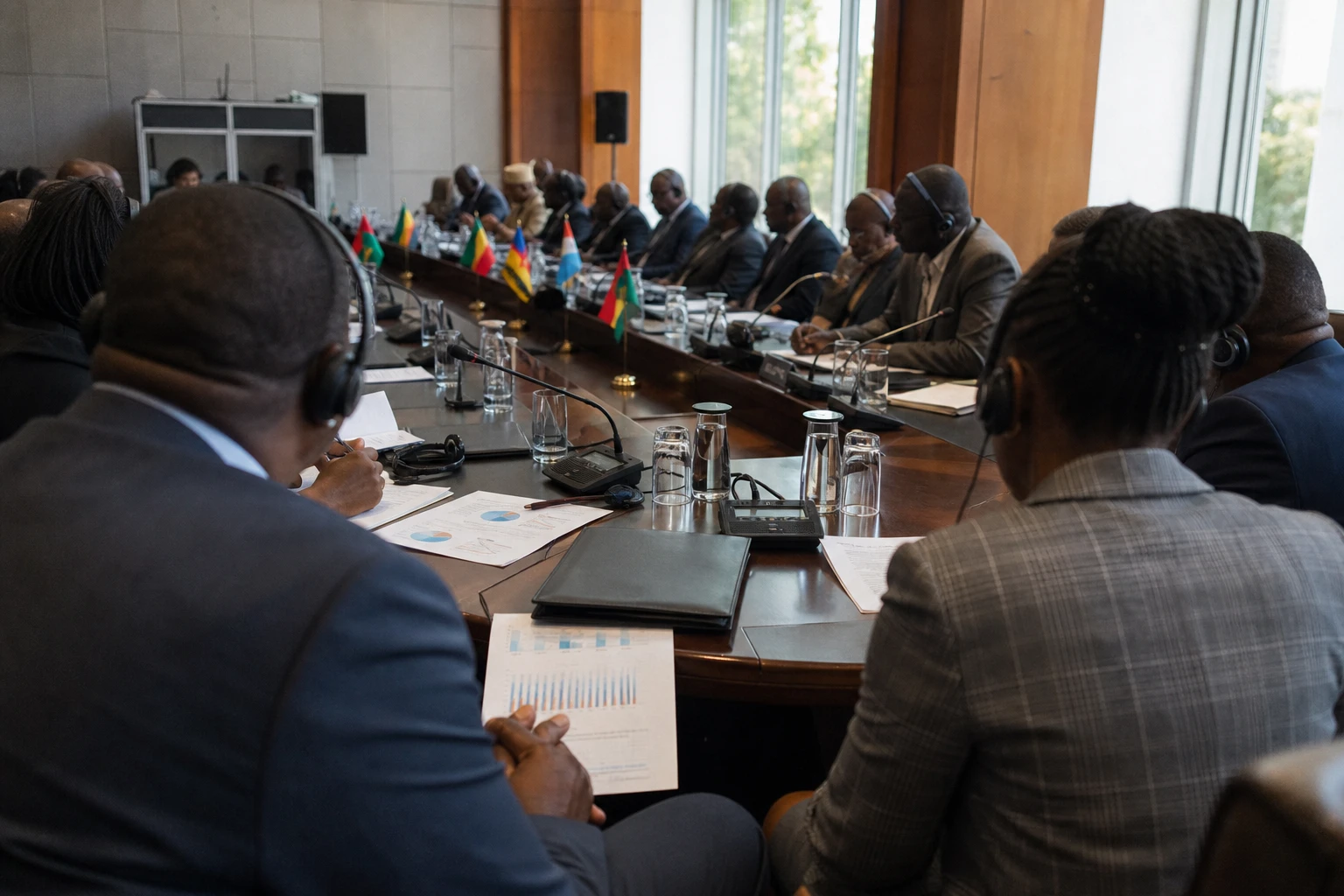
In Harare, the Reserve Bank of Zimbabwe has eased monetary policy slightly. The decision comes as prices are still rising slowly, but the country remains exposed to external shocks, commodity prices and climate risks.
A cautious adjustment after several months of stability
The Monetary Policy Committee of the Reserve Bank of Zimbabwe cut its key rate from 30% to 27.5% at its meeting on 28 September 2026. The rate serves as a benchmark for the cost of money in the economy. It influences, among other things, lending conditions for businesses, households and banks.
The central bank presents the cut as a technical realignment. It does not want to signal an abandonment of monetary discipline. In its statement, the institution said the reduction reflected changes in inflation rather than a complete shift in direction.
This caution is explained by Zimbabwe’s recent monetary history. Following episodes of hyperinflation that severely undermined confidence in the national currency, the authorities are seeking to preserve exchange-rate and price stability. The current local currency, Zimbabwe Gold, is generally referred to as ZiG in economic discussions.
The September decision nonetheless extends a shift already under way. In June 2026, the central bank cut its key rate by five percentage points, from 35% to 30%. The latest reduction brings the cumulative easing to 7.5 percentage points in a few months, while leaving rates at a still-high level.
Prices contained despite a September uptick
Annual inflation measured in ZiG stood at 3.7% in September 2026, up from 2.9% in August, according to data published by the Zimbabwe National Statistics Agency. The August figure was the lowest recorded since 1980, according to data cited by several economic sources.
The movement remains limited, but warrants close monitoring. Monthly inflation reached 0.5% in September, compared with 0.1% the previous month. This acceleration shows that overall price stability does not mean there is no pressure on some areas of spending.
The recent rise is due in particular to changes in the cost of energy and essential services. Tensions in international oil markets have also fuelled the central bank’s concerns. For an economy dependent on imported fuel and many intermediate goods, higher oil prices can quickly feed through to transport, production and retail prices.
Despite this uptick, expectations remain moderate. The Reserve Bank expects annual inflation to be below 7% at the end of December 2026. This outlook is based on controlled growth in the money supply, relative exchange-rate stability and the continuation of a restrictive liquidity policy.
Inflation data published by the Reserve Bank of Zimbabwe also show that the country now tracks price movements in ZiG and US dollars separately. This dual perspective remains important in an economy where businesses and households still use several monetary benchmarks.
Solid growth, but exposed to shocks
The rate cut comes as the economy continues to maintain a strong pace of activity. The International Monetary Fund estimates gross domestic product growth at 8.3% in 2025 and 5% in 2026. The expected slowdown therefore does not signal a contraction, but a return to a more moderate pace after a strong recovery.
Agriculture, mining and remittances are supporting this trajectory. Zimbabwe benefits in particular from significant revenues linked to gold and other mineral exports. Remittances from the diaspora also bolster households’ foreign-currency resources and help support consumption.
The current account is expected to remain in surplus in 2026. In other words, revenues from exports and transfers are expected to exceed outflows related to current transactions. This supports the balance of payments, but does not fully shield the country from fluctuations in the prices of gold, oil or agricultural products.
The external position has also improved. Foreign-currency reserves intended to support the ZiG exceeded US$2bn in September, according to information released by the central bank. They would represent about two months of import cover. This buffer strengthens the authorities’ ability to intervene in the event of pressure on the foreign-exchange market.
The International Monetary Fund confirms its growth and low-inflation projections for 2026. It also stresses the need to build up reserves, improve fiscal management and safeguard financial stability.
The cost of credit at the heart of the debate
For Zimbabwean businesses, the cut in the key rate could gradually reduce the cost of financing. Its impact will nevertheless remain limited as long as banks maintain wide margins to protect themselves against foreign-exchange risk, default risk and economic uncertainty.
Small businesses and informal-economy operators are particularly affected. They often have limited access to bank credit. A cut in the benchmark rate therefore does not automatically translate into an immediate improvement in their financing conditions.
Households, for their part, may hope for a gradual easing in the cost of loans. But this will depend on how fully banks pass on the decision and on the evolution of prices for essential goods. In urban areas, rent, electricity, transport and imported products may continue to weigh on household budgets, even when average inflation remains low.
The central bank will therefore have to maintain a delicate balance. Rates that are too high curb investment and make credit more expensive. A cut that is too rapid could, conversely, revive pressure on the ZiG and fuel demand for foreign currency.
A test for the regional outlook
Zimbabwe is part of the Southern African Development Community (SADC), which brings together several countries in the region around goals of economic integration and political cooperation. Changes in Zimbabwe’s exchange rate, imports and prices therefore have effects on trade with its neighbours.
The next step will be to determine whether the rate cut genuinely supports activity without reversing the progress made on inflation. The authorities will also have to monitor the 2026-27 agricultural season. The risk of an El Niño event, which can reduce rainfall and affect harvests, is among the main threats to the economic outlook.
The International Monetary Fund already forecasts a slowdown in growth to 3.5% in 2027, owing to the expected effects of a particularly severe climate event. For Harare, monetary stability will therefore depend on more than central bank decisions. It will also depend on harvests, mineral exports, foreign-currency reserves and the country’s ability to strengthen confidence in the ZiG over the long term.