Algeria
 Egypt
 Libya
 Morocco
 Sudan
 Tunisia
 Benin
 Burkina Faso
 Cabo Verde
 Côte d'Ivoire
 Ghana
 Guinea
 Guinea-Bissau
 Liberia
 Mali
 Mauritania
 Niger
 Nigeria
 Senegal
 Sierra Leone
 The Gambia
 Togo
 Cameroon
 Central African Republic
 Chad
 DR Congo
 Equatorial Guinea
 Gabon
 Republic of the Congo
 São Tomé and Príncipe
 Burundi
 Comoros
 Djibouti
 Eritrea
 Ethiopia
 Kenya
 Madagascar
 Malawi
 Mauritius
 Mozambique
 Rwanda
 Seychelles
 Somalia
 South Sudan
 Tanzania
 Uganda
 Angola
 Botswana
 Eswatini
 Lesotho
 Namibia
 South Africa
 Zambia
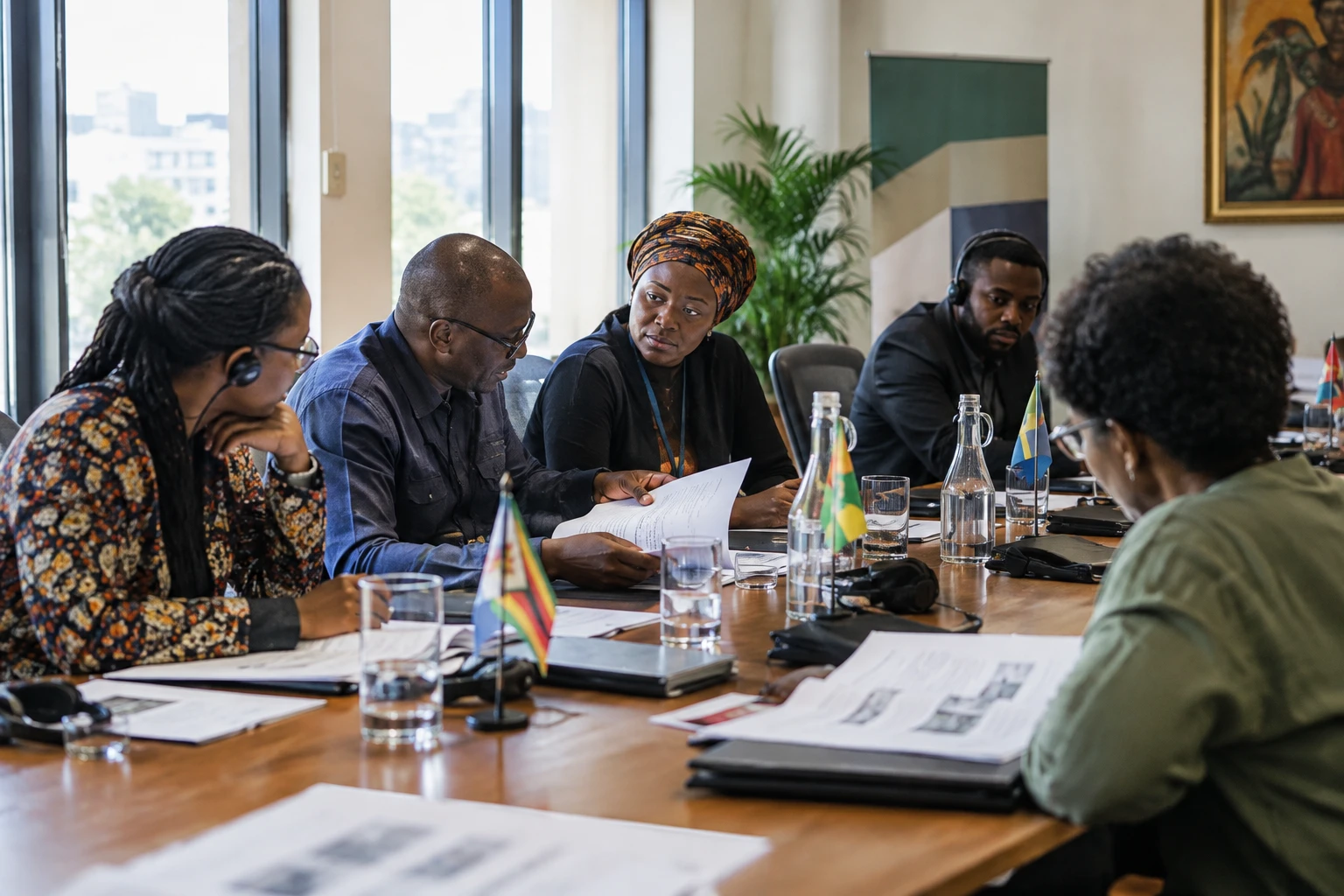
Software can flag similarities to texts generated by artificial intelligence. On its own, it cannot tell how a short story was written. That distinction lies at the heart of a controversy involving Simbarashe Kundizeza, a Zimbabwean author who this year won one of Africa’s best-known literary prizes.
An award becomes a question of method
On 6 October 2026, in London, Kundizeza won the Caine Prize for “The Blue Fighter”, a short story published in 2025 by The Shallow Tales Review. The prize is worth £10,000. The announcement initially celebrated a work of fiction from Zimbabwe; a few days later, its authorship became the subject of debate.
The story follows Tinashe, a boy whose family faces hardship after his father, an accountant, leaves his job to build aquariums. According to Kundizeza, the story draws on family memories and a period of economic difficulty in Zimbabwe. The pan-African news agency APA confirmed the date, the prize money and the story’s earlier publication.
The challenge gathered pace after an article reported that Pangram, an AI-detection software programme, had classified almost the entire text as machine-generated. The journalist also noted differences in tone from an earlier story by Kundizeza and stylistic patterns she considered common in AI-generated work. These are points raised in a journalistic investigation, not independent proof of how the text was composed.
Kundizeza rejected the allegation. “I am the one who wrote ‘The Blue Fighter’,” he said on X. He says he has successive drafts and a timeline of the writing process. He has also explained that characters and elements of the setting come from his personal experience. The Associated Press reports that he believes technology must be used carefully, so that it does not create bias against authors writing about their own cultures.
The detector: a disputed clue
Ellah Wakatama, chair of the Caine Prize board, announced that an internal review would be opened. The process is expected to include consultation with the author, the judges and the journal in which the story appeared. The organisation says it favours a human-centred approach and has not announced that the prize will be withdrawn. It also notes that shortlisted works have already been published and their authors guarantee their originality.
The debate, then, is not simply a matter of believing the tool or the writer. A peer-reviewed study published in June 2026 by researchers at Vrije Universiteit Brussel compared four detectors on 160 academic texts of known origin. Pangram performed better than the other tools tested; the authors nevertheless stressed that a detector should not be used as the sole evidence in a high-stakes decision. The research concerns academic work, not literary fiction, and does not settle Kundizeza’s case.
For Wakatama, an algorithmic score should not act as the final arbiter. The question is particularly sensitive when an allegation threatens an author’s reputation and the legitimacy of a prize devoted to African writers. Several voices in the African literary world have denounced on social media the risk of disproportionate treatment of Black authors. These reactions express concern; on their own, they are not enough to establish discriminatory intent in this case.
A story rooted in Zimbabwean memory
Kundizeza has traced the inspiration for his story to his family’s history and the economic difficulties Zimbabwe faced in the early 2000s. He said that his father, also an accountant, had left his job to grow tomatoes. The story turns these elements into fiction: it is not a report on a real family, but bears the imprint of social and domestic memory.
This context gives the case significance beyond the technical dispute. In Harare, as in other cities and rural areas, national economic trajectories are also recounted through work choices, family solidarity and everyday adaptations. A Zimbabwean writer’s work can draw on this experience without being reduced to documentary testimony. Distinguishing inspiration, literary craft and the possible use of digital tools therefore requires a careful investigation, not an automated reading of the text.
The Caine Prize, established in 2000 and dedicated to African short fiction, connects authors, journals, juries and readers across borders. Its own history is linked to Zimbabwe: its first award ceremony was held in Harare. Kundizeza’s win, as an author based in the capital, also had concrete professional significance. An award at this level can raise a writer’s international profile and create publishing opportunities. An unresolved allegation, by contrast, could undermine that recognition.
A process to watch across the region
Zimbabwe is a member of the Southern African Development Community, or SADC, which brings neighbouring countries together through regional co-operation. The controversy does not fall directly within the remit of its political institutions, but concerns a cultural space in which authors, publishers and journals move between countries. The 2026 selection included writers from Kenya, Cameroon, Nigeria and Egypt alongside the Zimbabwean winner. The issue is therefore also about the rules applied to African works when they receive international recognition.
What happens next will depend on the review announced by the prize: comparing drafts, consulting the author and the journal, and considering the judges’ views. These elements may help establish the text’s provenance, although no document or testimony will automatically be decisive. It will also be important to see whether the prize sets out its rules on AI use and acceptable investigative methods.
For African literary institutions and their partners, the balance is delicate: preserving trust in prizes, taking suspicions seriously and ensuring that a commercial tool does not replace human judgement. In this case, the outcome of the investigation will matter. So too will the method used.
For context: APA’s report on the 2026 Caine Prize, the Caine Prize’s official statement, the Associated Press report on Kundizeza’s response and Vrije Universiteit Brussel’s study of AI detectors.