Algeria
 Egypt
 Libya
 Morocco
 Sudan
 Tunisia
 Benin
 Burkina Faso
 Cabo Verde
 Côte d'Ivoire
 Ghana
 Guinea
 Guinea-Bissau
 Liberia
 Mali
 Mauritania
 Niger
 Nigeria
 Senegal
 Sierra Leone
 The Gambia
 Togo
 Cameroon
 Central African Republic
 Chad
 DR Congo
 Equatorial Guinea
 Gabon
 Republic of the Congo
 São Tomé and Príncipe
 Burundi
 Comoros
 Djibouti
 Eritrea
 Ethiopia
 Kenya
 Madagascar
 Malawi
 Mauritius
 Mozambique
 Rwanda
 Seychelles
 Somalia
 South Sudan
 Tanzania
 Uganda
 Angola
 Botswana
 Eswatini
 Lesotho
 Namibia
 South Africa
 Zimbabwe

Producing vaccines in Zambia could change part of the regional health equation: doses would be made closer to the populations that need them. But announcing a plant guarantees neither rapid production nor assured access to public markets. For ZAMVAX, the challenge will be to turn an industrial agreement into an approved production capacity.
An industrial agreement led from Lusaka
On 2 November 2026, the Zambia Industrial Development Corporation (IDC) and Chinese company Jijia International Medical Technology signed a joint venture agreement to establish ZAMVAX Limited. The IDC will hold 60% of the capital, compared with 40% for Jijia. The agreement sets out the partners’ governance and responsibilities, following a memorandum of understanding concluded in 2024.
The project is valued at $213 million across several phases, according to the pan-African news agency APA. This overall sum does not cover the launch alone: the first phase is estimated at $24.13 million. It is intended to establish a facility for filling, packaging and quality control of oral cholera vaccines in the Lusaka South Multi-Facility Economic Zone.
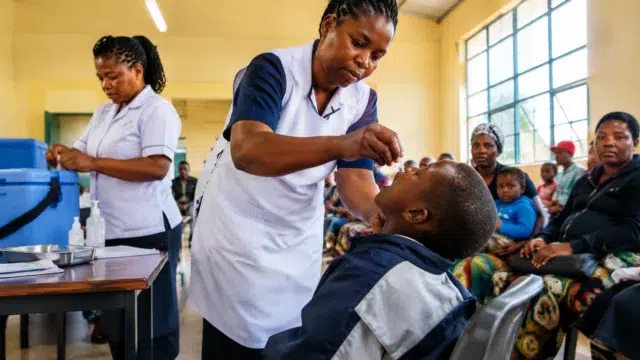
The stated capacity is up to 20 million doses a year. Half would be destined for the Zambian market and the other half for export, subject to approvals and access to the targeted markets. The IDC says this first stage will use an imported antigen. A later phase could introduce local production of the antigen, a prerequisite for integrated manufacturing.
Preparatory work is expected to continue over the next 12 months, but no date for the start of commercial production has been announced. Expansion into paediatric or veterinary vaccines also remains subject to separate studies, funding and approvals.
A response to regional needs, but not yet a guaranteed supply
Zambia has experienced several cholera outbreaks, including a major one in 2023-2024. The risk remains linked to access to safe water and sanitation, as well as disruption caused by rain and flooding. In February 2026, the World Health Organization (WHO) reported 4,320 cases and 56 deaths in five Southern African countries between 1 January and 15 February. That was more than seven times the number of cases over the same period in 2025.
These regional figures highlight the value of local capacity, but do not prove that a Zambian plant will be able to respond immediately to emergencies. Campaigns are organised using stockpiles and international mechanisms. In February 2026, WHO, Gavi and UNICEF announced the resumption of preventive campaigns in several countries, following a period of global shortages. Available doses are therefore allocated according to need, rather than simply bought close to where they are produced.
ZAMVAX’s stated export market will also depend on the product’s quality and approval. The first phase, based on an imported antigen, could develop local filling and quality-control skills. It does not yet mean that all the components of the vaccine will be made in Zambia. The distinction matters: industrial autonomy is built in stages, with precise technical and regulatory requirements.
Different benefits for different stakeholders
For the government and the IDC, the agreement represents an industrial investment and a majority stake. For Jijia, it opens up a partnership in a market where procurement also depends on international health decisions. For Zambian professionals, the project could create skilled jobs and transfer expertise. These benefits remain contingent on the completion of the various phases and are not yet achieved results.
For residents, the project’s value will be measured above all by the availability and price of doses, as well as their distribution beyond Lusaka. National production capacity does not replace health centres, epidemiological surveillance, or water and sanitation networks. Rural areas and underserved urban neighbourhoods will not automatically benefit from better access if logistics and prevention do not keep pace.
The promise to allocate half of production to the domestic market will therefore need to be reflected in purchase contracts and distribution plans. Conversely, exporting ten million doses a year will only be possible if regional markets approve the product and production consistently meets the required standards. The documented needs in Southern Africa provide a favourable context, but not a firm order.
A stake for Southern Africa and the continental strategy
Zambia is a member of the Southern African Development Community (SADC), an organisation that brings the countries of the region together for economic and sectoral cooperation. If ZAMVAX gets off the ground, its production could strengthen regional capacity, provided neighbouring countries can access the doses and approval procedures are compatible. A plant in Lusaka does not, by itself, become a regional supplier.
The project also feeds into a broader continental debate: dependence on imports makes countries vulnerable when global demand outstrips available stocks. The African Union has set a target of producing 60% of the vaccines needed on the continent by 2040. ZAMVAX is in line with that direction, but will not be enough to achieve it: sustained funding, scientific expertise, supply chains and regulators capable of assessing products will also be needed.
The next concrete steps will therefore be more revealing than the financial announcement: securing the initial funding, progress on construction, regulatory approval and confirmation of the first contracts. The decisive test will be ZAMVAX’s ability to deliver doses of consistent quality that are affordable in Zambia and accepted by markets across the region.