Algeria
 Egypt
 Libya
 Morocco
 Sudan
 Tunisia
 Benin
 Burkina Faso
 Cabo Verde
 Côte d'Ivoire
 Ghana
 Guinea
 Guinea-Bissau
 Liberia
 Mali
 Mauritania
 Niger
 Nigeria
 Senegal
 Sierra Leone
 The Gambia
 Togo
 Cameroon
 Central African Republic
 Chad
 DR Congo
 Equatorial Guinea
 Gabon
 Republic of the Congo
 São Tomé and Príncipe
 Burundi
 Comoros
 Djibouti
 Eritrea
 Ethiopia
 Kenya
 Madagascar
 Malawi
 Mauritius
 Mozambique
 Rwanda
 Seychelles
 Somalia
 South Sudan
 Tanzania
 Uganda
 Angola
 Botswana
 Eswatini
 Lesotho
 Namibia
 South Africa
 Zimbabwe
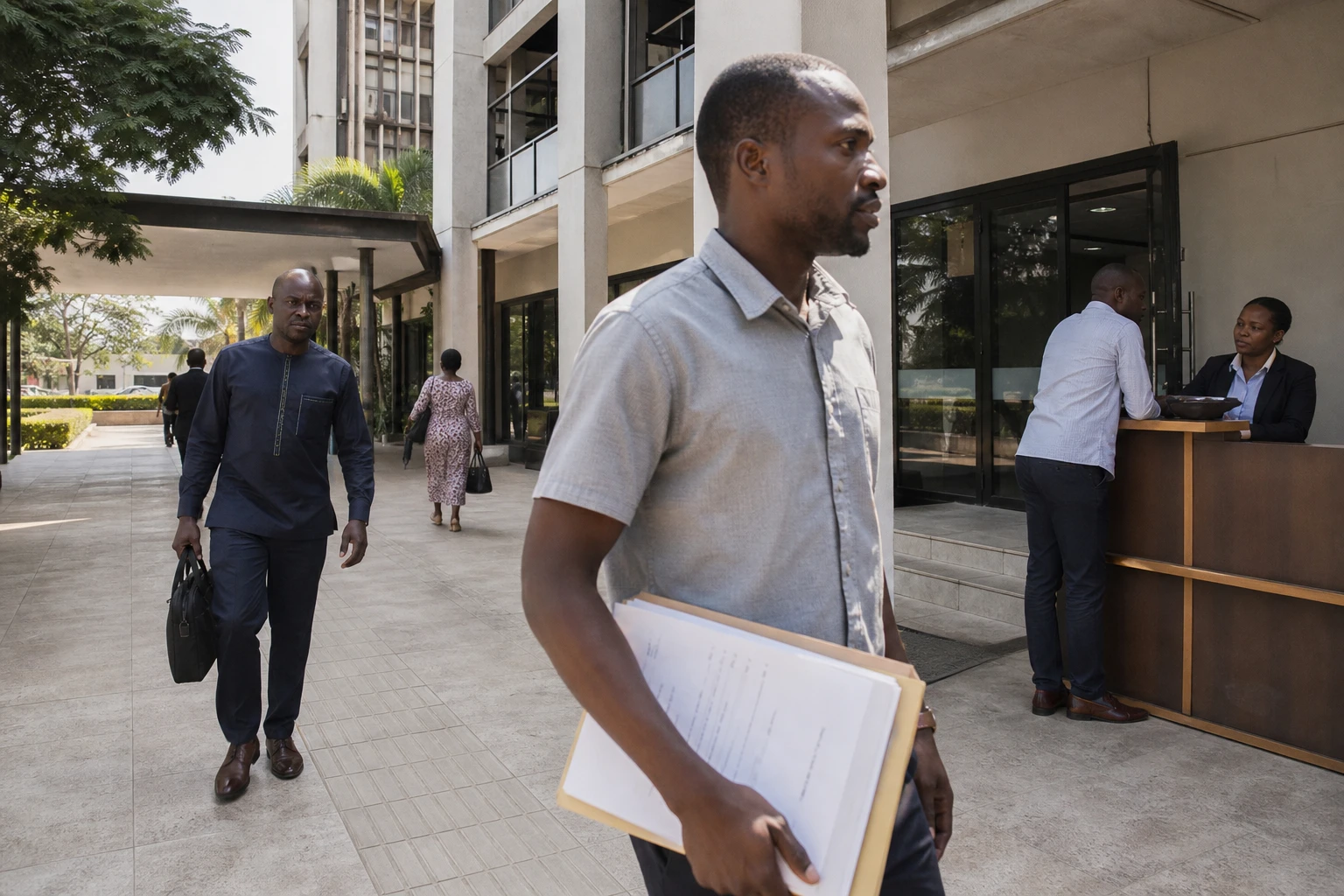
Democracy under pressure as the ballot is counted
In Lusaka, Zambian politics has suddenly taken a harder turn over a simple question: how can an election be challenged without being treated as a threat to the state? In Zambia, a country long presented as an island of stability in southern Africa, the post-election period in mid-August 2026 shows that the issue is no longer only the result at the ballot box, but also the space left for the opposition to speak, demonstrate and seek justice.
The regional context matters. Zambia belongs to SADC, the Southern African Development Community, which closely monitors the quality of elections in the region and deployed an observer mission for the 13 August 2026 vote. The European Union, too, considered it necessary to describe the electoral playing field as “competitive but uneven”. In this context, tensions in Lusaka go far beyond a simple domestic power struggle.
What the established facts show
On Thursday 21 August 2026, Zambian police summoned Brian Mundubile, opposition leader and President Hakainde Hichilema’s main rival in the 13 August election, as well as his running mate Makebi Zulu, for questioning in a case linked to alleged threats to national security. Police say a joint investigation concerns “alarming activities” linked to premises associated with the pair, without specifying the exact nature of the alleged conduct.
According to results published by the Electoral Commission, Hakainde Hichilema won a second term with about 60% of the vote, while Brian Mundubile secured around 38%. The opposition leader announced he would challenge the result in court, citing irregularities. The Electoral Commission confirmed that counting had been halted for a time, following episodes of violence and reported incidents at several polling stations.
The rising tension was not confined to this summons. In the preceding days, opposition figures had already been arrested during and after the election, amid claims by police that they had targeted people suspected of threatening state security. AP also reported that shots had been fired during an operation against opposition figures. A former minister, Mutotwe Kafwaya, was killed during the operation, according to several consistent news reports.
What this sequence reveals about Zambia
The heart of the case goes beyond Brian Mundubile’s name alone. It concerns how an elected government treats dissent when it moves from the political arena to the courts. In Zambia, a court challenge should be a normal mechanism for democratic regulation. But when opposition figures are summoned, searched or arrested in the hours after a contested election, the message to the rest of the political class is much broader than the procedure itself.
On 10 August 2026, Amnesty International warned of a deterioration in the human rights climate ahead of the election, citing a shrinking civic space, intimidation, and restrictions on freedom of expression and peaceful assembly. This assessment, made before the vote, sheds light on what followed: the crisis did not emerge the day after the election, but is part of a period of growing repression already documented by human rights organisations.
For the government, the line of defence rests on the language of national security. For the opposition, this is an attempt to stifle the right to challenge the result. Between the two, Zambia’s population is watching a public space close that had long allowed power to change hands through the ballot box since the return to multi-party politics in 1991. This reputation for stability has never meant an absence of tension, but it rested on an unspoken rule: the ballot decides, and the streets do not replace the institutions. That rule is now being tested.
The economic backdrop also deserves attention. Zambia is one of the continent’s major copper producers and a key country for critical minerals. This shapes domestic politics. It attracts investors, major powers and regional partners, while exposing the state to increased pressure to ensure a predictable environment. In a country that has restructured a large part of its debt after defaulting in 2020, its image of stability matters as much as its macroeconomic figures.
A signal for southern Africa and beyond
Zambia is not an isolated case, but nor is it interchangeable with its neighbours. In southern Africa, several recent elections have shown that regional election monitoring alone is not enough to ease political tensions. What is happening in Lusaka is therefore of interest to SADC, but also to the African Union, because the credibility of elections depends as much on how the vote is organised as on how the losers are treated.
What happens next will depend on several concrete milestones: the progress of the court proceedings announced by the opposition, the course of prosecutions against figures arrested after the election, and the institutions’ ability to handle these cases without creating a lasting precedent for the criminalisation of dissent. If the courts do their work transparently, the crisis may remain contained. If they become an extension of the political confrontation, Zambia risks damaging an asset it has long valued: its ability to change governments without descending into rupture.