Algeria
 Egypt
 Libya
 Morocco
 Sudan
 Tunisia
 Benin
 Burkina Faso
 Cabo Verde
 Côte d'Ivoire
 Ghana
 Guinea
 Guinea-Bissau
 Liberia
 Mali
 Mauritania
 Niger
 Nigeria
 Senegal
 Sierra Leone
 The Gambia
 Togo
 Cameroon
 Central African Republic
 Chad
 DR Congo
 Equatorial Guinea
 Gabon
 Republic of the Congo
 São Tomé and Príncipe
 Burundi
 Comoros
 Djibouti
 Eritrea
 Ethiopia
 Kenya
 Madagascar
 Malawi
 Mauritius
 Mozambique
 Rwanda
 Seychelles
 Somalia
 South Sudan
 Tanzania
 Uganda
 Angola
 Botswana
 Eswatini
 Lesotho
 Namibia
 South Africa
 Zimbabwe
A mining project can have stated reserves and a quantified construction cost without having secured the necessary funding. In Zambia, the Muntanga project illustrates this decisive step: turning a technical study into financing without surrendering control of the project too early.
An investment still to be structured
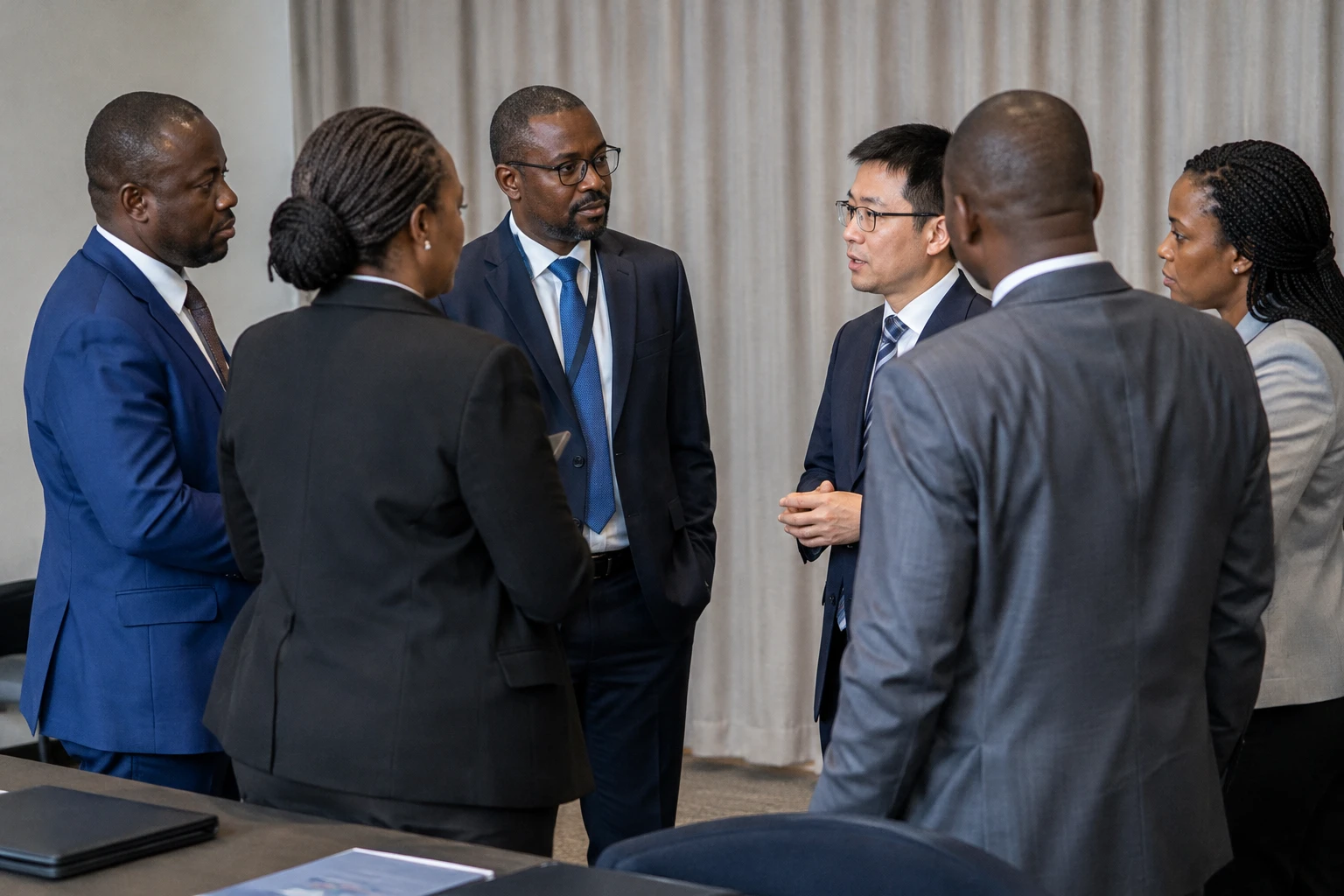
On 22 October, on the sidelines of the Zambia Mining and Investment Insaka held in Lusaka, Atomic Eagle met representatives of China General Nuclear Power Group (CGN), a Chinese state-owned group active in civil nuclear power. Officials from Zambia’s Ministry of Mines also attended the meeting, according to information provided about the gathering. No financing agreement or timetable for negotiations was announced.
Atomic Eagle chief executive Phil Hoskins said the company remained open to financing proposals from various sources. This signals a search for partners, not a commitment from CGN. Possible arrangements — debt, an equity stake, an offtake agreement or a combination of several instruments — have not been specified.
Muntanga is in southern Zambia. The feasibility study published by Atomic Eagle in March 2026 estimates the capital required before production begins at $282 million. It envisages a mine life of about 12 years and average production of 2.2 million pounds of uranium a year. These figures are the developer’s projections, not results already achieved.
Zambia seeks to broaden its mining base
Copper has long dominated Zambia’s mining sector. The country aims to diversify its resources and attract capital to develop new projects. Uranium could open up an additional industry, but it brings particular requirements for safety, tailings management and the control of radioactive materials.
The mining framework is overseen by the national authorities. Zambia’s 2024 Minerals Regulation Act classifies uranium as an energy mineral and sets out obligations relating to mining rights and environmental assessment. For Muntanga, commercial feasibility will not be enough: permits, safety guarantees and monitoring arrangements will also have to proceed.
The Lusaka conference is part of the government’s efforts to attract investment to the sector. For the authorities, a project is not measured solely by its announced value. Local benefits, public revenues, jobs, infrastructure and the share of value created in the country will all weigh in its economic case. These benefits will depend on agreements and operating conditions that have yet to be established.
Washington and Beijing among several possibilities
The approach to CGN builds on Atomic Eagle’s interest in several sources of capital. In June 2026, the company had referred to the possibility of taking US appetite for uranium into account. However, based on the information available, the company has announced neither confirmed US financing nor an agreement with the Chinese group.
China has an expanding nuclear sector. The World Nuclear Association estimates that, at the end of 2025, China’s operating nuclear capacity stood at about 62 gigawatts electrical, with a further 43 gigawatts under construction. CGN is one of China’s major operators in the sector. This growth may fuel demand for nuclear fuel, but it does not mean that the group will finance Muntanga or buy its output.
For a mining company at the development stage, engaging with multiple parties can strengthen competition among potential financiers and buyers. But each option may come with conditions: guarantees on future sales, repayment terms, an equity stake or influence over marketing. The precise terms will matter as much as the amount raised.
Local conditions will determine the benefits
An investment of this scale could support activity in areas near the site, particularly through construction, services and mine-related jobs. But the impact would be neither automatic nor evenly distributed. Skilled jobs may go to workers from other regions or abroad, while local small businesses will benefit mainly if they can access project contracts.
The authorities and affected communities will also need to examine water needs, pollution risks and the monitoring of tailings. For a uranium mine, transparent controls and the publication of environmental results are essential to public trust. The information available about the discussions with CGN does not yet show how these issues would be addressed in any financing arrangement.
A regional issue, but no agreement yet
Zambia is a member of the Southern African Development Community (SADC), which brings together states in the region for economic co-operation and development. If Muntanga goes ahead, its logistical needs, markets and benefits could extend beyond the local area. At this stage, however, there is no evidence of a regional uranium supply or processing arrangement.
The next step will be to establish whether the discussions lead to formal proposals and, if so, to learn their terms. Permits, changes to the development plan and the announced distribution of benefits will also need to be tracked. The project has been costed on paper; its financing still needs to be put together.