Algeria
 Egypt
 Libya
 Morocco
 Sudan
 Tunisia
 Benin
 Burkina Faso
 Cabo Verde
 Côte d'Ivoire
 Ghana
 Guinea
 Guinea-Bissau
 Liberia
 Mali
 Mauritania
 Niger
 Nigeria
 Senegal
 Sierra Leone
 The Gambia
 Togo
 Cameroon
 Central African Republic
 Chad
 DR Congo
 Equatorial Guinea
 Gabon
 Republic of the Congo
 São Tomé and Príncipe
 Burundi
 Comoros
 Djibouti
 Eritrea
 Ethiopia
 Kenya
 Madagascar
 Malawi
 Mauritius
 Mozambique
 Rwanda
 Seychelles
 Somalia
 South Sudan
 Tanzania
 Uganda
 Angola
 Botswana
 Eswatini
 Lesotho
 Namibia
 South Africa
 Zimbabwe
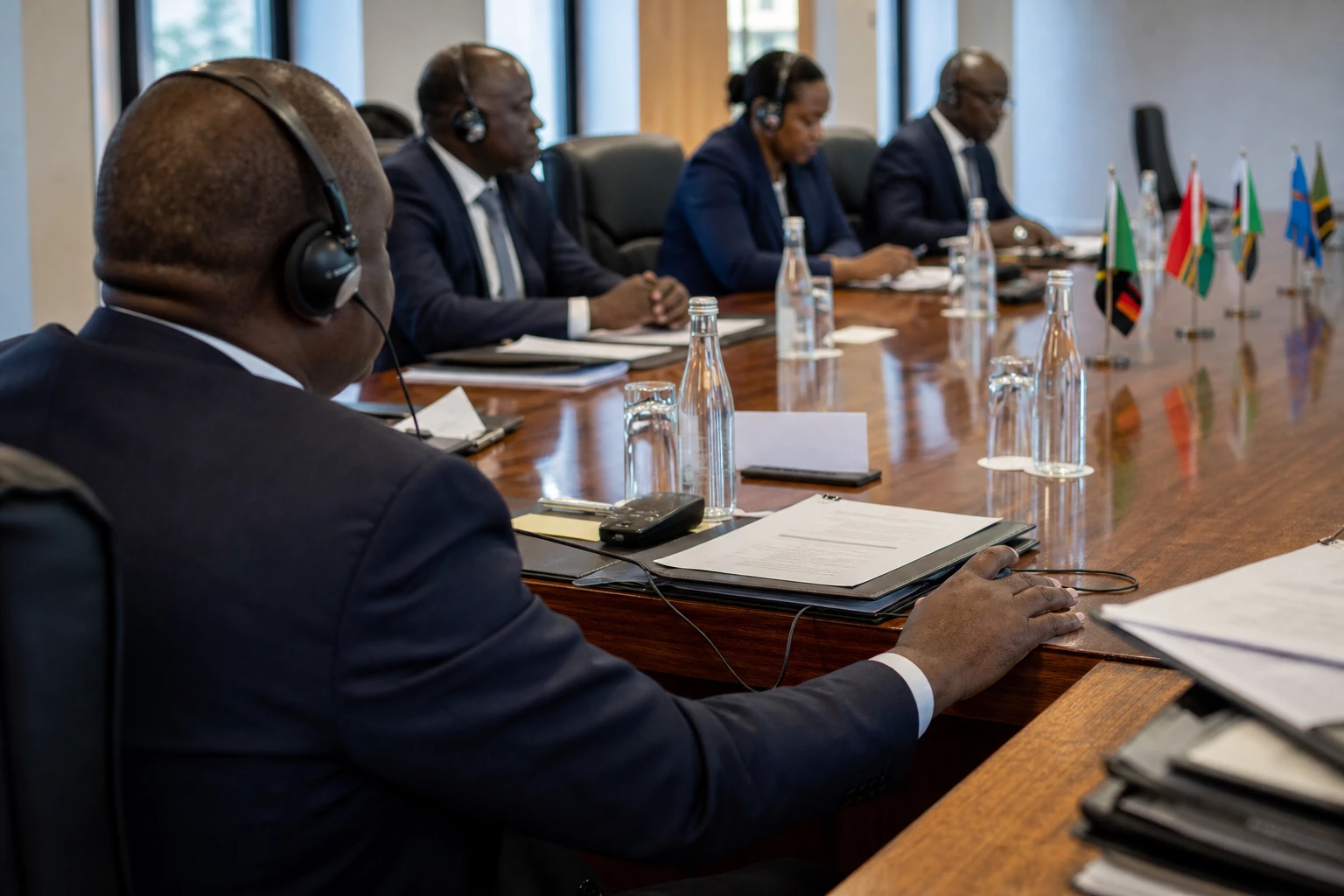
A close election, followed by an institutional stand-off
In Lusaka, the electoral battle did not end with the count. In Zambia, the presidential election of 13 August 2026 opened an even more sensitive chapter: one involving challenges to the result, public security and access to justice. In a country often cited for its peaceful transfers of power since the return to multi-party politics in 1991, tensions over the result have taken on national and regional significance.
President Hakainde Hichilema was declared the winner with about 60% of the vote, according to results reported by the electoral commission appointed by the authorities. His main rival, Brian Mundubile, secured about 38%. The figure matters, but the context matters more: the campaign was marked by allegations of intimidation, incidents of violence and growing suspicions about the impartiality of the process.
The facts: detention, a treason investigation and a blocked challenge
On Thursday 27 August 2026, Brian Mundubile presented himself to the police after spending nearly two weeks in an undisclosed location, according to available information. He was detained as part of an investigation into alleged treason. His running mate, Makebi Zulu, was also questioned and held in detention, according to the same sources. Zambian police say the two political figures are being questioned in a case related to a threat to national security.
This episode is not limited to a criminal case. It comes as the opposition sought to challenge the election results. But the temporary closure of the courts, ordered by the authorities and justified on security grounds, prevented a challenge from being filed within the deadline, according to Human Rights Watch. The organisation says the closure denied opponents effective access to electoral justice.
On 24 August 2026, the courts were closed and surrounded without a credible explanation, according to Human Rights Watch. The measure froze a central stage of the electoral dispute. In Zambia, presidential election challenges fall under the Constitutional Court, which must be petitioned within a strict time limit. Without an open court registry, the legal remedy becomes theoretical.
What the Zambian crisis reveals
The Zambian case says something broader than the rivalry between two men. It exposes the fragility of the balance between electoral competition, state security and procedural safeguards. When a treason investigation follows a disputed election, it cannot be viewed solely as a police case. It also affects perceptions of the institutions’ neutrality.
The government, for its part, defends a security-focused interpretation. But the opposition and several human rights organisations see it as a tightening of political space. Before the vote, Amnesty International had described a worrying decline in civil liberties in Zambia, amid growing pressure on critical voices. This view echoes warnings issued after the election by the UN High Commissioner for Human Rights, who expressed concern about election-related arrests of opposition figures.
One major political fact should also be recalled: Hakainde Hichilema himself was imprisoned on treason charges when he was an opposition figure, in 2017. That past gives particular resonance to the current episode. This is not simply a repeat, but a stark reminder of how the accusation of treason can become, in Zambia as elsewhere, an instrument with a powerful political charge.
Economically, institutional stability matters all the more because Zambia remains a strategically important country in southern Africa, a major copper producer and engaged in the difficult task of restructuring its debt. Investors, markets and regional partners are therefore looking less at the election score alone than at the country’s ability to resolve a political dispute without breaking constitutional order.
Regional significance: a test for SADC and the African Union
Zambia belongs to SADC, the Southern African Development Community, which has adopted principles and guidelines for democratic elections. These texts stress transparency, free access to electoral information and acceptance of results declared in accordance with the law. When courts close at the very moment a challenge must be filed, the entire edifice of electoral trust is shaken.
The region is therefore following the case closely. The African Union and COMESA sent an observation mission for the 13 August election. Their presence shows that the Zambian case is not solely a national matter. It touches on the quality of political transitions in southern Africa, a region where the regularity of elections remains a major marker of institutional credibility.
The message sent goes beyond Lusaka. If the judicial process remains blocked, the opposition will be able to denounce a victory secured by closing off avenues of challenge. If access to justice is restored, the government can instead argue that constitutional mechanisms are working. In either case, the next step will be decisive: it will show whether Zambia confirms its reputation as a competitive democracy or enters a tougher phase, in which political disputes move from the ballot box to the courts and police stations.