Algeria
 Egypt
 Libya
 Morocco
 Sudan
 Tunisia
 Benin
 Burkina Faso
 Cabo Verde
 Côte d'Ivoire
 Ghana
 Guinea
 Guinea-Bissau
 Liberia
 Mali
 Mauritania
 Niger
 Nigeria
 Senegal
 Sierra Leone
 The Gambia
 Togo
 Cameroon
 Central African Republic
 Chad
 DR Congo
 Equatorial Guinea
 Gabon
 Republic of the Congo
 São Tomé and Príncipe
 Burundi
 Comoros
 Djibouti
 Eritrea
 Ethiopia
 Kenya
 Madagascar
 Malawi
 Mauritius
 Mozambique
 Rwanda
 Seychelles
 Somalia
 South Sudan
 Tanzania
 Uganda
 Angola
 Botswana
 Eswatini
 Lesotho
 Namibia
 South Africa
 Zimbabwe
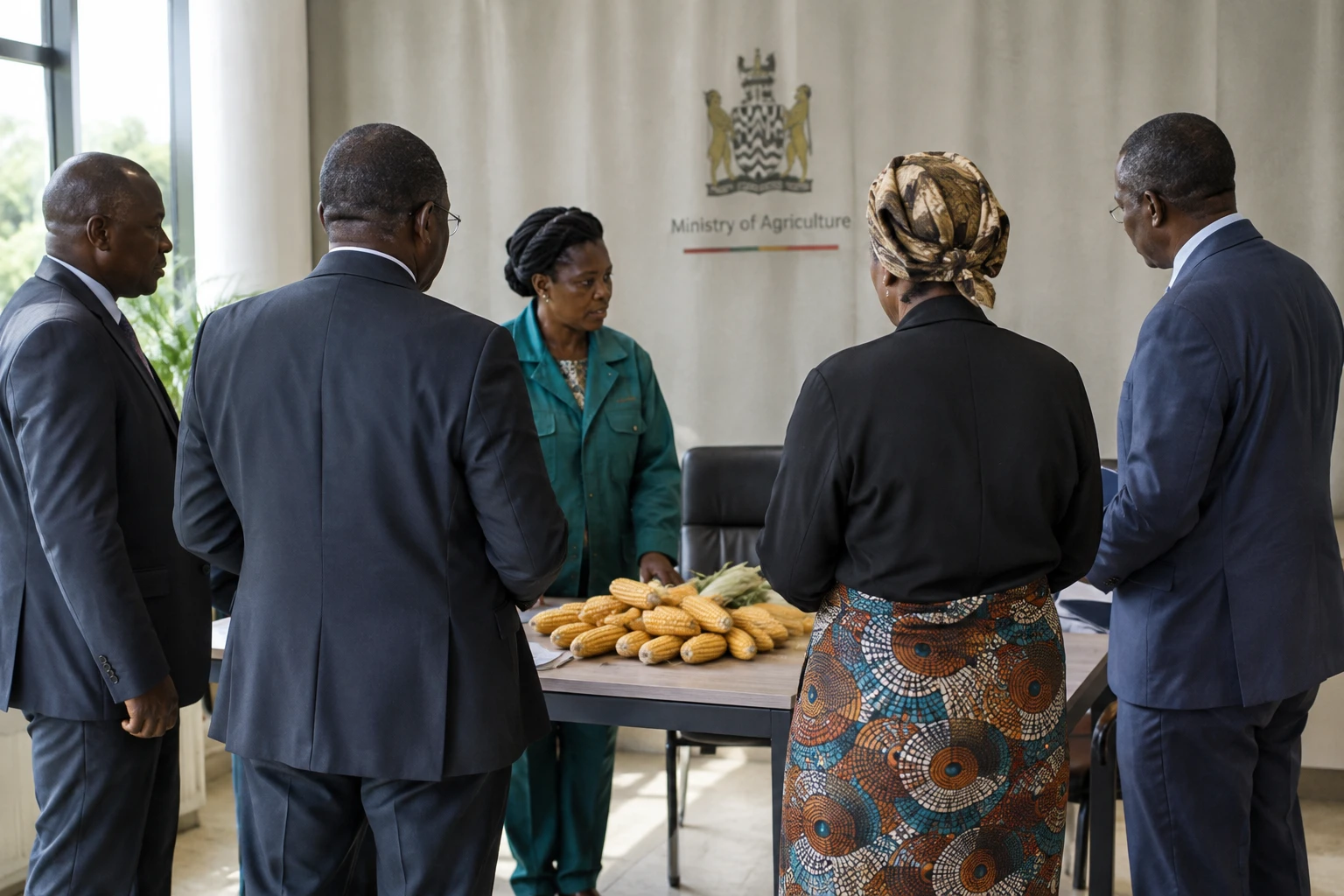
A record harvest alone does not guarantee that families will have access to maize when they need it. In Zambia, the government wants to use the current abundance to strengthen reserves and pay producers, as the next rainy season looks uncertain.
Abundant harvests, but a risk to the next season
Zambia is emerging from two recovery seasons following the 2023-2024 drought, which cut harvests and forced the country to import maize. For the 2025-2026 season, national maize production is estimated at nearly 4.94 million tonnes, a record and a 27.8% increase year on year. The Ministry of Agriculture presented this estimate in Lusaka in May.
But this performance does not eliminate climate risks. Zambia’s meteorological department has published its forecast for the 2026-2027 season. FEWS NET, a food security monitoring network, expects irregular and below-average rainfall in some areas, particularly in the south and west, under the influence of a very strong El Niño episode.
El Niño is a periodic warming phase in the Pacific Ocean that can alter rainfall patterns worldwide. Its effects vary by region. In southern Africa, a late start to the rains can complicate planting and reduce yields, especially for farms dependent on rainfall.
Emergency budget must also cover maize purchases
On 22 October, Finance and National Planning Minister Situmbeko Musokotwane presented Parliament with a request for additional spending of 19.9 billion kwacha for 2026. The proposal must still be reviewed by the relevant parliamentary committee before the National Assembly makes a decision.
The largest share, 14.7 billion kwacha, would go towards paying producers who delivered their maize to the Food Reserve Agency (FRA), the public body responsible for food reserves. According to the minister, the FRA bought 2.7 million tonnes in 2026, against an initial target of 500,000 tonnes. The Ministry of Agriculture would receive 15.8 billion in total, including 1.1 billion for the agricultural input support programme for the 2026-2027 season.
The government presents these purchases as a way to build up stocks ahead of a possible lean season in 2027. The funding request serves two related but distinct purposes: consolidating public reserves and meeting payments owed to farmers. The budget and purchasing figures were reported separately by several Zambian media outlets, including the state-owned Zambia Daily Mail and the independent outlet News Diggers.
Between support for producers and the cost to public finances
The FRA’s intervention can provide producers with a market when abundant harvests put pressure on prices. It particularly benefits farmers who sold their maize to the agency. But the volume purchased far exceeds the budgeted target, so the state must find new resources to meet its commitments.
The government proposes raising 18 billion kwacha through borrowing on the domestic market. The remainder would come from additional revenue, partner funds and savings on external debt servicing. This creates a budget management challenge: producers must be paid and the next season prepared for without excessively increasing the cost of public financing.
Food security is not simply a matter of the tonnage held in storage. It also depends on transport, storage capacity, access to seeds and fertilisers, and the price at which households can buy maize. In rural areas, a poor start to the rains can reduce agricultural incomes. In cities, changes in the price of maize meal have a direct impact on family budgets.
An issue that extends beyond Zambia’s borders
Zambia is a member of the Southern African Development Community (SADC), a regional organisation that co-ordinates responses to agricultural and climate-related issues, among others. Production conditions can vary considerably from one neighbouring country to another. Forecast droughts in parts of southern Africa therefore make regional trade important, although there is no guarantee that surpluses in one country will make up for deficits in another.
The 2024 precedent remains fresh: the drought exposed the vulnerability of supplies and led to purchases from abroad. The current harvest gives Lusaka more room for manoeuvre, but building up stocks will not be enough if payments are delayed or rainfall disrupts planting. Parliament must now review the proposed funding. The next indicators to watch will be rainfall patterns, the pace of payments to producers and the FRA’s ability to manage the volumes purchased.
At regional level, Zambia’s experience illustrates a shared challenge: turning a one-off good harvest into lasting protection against climate shocks and market fluctuations. How the authorities balance public reserves, markets for agricultural produce and borrowing will provide a concrete indication of their preparedness.