Algeria
 Egypt
 Libya
 Morocco
 Sudan
 Tunisia
 Benin
 Burkina Faso
 Cabo Verde
 Côte d'Ivoire
 Ghana
 Guinea
 Guinea-Bissau
 Liberia
 Mali
 Mauritania
 Niger
 Nigeria
 Senegal
 Sierra Leone
 The Gambia
 Togo
 Cameroon
 Central African Republic
 Chad
 DR Congo
 Equatorial Guinea
 Gabon
 Republic of the Congo
 São Tomé and Príncipe
 Burundi
 Comoros
 Djibouti
 Eritrea
 Ethiopia
 Kenya
 Madagascar
 Malawi
 Mauritius
 Mozambique
 Rwanda
 Seychelles
 Somalia
 South Sudan
 Tanzania
 Uganda
 Angola
 Botswana
 Eswatini
 Lesotho
 Namibia
 South Africa
 Zimbabwe
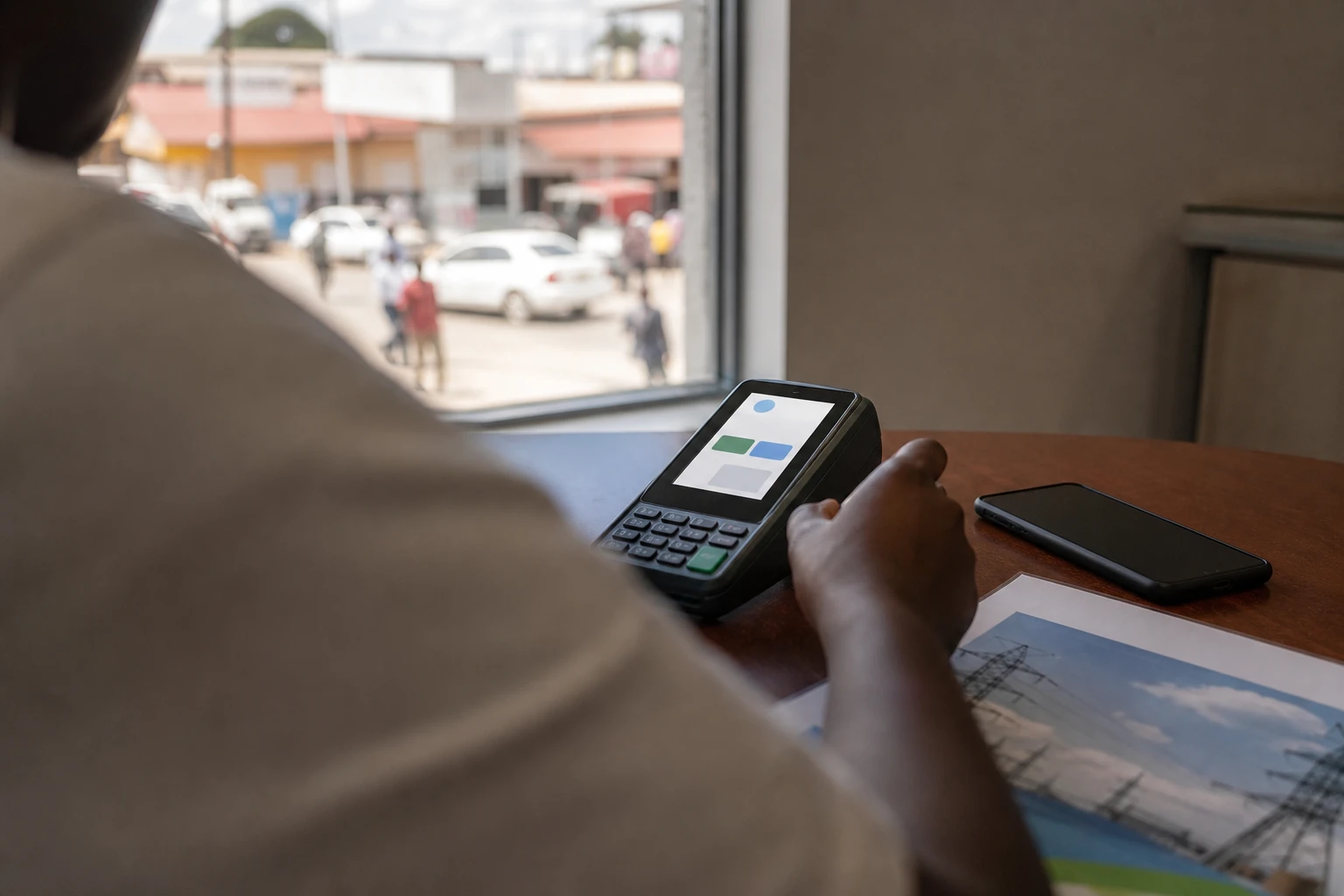
In Zambia, every megawatt of solar power now counts twice. It must meet rising electricity demand while reducing the country’s exposure to fluctuations in hydropower generation. Against this backdrop, the Kafue Solar project has reached a decisive milestone after several years of preparation.
Solar project finally enters execution phase
Kafue Solar reached financial close at the end of September 2026. This milestone clears the way for a shift from development to construction. The facility will be located near Kafue, in Lusaka Province, close to the Zambian capital.
Developed by Globeleq, the site will comprise two neighbouring 20 MWac photovoltaic plants. Its contracted capacity will therefore be 40 MWac, with an installed capacity of 56 MWp. Megawatt-peak refers to the panels’ theoretical maximum output under standard conditions, while MWac is the power actually delivered as alternating current.
The project is expected to generate around 123 GWh of electricity a year. ZESCO, the state-owned company responsible for electricity generation, transmission and distribution in Zambia, will buy the power produced. First power is scheduled for October 2027, subject to the construction timetable being met.
Financing includes the Dutch development bank FMO and British International Investment, the UK’s development finance institution. The precise terms of the debt and equity have not been fully disclosed publicly.
Kafue Solar is part of the GET FiT Zambia programme. Set up by Zambia’s Ministry of Energy with support from German development bank KfW, the scheme aims to attract private power producers through competitive tenders and structured power purchase agreements.
The project was awarded to Globeleq in 2019. Around seven years will therefore have elapsed between the award and financial close, illustrating the time often needed to secure permits, contracts, grid connections and financial guarantees for an energy project.
Diversification becomes a national priority
For Zambia, Kafue Solar is more than a new power plant. The project is part of a broader shift in the national electricity system. The 2024 drought highlighted the risks of heavy reliance on hydropower, which has historically played a central role in Zambia’s electricity mix.
When dams generate less power, households, businesses and industries are directly affected. Mining companies in the Copperbelt, in particular, need a more reliable supply to maintain operations. In rural areas, outages also affect essential services, small businesses and cold chains.
Solar power can help reduce this vulnerability, but it cannot solve the problem of grid stability on its own. Its output varies with sunshine. Zambia will therefore need to strengthen its transmission lines, improve demand management and pair solar with storage capacity or other dispatchable sources.
The government is targeting a substantial increase in national generation capacity over the coming years. The Ministry of Energy has said Kafue Solar is part of a 120 MW GET FiT portfolio. ZESCO, for its part, has reported that several hundred megawatts of solar projects are at different stages of development.
The project is also expected to create local benefits during construction. Globeleq says the site will support more than 200 temporary jobs. The lasting impact, however, will depend on the share of work awarded to Zambian companies, the training of local technicians and the grid’s ability to deliver electricity to centres of consumption.
Globeleq expands its footprint around Lusaka
Kafue Solar is not a standalone venture. In March 2026, Globeleq completed its acquisition of a 51% stake in Lunsemfwa Hydro Power Company, known as LHPC. The remaining 49% is held by Wanda Gorge Investments, a Zambia-based investment company.
LHPC operates two hydropower plants with a combined capacity of 56 MW. The company is also developing a 27 MWp solar facility and holds a trading licence within the Southern African Power Pool, the regional electricity market linking operators in several Southern African countries.
The acquisition gives Globeleq a direct presence in Zambian hydropower and greater access to regional power trading. It complements the solar-focused Kafue project rather than replicating a single technology in the national portfolio.
The group also launched Leopards Hill, near Lusaka, in April 2026. The complex is planned to combine 250 MWp of solar panels with a 150 MW battery capable of storing up to 600 MWh. Storage is intended to shift some of the electricity generated during the day to periods of peak demand.
Globeleq is also behind the 300 MW Mpika wind project. These assets are at different stages of maturity. Timetables, power purchase agreements and financing terms will still need to be confirmed for each of them.
An issue that reaches beyond Zambia’s borders
Globeleq’s expansion is taking place in a regional market marked by electricity shortages and strong demand from the mining, industrial and urban sectors. Zambia can generate more power for its own grid while also strengthening trade with its neighbours through the Southern African Power Pool.
This prospect depends on the capacity of interconnectors and the financial strength of power buyers. A project can be technically ready but unable to deliver its electricity if transmission lines are lacking or commercial contracts remain fragile.
The next milestone will be final financing for Leopards Hill, which Globeleq is targeting by the end of 2026. The outcome will show whether Zambia can turn investor interest into capacity that is actually connected to the grid.
In the short term, Kafue Solar will therefore serve as a practical test. The country will need to show that it can cut delays, secure its infrastructure and make private producers, the public utility and the regional market work together. For Zambians, the challenge is not just to add panels: it is to secure electricity that is more widely available, more predictable and better distributed between urban centres, productive regions and rural areas.