Algeria
 Egypt
 Libya
 Morocco
 Sudan
 Tunisia
 Benin
 Burkina Faso
 Cabo Verde
 Côte d'Ivoire
 Ghana
 Guinea
 Guinea-Bissau
 Liberia
 Mali
 Mauritania
 Niger
 Nigeria
 Senegal
 Sierra Leone
 The Gambia
 Togo
 Cameroon
 Central African Republic
 Chad
 DR Congo
 Equatorial Guinea
 Gabon
 Republic of the Congo
 São Tomé and Príncipe
 Burundi
 Comoros
 Djibouti
 Eritrea
 Ethiopia
 Kenya
 Madagascar
 Malawi
 Mauritius
 Mozambique
 Rwanda
 Seychelles
 Somalia
 South Sudan
 Tanzania
 Uganda
 Angola
 Botswana
 Eswatini
 Lesotho
 Namibia
 South Africa
 Zimbabwe
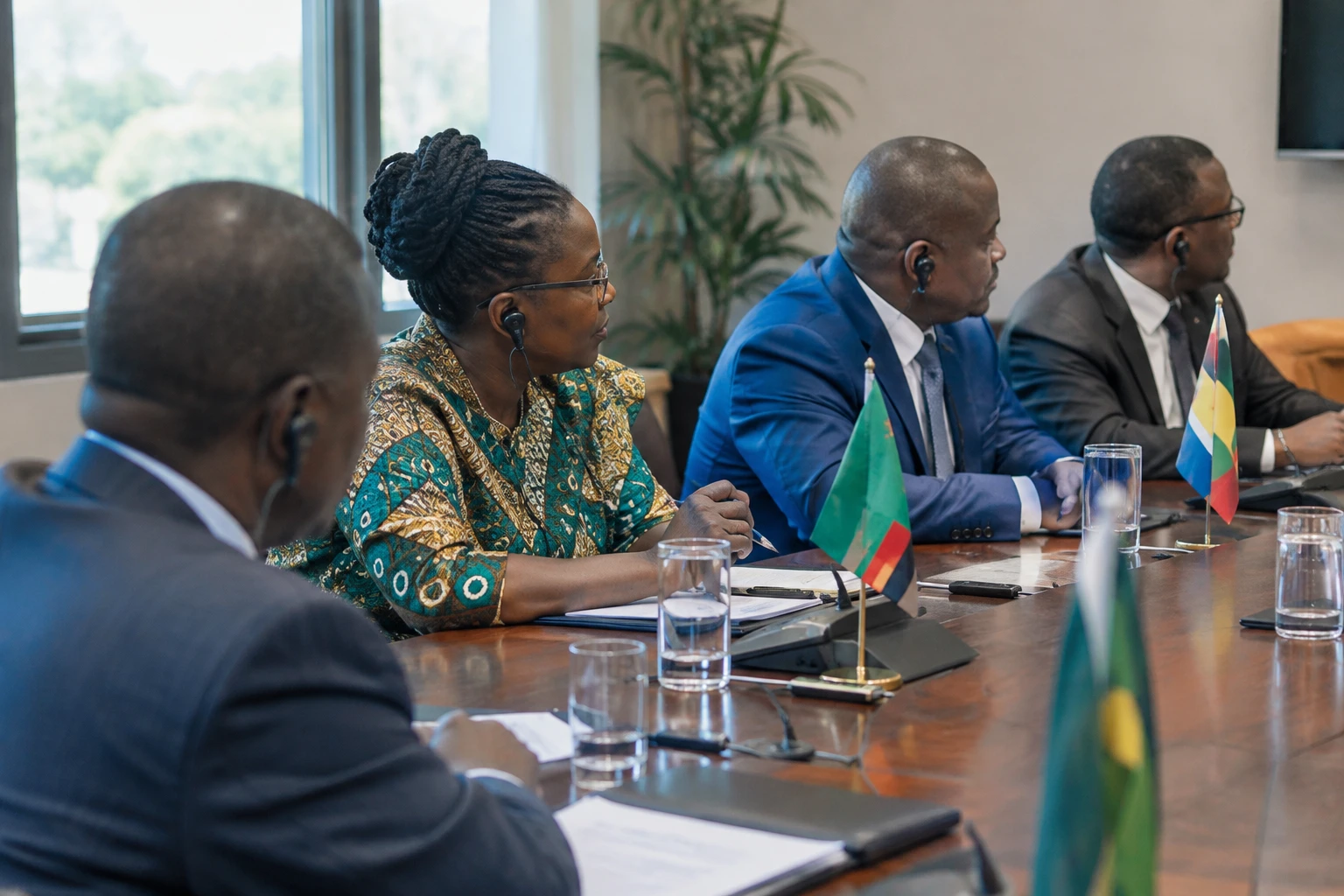
An international seat can open diplomatic doors. It also creates a tangible expectation: that the principles defended in Geneva are reflected in citizens’ lives. For Zambia, the term beginning in 2027 will bring this question to the fore, both at home and in its international positions.
A term secured without a rival for the African seat
On 13 October 2026, the United Nations General Assembly elected 15 states to the Human Rights Council for the 2027-2029 period. Zambia received 177 votes out of 181 valid ballots, the highest score among the elected countries. The new members will begin their terms on 1 January 2027.
Four countries will represent the African group: Zambia, Ghana, Nigeria and Burundi. Detailed results published by Japan’s Ministry of Foreign Affairs confirm the figures announced for the four African candidates: 177, 173, 172 and 160 votes respectively. The pan-African news agency APA also reported the result and the date the term begins.
Lusaka’s high score does not, however, mean that several African candidates competed for the seat. The four seats allocated to the African group corresponded exactly to the four candidates put forward. The 15 elected states were thus appointed without a competitive race within their regional groups, according to the Associated Press. The vote therefore establishes the support received by Zambia, but does not allow one to conclude that member states compared several African options.
President Hakainde Hichilema thanked UN members. He described the election as a vote of confidence and stressed that the value of the term would also be measured by citizens’ experiences in Zambia. His statement sets a domestic as well as a diplomatic challenge: the country’s international reputation will depend on consistency between its commitments and the authorities’ practices.
The Council’s role and expectations of Lusaka
Established in 2006, the Human Rights Council has 47 member states. Based in Geneva, it examines alleged human rights violations, conducts the Universal Periodic Review — a regular review of the human rights record of every UN member state — and can appoint independent investigators. It does not replace national courts and not all its decisions are binding, but its debates can increase diplomatic pressure.
States are elected by the General Assembly for three-year terms. Seats are allocated among five regional groups to ensure geographical representation. This arrangement gives Africa a collective place, but does not guarantee that every region has a choice between several candidates at each election. The lack of competition this year has revived criticism of the vote’s ability to distinguish between states according to their human rights practices.
Zambia joins the Council with progress and controversies to examine. Amnesty International documented restrictions on freedom of expression and peaceful assembly, arrests of journalists and intimidation of opposition members in 2025. The organisation also notes that provisions of laws on cybersecurity and cybercrime adopted in 2025 are being challenged before the High Court by the Law Association of Zambia. These findings are those of a human rights organisation, not a ruling by the Council.
In August 2026, Amnesty International also published a report on restrictions on freedoms ahead of Zambia’s general election. These assessments mean the term will be closely watched. They do not, on their own, determine Lusaka’s future conduct, but they point to the issues on which the government may be questioned, including press freedom, the right to protest and the safeguards afforded to the opposition.
The government, for its part, presents the election as recognition of its commitment to fundamental rights. The challenge will be to turn this diplomatic recognition into co-operation with international mechanisms and verifiable responses to criticism. For residents of Lusaka and the provinces alike, the impact of a seat in Geneva will depend less on official statements than on the application of laws and access to remedies.
A regional issue for southern Africa
Zambia sits in the African group alongside Ghana, Nigeria and Burundi. This representation brings together countries from different sub-regions; it does not constitute a uniform voting bloc. Their priorities and positions may diverge depending on the debate, whether on conflicts, civil liberties or co-operation with UN investigators.
For southern Africa, Zambia’s presence offers an additional voice in a forum whose global debates are often closely followed by governments, regional organisations and civil society actors. Zambia is a member of the Southern African Development Community, SADC, which brings together states in the region around political and economic co-operation. Its term in Geneva will therefore not automatically speak for SADC, but Lusaka will be able to raise regional issues and contribute to discussions on methods of co-operation with international institutions.
The election’s significance will play out on two levels. Internationally, Zambia’s delegation will have to take positions on global situations and take part in reviewing states’ commitments. At home, civil society and citizens will be able to compare these statements with the treatment of freedoms in their own country. This demand for consistency applies to the three other African members as well, and to all the elected states.
The key date is 1 January 2027, when the term begins. Until then, the commitments put forward by the new members and the Council’s first debates will offer clues as to how they intend to use their seats. For Lusaka, the challenge will not simply be to represent Africa in Geneva, but to show that this international responsibility can go hand in hand with effective safeguards for Zambians.