Algeria
 Egypt
 Libya
 Morocco
 Sudan
 Tunisia
 Benin
 Burkina Faso
 Cabo Verde
 Côte d'Ivoire
 Ghana
 Guinea
 Guinea-Bissau
 Liberia
 Mali
 Mauritania
 Niger
 Nigeria
 Senegal
 Sierra Leone
 The Gambia
 Togo
 Cameroon
 Central African Republic
 Chad
 DR Congo
 Equatorial Guinea
 Gabon
 Republic of the Congo
 São Tomé and Príncipe
 Burundi
 Comoros
 Djibouti
 Eritrea
 Ethiopia
 Kenya
 Madagascar
 Malawi
 Mauritius
 Mozambique
 Rwanda
 Seychelles
 Somalia
 South Sudan
 Tanzania
 Uganda
 Angola
 Botswana
 Eswatini
 Lesotho
 Namibia
 South Africa
 Zimbabwe
Zambia’s vote hinges on the cost of everyday life
In Lusaka, as in Ndola and Kitwe, the campaign has not revolved around slogans but a simple question: how much does everyday life still cost? Zambia’s general election on Thursday 13 August 2026 looks less like a contest of images than a verdict on the household shopping basket, fuel, electricity and the value of the kwacha. Incumbent President Hakainde Hichilema wants to convince voters that restored stability merits a second term, while the opposition is seeking to turn social fatigue into a protest vote.
A country still carried by restructuring, but not yet relieved
Zambia is emerging from a difficult economic period. The country has embarked on a restructuring of its public debt after years of financial strain, under a programme backed by the International Monetary Fund. In January 2026, the institution again noted progress on debt restructuring, while stressing that Lusaka’s public finances remained under close scrutiny. In May, it said restructuring agreements already covered about 94% of the relevant debt.
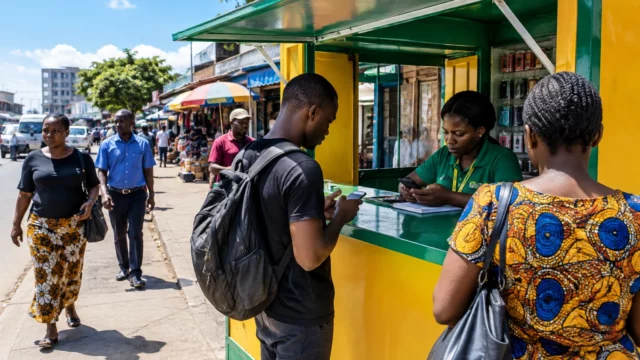
On paper, the indicators are improving. Annual inflation fell from 11.2% in December 2025 to 9.4% in January 2026, then to 6.5% in June, according to figures published by the statistical authorities and organisations tracking the prices of essential goods. But this improvement does not automatically translate into lower costs in markets, transport or food. The cost of living remains the campaign’s central measure because it weighs most heavily on informal incomes, lower-income urban households and families dependent on imported food prices.
The government’s economic record at the heart of the contest
The president’s camp points to restructured debt, renewed confidence among lenders and macroeconomic stability. This is its strongest line. The government also says foreign-exchange reserves have strengthened and mining investment has increased, two arguments intended to reassure markets as well as voters. The challenge is clear: turning recovery figures into a perception of improved living standards, which remains harder in poorer neighbourhoods than in macroeconomic tables.
Against this defence of the government’s record, the opposition has chosen a direct attack on prices. Its argument is simple: if the debt has been reorganised, why do so many Zambians still feel daily pressure on their spending? This message resonates particularly in cities, where fixed wages, rents and transport costs make increases immediately visible. In rural areas, the vote also depends on other factors: access to agricultural inputs, roads, credit and markets.
In copper’s shadow, the question of resources
Beyond the cost of living, another issue runs through the campaign: mineral resources. Zambia remains one of the world’s major copper producers, making mining central to its ability to fund the state, infrastructure and public services. The government has sent multiple signals favourable to investors in an effort to attract capital. This strategy is presented as necessary for a country seeking to restore liquidity. But some economists see a risk: if incentives are too generous, they could reduce in the short term the revenues the state needs precisely now.
This debate is decisive because it concerns how wealth is actually distributed. In a country where copper drives exports, the political question is who benefits from investment, where revenues go and how much reaches public services. This is also where the difference between growth on paper and tangible improvements in everyday life becomes clear.
A more open campaign than it might seem
The 13 August election is not limited to two names, even if the contest is largely focused on Hakainde Hichilema and Brian Mundubile. In total, 12 presidential candidates have been approved by the Electoral Commission of Zambia, pointing to a fragmented political field but also a system in which the real battle is over coalitions capable of winning an absolute majority in the first round. The official timetable provides for the results to be announced on 17 August.
This electoral geography matters. Local analysts believe the contest is tougher in urban centres, where the opposition can mobilise frustration over the cost of living. In rural areas, the governing party benefits more from its administrative and territorial presence. In other words, the vote cannot be read only at national level; it is also divided between the capital, Copperbelt cities and rural regions where expectations differ.
Civil liberties, electoral security and regional stakes
The campaign has also been marked by questions about civic space. Civil liberties advocates have criticised the continued use of cybersecurity and cybercrime laws they consider chilling to political speech, as well as clashes at opposition rallies. The authorities, for their part, say they want to ensure a peaceful election. In a country that experienced a transfer of power in 2021 without an institutional rupture, the stakes are as much democratic as symbolic.
For Southern Africa, Zambia’s vote matters beyond Lusaka. Zambia belongs to SADC, the Southern African Development Community, a region where electoral credibility, macroeconomic stability and access to mineral resources have a direct impact on neighbours and regional investors. If the government emerges strengthened from the ballot, it will seek to extend its economic recovery agenda. If the opposition makes gains, debate over redistribution, mining governance and civil liberties will intensify. Either way, the election will say something broader about how an African state seeks to reconcile fiscal discipline, social tensions and democratic promise.